Situation Summary
Argentina remains at moderate global risk (rank #45, composite threat 49) with localized but recurring violence concentrated in Buenos Aires Province and Córdoba. The last 48 hours show a spike in opportunistic street crime and homicides tied to World Cup celebrations, but no coordinated political instability, infrastructure attack, or nationwide security shock. The threat profile is dominated by criminal activity—gang violence, robbery, sexual offenses, and law-enforcement targeting—rather than terrorism or state-level instability.
Key Developments
- Colón, Buenos Aires Province (17 July) — Three men stabbed during World Cup victory celebrations; one sustained serious thoracic injury. All treated at municipal hospital.
- Capitán Bermúdez, Santa Fe Province (17 July, ~20:00) — Street brawl during celebrations at avenida San Lorenzo and 9 de Julio intersection; multiple injuries from bladed weapons and bottles; police intervention.
- Multi-city violence spikes (17 July evening) — Disturbances and street fights reported in Tucumán, San Luis, Mina Clavero (Córdoba), Villa Atuel (Mendoza), Rosario de Lerma (Salta), and Catriel (Río Negro); groups turned celebration sites into conflict scenes.
- José C. Paz, Buenos Aires Province (18 July) — Body of 22-year-old woman (Karina Elizabeth Cáceres Domínguez) found in septic pit; reported missing; suspect apprehended in Charata, Chaco, and confessed to homicide.
- Fuerte Apache, Buenos Aires Province (18 July, afternoon) — Provincial police officer Alan Fabián Molina (30) shot dead during patrol; incident treated as targeted law-enforcement homicide.
- Merlo, Buenos Aires Province (18 July) — Federal Police arrested Paraguayan national Carlos Alberto Avalos Vallejo, accused of serial child sex abuse involving six minors; flagged as serious public-safety case.
- Villa La Angostura, Neuquén Province (17–18 July night) — Major restaurant theft during celebrations; high-value robbery exploiting distraction created by festivities.
Highest-Risk Areas
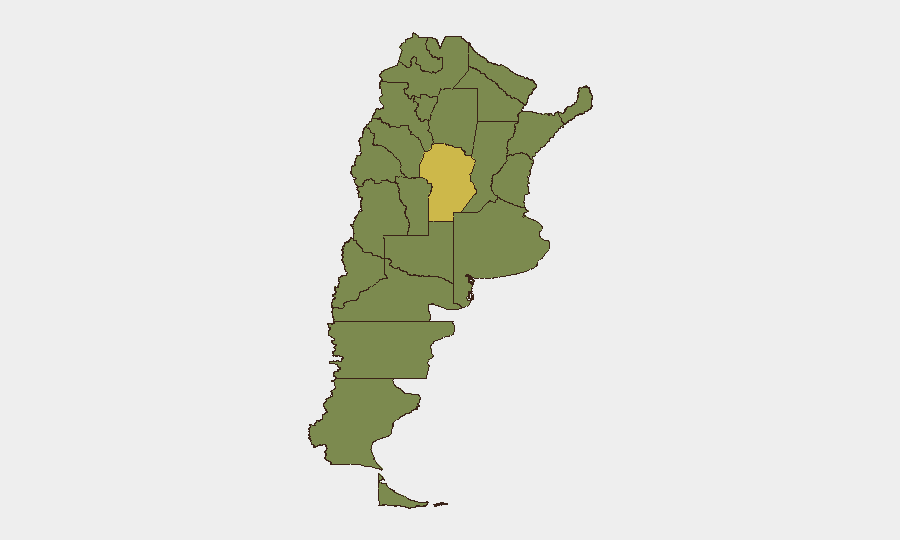
Córdoba Province (score 64.2) remains the single highest-risk jurisdiction, driven by violent crime and gang activity. Buenos Aires Province (38.4) and the Autonomous City of Buenos Aires (35.7) together concentrate the most reported incidents—homicides, street violence, and organized crime—reflecting both population density and persistent organized-crime networks. Río Negro, Santiago del Estero, and Jujuy provinces also show elevated scores (35–36.9), indicating distributed, regional violent-crime pressure rather than a single hot spot. World Cup celebrations have acted as a trigger for opportunistic violence in secondary cities (Tucumán, Santa Fe, Salta), exposing gaps in localized crowd control and law-enforcement coordination.
How GeoBit Would Assist
Security teams operating in Argentina should employ AOI (Area-of-Interest) Monitoring & Early Warning on Córdoba and Buenos Aires Province to detect emerging crime clusters and protest activity in real time. OSINT fusion (Twitter/Telegram, multi-language search, sentiment analysis) across criminal forums and local news feeds provides 24–48-hour advance notice of gang-related violence, kidnapping networks, and targeted attacks on personnel. GIS & Spatial Analysis combined with Routing & Network Analysis enables duty-of-care teams to plan safe travel corridors around high-incident neighborhoods and identify alternative routes during periods of elevated street violence.
7-Day Outlook
Expect residual street violence and property crime to normalize post-World Cup as celebrations subside, but baseline criminal activity in Córdoba and Buenos Aires Province will persist. Police investigations into the Fuerte Apache homicide and serial sexual-abuse case may generate additional detention-related demonstrations in high-risk neighborhoods. No major political or infrastructure disruption is forecast in the next seven days absent unexpected incident escalation.
Highest-Risk Areas — Ranked
| # | State / Region | Risk |
|---|---|---|
| 1 | Córdoba | 64.2 |
| 2 | Buenos Aires Province | 38.4 |
| 3 | Río Negro Province | 36.9 |
| 4 | Autonomous City of Buenos Aires | 35.7 |
| 5 | Santiago del Estero Province | 35.7 |
| 6 | Jujuy Province | 35 |
| 7 | La Rioja Province | 34.8 |
| 8 | Neuquén Province | 34.6 |
| 9 | Santa Fe Province | 34.6 |
| 10 | Tucumán Province | 34.6 |
| 11 | Chaco Province | 34.6 |
| 12 | Salta Province | 34.4 |
Sources
Previous Daily Briefs
A new Argentina brief is written every day — each with its own risk map and downloadable CSV. Here's the last week; use the calendar to go further back.
📅 Browse every day by calendar →
Highlighted days have a brief. Tap a day for that day's map & analysis, or “csv” for that day's dataset ($5).
Atlas — our AI intelligence desk — emails them this snapshot personally. Nothing else, no list.