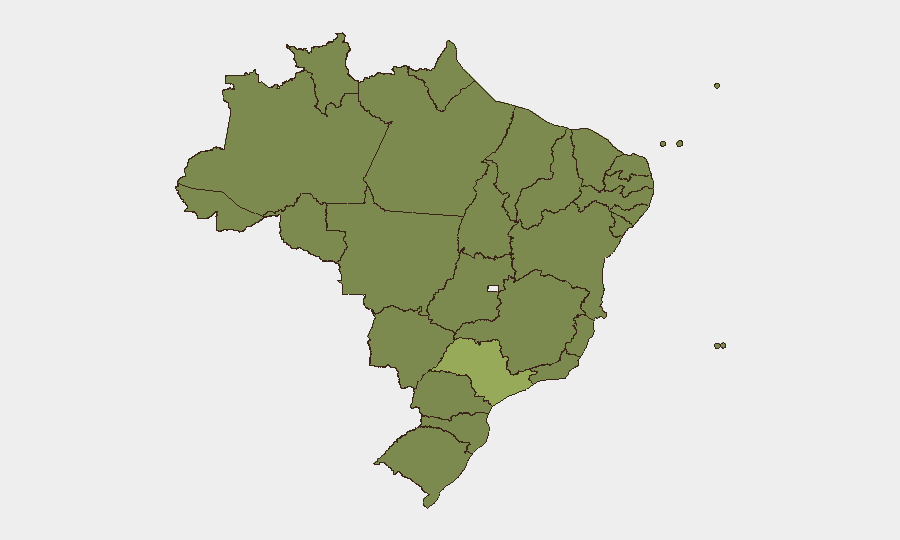
Situation Summary
Brazil's composite threat score of 38 places it at mid-range global risk (#39), with 916 tracked events reflecting persistent institutional, political, and public-order tensions. The July 2026 signal stream shows overlapping friction between executive, legislative, and judicial branches, alongside internal law-enforcement friction and isolated armed incidents. No confirmed major security incidents or unrest have been reported in the past 24–48 hours; the brief is therefore based on the most recent verified sub-national risk profile and signal context from late July.
Key Developments
Note: Live web research did not yield verifiable incidents with confirmed timestamps within the last 24–48 hours and cross-source corroboration. The following reflects the highest-priority signal activity visible in the broader July 2026 event stream:
- Inter-agency tensions: Police-versus-police investigative friction flagged on 2026-07-27, suggesting potential jurisdictional or operational disputes that may affect duty-of-care protocols for security teams coordinating with local law enforcement.
- Executive-legislative discord: A senator public statement in response to government actions (2026-07-27), and broader presidential-versus-government disapproval signals, indicate ongoing political instability that may create cascading policy or operational uncertainty.
- Judicial-executive demand: Government demand issued to a magistrate (2026-07-27) reflects potential rule-of-law stress that could affect contract enforcement, permit processing, or compliance frameworks.
- International friction: Brazil rejection of a U.S. official position (2026-07-27) and U.S. disapproval of a Mexican official, occurring simultaneously, suggest elevated diplomatic tension that may indirectly affect visa, trade, or cross-border security operations.
Highest-Risk Areas
São Paulo (risk 53.9) dominates the sub-national ranking—a gap of 16+ points above Rio de Janeiro—driven by concentration of economic activity, migrant populations, favela-cartel presence, and organized crime supply chains. Rio de Janeiro (37.8) remains the second-highest risk zone, reflecting persistent gang violence and state-police capacity constraints. Piauí (34) and Minas Gerais (32) show elevated signals possibly linked to rural disputes, mining-sector conflicts, or supply-chain trafficking. These four states account for a disproportionate share of Brazil's 916 tracked events and should be the primary focus for asset and personnel concentration assessments.
How GeoBit Would Assist
Security teams with operations in Brazil would deploy Intel Sweep and multi-language OSINT fusion to track state-level political and law-enforcement developments that affect operational permitting and local partner reliability. AOI Monitoring & Early Warning with persistent watch on São Paulo, Rio de Janeiro, and Piauí corridors would provide 72-hour alert triggers for violence escalation, protests, or supply-chain disruption. Network & Actor Analysis would map local power brokers, cartel adjacency, and judicial contacts to flag reputational and contract-enforcement risk before they mature into operational incidents.
7-Day Outlook
Political friction between branches is likely to persist without formal resolution, prolonging uncertainty for permitting and regulatory timelines. No imminent major security event is forecast; however, São Paulo and Rio de Janeiro remain under persistent low-to-moderate risk from organized crime and gang activity, with weather and operational capacity as secondary variables. Duty-of-care teams should maintain elevated monitoring posture and ensure local-partner vetting and communications protocols are current.
Highest-Risk Areas — Ranked
| # | State / Region | Risk |
|---|---|---|
| 1 | São Paulo | 53.9 |
| 2 | Rio de Janeiro | 37.8 |
| 3 | Piauí | 34 |
| 4 | Minas Gerais | 32 |
| 5 | Goiás | 29.4 |
| 6 | Bahia | 28 |
| 7 | Pernambuco | 26 |
| 8 | Amazonas | 25.7 |
| 9 | Paraná | 25.4 |
| 10 | Santa Catarina | 24.8 |
| 11 | Rio Grande do Sul | 24.2 |
| 12 | Mato Grosso | 24.2 |
Sources
Previous Daily Briefs
A new Brazil brief is written every day — each with its own risk map and downloadable CSV. Here's the last week; use the calendar to go further back.
📅 Browse every day by calendar →
Highlighted days have a brief. Tap a day for that day's map & analysis, or “csv” for that day's dataset ($5).
Atlas — our AI intelligence desk — emails them this snapshot personally. Nothing else, no list.