Situation Summary
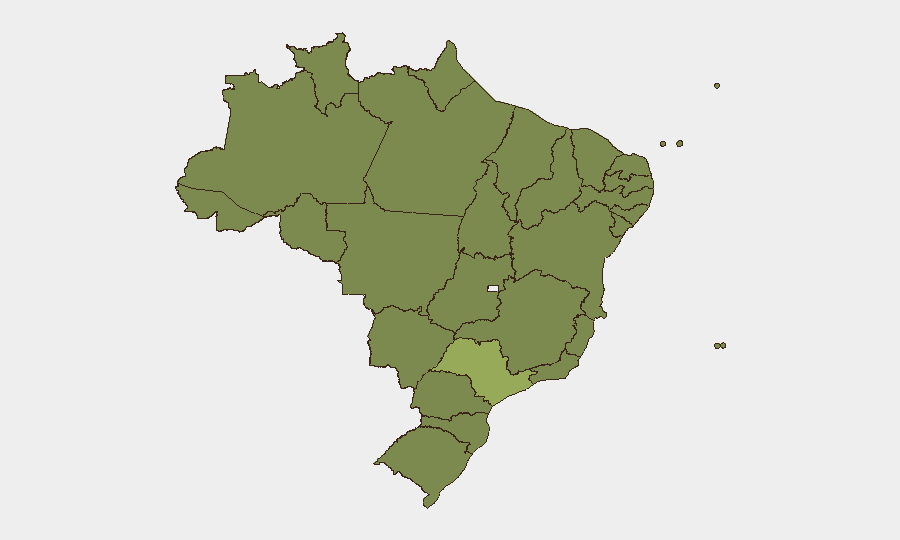
Brazil's composite threat score (37; rank #38 globally) reflects persistent but regionally concentrated security challenges. São Paulo dominates the national risk profile at 56, roughly 1.6× the country average, while Rio de Janeiro and Piauí also exceed the mean substantially. The past 48 hours show elevated operational tempo across federal law enforcement (raids, arrests, cargo interdiction) and localized violence in Rio's north zone, alongside emerging regulatory and infrastructure stressors (prison overcrowding, power-sector downgrade, pension-fund exposure). No nationwide destabilization is evident, but fragmented risk requires sector- and region-specific duty-of-care protocols.
Key Developments
- Rio de Janeiro, Avenida Brasil / Parque União (Zona Norte) – 29 July 2026
Military Police gunfight in early morning left one PMERJ corporal and four suspects dead; Police Civil investigation ongoing. Reflects ongoing gang/organized-crime violence in high-risk north zone.
- BR-153 highway, near Anápolis, Goiás – 29 July 2026
Federal Highway Police arrested two men during Correios truck inspection; one suspect concealed in cargo box. Suspected cargo theft and postal freight adulteration indicates vulnerability in national logistics corridors.
- Multi-state federal operation (four states) – late July 2026
41 search-and-seizure warrants executed in coordinated raids targeting parliamentary-amendment fund irregularities and mobile-device trafficking via Correios; ~18,855 detentions reported in recent related security operations. Signals both institutional corruption risk and federal enforcement intensity.
- Nationwide prison system – alert issued late July 2026
National Council of Justice (CNJ) flagged critical overcrowding and infrastructure deficits, warning of heightened public-security and detention-facility safety risks across the country.
- Brasília (federal pension funds) – last 48 hours
Following Banco Master collapse, regulators imposed portfolio restrictions on public pension-fund creditors, raising financial-stability and long-term social-welfare funding concerns.
- Rio de Janeiro, concert venue (Copacabana area) – 26 July 2026 (reported in last 48h)
Worker fatality during stage construction for Shakira concert; fire brigade response. Highlights occupational safety and large-event infrastructure vulnerabilities.
- Brazil (power sector, Enel Brasil) – reported last 48 hours
Fitch downgraded Enel Brasil credit rating over concession-renewal uncertainty. Signals regulatory and infrastructure risk in critical electricity distribution.
- Federal electoral security – last 48 hours
Brazilian authorities blocked U.S. officials' travel citing election-security concerns. Reflects heightened sensitivity around electoral legitimacy and external scrutiny.
Highest-Risk Areas
São Paulo's composite score of 56 substantially outpaces all other states and the national mean (37), indicating concentrated organized-crime, gang, and criminal-logistics activity. Rio de Janeiro (34.2) and Piauí (34.5) follow; Rio's recent armed clash and long-standing favela-based trafficking networks drive rank, while Piauí's elevation reflects emerging cocaine-transit and illicit-commerce flows. Amazonas (30.3) and Bahia (29.7) remain elevated due to border instability, drug-trafficking infrastructure, and gang presence. Corporate and diplomatic presence in São Paulo and Rio requires granular, sector-specific risk assessment rather than blanket avoidance.
How GeoBit Would Assist
Teams managing Brazil exposure should leverage Intel Sweep and multi-language OSINT (Twitter, Telegram, local news feeds) for real-time detection of violence, trafficking, or regulatory surprises in high-risk states. Network & Actor Analysis and entity extraction identify trafficking syndicates and corruption networks; AOI Monitoring & Early Warning on key logistics nodes (highways, ports, Correios facilities) and prison sites detects escalation early. GIS & Spatial Analysis combined with conflict mapping pinpoints safe routing and venue-security risk in São Paulo and Rio.
7-Day Outlook
Expect continued federal enforcement operations against fund-misuse and trafficking networks; operational tempo may spike before August recess. Rio and São Paulo street violence will remain episodic but localized. Prison infrastructure crisis and power-sector regulatory pressure will progress slowly, creating medium-term rather than acute near-term risk. Electoral sensitivities and international scrutiny are likely to persist through the election cycle.
Highest-Risk Areas — Ranked
| # | State / Region | Risk |
|---|---|---|
| 1 | São Paulo | 56 |
| 2 | Piauí | 34.5 |
| 3 | Rio de Janeiro | 34.2 |
| 4 | Minas Gerais | 33.1 |
| 5 | Amazonas | 30.3 |
| 6 | Bahia | 29.7 |
| 7 | Rondônia | 29.4 |
| 8 | Espírito Santo | 28.3 |
| 9 | Pernambuco | 27.7 |
| 10 | Goiás | 27.7 |
| 11 | Paraná | 26.9 |
| 12 | Santa Catarina | 26.9 |
Sources
Previous Daily Briefs
A new Brazil brief is written every day — each with its own risk map and downloadable CSV. Here's the last week; use the calendar to go further back.
📅 Browse every day by calendar →
Highlighted days have a brief. Tap a day for that day's map & analysis, or “csv” for that day's dataset ($5).
Atlas — our AI intelligence desk — emails them this snapshot personally. Nothing else, no list.