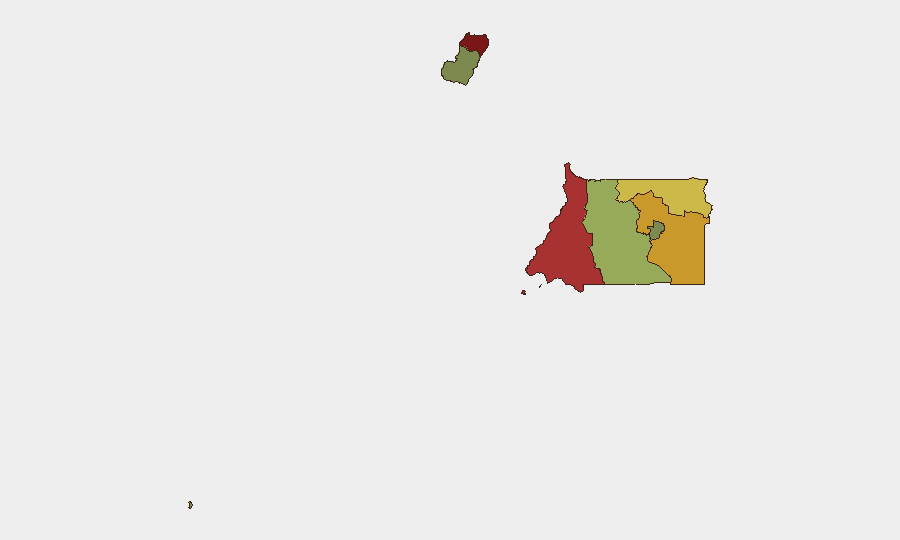
Situation Summary
Equatorial Guinea remains a low-frequency security environment globally (rank #160), with no verified discrete incidents reported in the last 24–48 hours. Underlying vulnerabilities—including documented police conduct toward migrant populations, constrained civil-liberties space, and localized administrative tensions—persist but have not escalated into acute incidents as of 18 August 2026. The threat profile is driven primarily by chronic rather than event-driven risk, concentrated in northern and coastal provinces.
Key Developments
No new verified incidents have been confirmed in the 24–48 hour window (17–18 August 2026). Web research and open-source feeds show no discrete security, conflict, crime, infrastructure, or travel-risk events that meet the threshold for inclusion in this brief.
Relevant background context (outside this window):
- 14 August 2026 (Malabo, Bioko Norte): US deportees held in a hotel continued to report escalating police intimidation, including armed officers entering rooms to pressure departure. This reflects an ongoing vulnerability in the migrant-detention environment but does not represent a new incident as of 17–18 August.
- 13 August 2026 (national): Government engaged in mediation of an internal Seventh-day Adventist Church dispute; primarily administrative, not civil unrest.
Highest-Risk Areas
Bioko Norte (risk 85) and Litoral Province (risk 78) drive the majority of assessed risk, reflecting concentration of state security apparatus, migrant populations, and administrative friction in Malabo and coastal zones. Wele-Nzas Province (72) and Kié-Ntem Province (68) carry elevated risk tied to remote geography, limited governance capacity, and border proximity. Centro Sur and Bioko Sur carry moderate risk; Djibloho (capital administrative zone, risk 15) and Annobón (8) remain comparatively stable. Northern and coastal regions should remain the focus of corporate asset monitoring and duty-of-care protocols.
How GeoBit Would Assist
Intel Sweep and OSINT Fusion would enable continuous, multi-language, multi-platform monitoring of Equatorial Guinea's political, security, and migrant-affairs landscape, surfacing emerging tensions before they crystallize into incidents. AOI Monitoring & Early Warning applied to Malabo (Bioko Norte) and Bata (Litoral) would provide persistent watch over high-risk zones and alert security teams to localized incidents within hours of occurrence. Network & Actor Analysis would map key officials, security-force commanders, and opposition figures, enabling teams to contextualize policy changes or personnel shifts that may signal shifting risk.
7-Day Outlook
No imminent acute security deterioration is forecast. The environment will likely remain characterized by chronic governance and human-rights friction rather than overt conflict or mass civil unrest. Continued monitoring of migrant-detention conditions (particularly in Malabo) and any shifts in central-government messaging or personnel is warranted to detect early signals of policy or security-posture change.
Highest-Risk Areas — Ranked
| # | State / Region | Risk |
|---|---|---|
| 1 | Bioko Norte | 85 |
| 2 | Litoral Province | 78 |
| 3 | Wele-Nzas Province | 72 |
| 4 | Kié-Ntem Province | 68 |
| 5 | Centro Sur Province | 45 |
| 6 | Bioko Sur | 38 |
| 7 | Djibloho | 15 |
| 8 | Annobón Province | 8 |
Sources
Previous Daily Briefs
A new Equatorial Guinea brief is written every day — each with its own risk map and downloadable CSV. Here's the last week; use the calendar to go further back.
- August 16, 2026
- August 14, 2026
- August 12, 2026
- August 10, 2026
- August 8, 2026
- August 6, 2026
- August 5, 2026
📅 Browse every day by calendar →
Highlighted days have a brief. Tap a day for that day's map & analysis, or “csv” for that day's dataset ($5).
Atlas — our AI intelligence desk — emails them this snapshot personally. Nothing else, no list.