Situation Summary
Eswatini remains at a low-to-moderate composite threat level (rank #130 globally; score 9/100) with no corroborated security incidents reported in the last 24–48 hours as of 24 August 2026. Open-source monitoring has identified no discrete events—protests, civil unrest, crime spikes, infrastructure failures, or terrorism—meeting multi-source confirmation thresholds. While the current 24–48h window is quiet, latent risk factors and historical patterns of episodic unrest warrant continued monitoring by organizations with personnel or assets in-country.
Key Developments
No discrete security incidents meeting specificity, recency (last 24–48 hours), and multi-source corroboration criteria were identified in open-source reporting as of 24 August 2026. Monitoring did not surface reports of civil unrest, major crime events, protest activity, or infrastructure disruptions at the country or regional level in this period.
Highest-Risk Areas
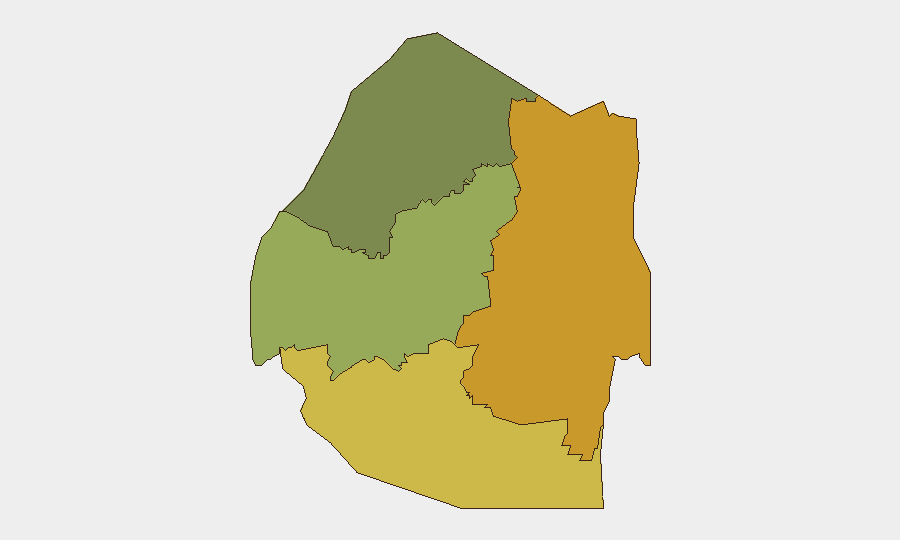
Lubombo Region (risk score 72) and Shiselweni Region (risk score 68) are assessed as the highest-risk sub-national areas, followed by Manzini Region (55) and Hhohho Region (35). The concentration of elevated risk in the southern and eastern regions reflects historical patterns of labor activism, community grievances, and localized unrest in these areas; however, no acute incidents in these zones have been reported in the current 24–48h window. Organizations operating in Lubombo and Shiselweni should maintain heightened situational awareness and contingency protocols relative to Hhohho and central areas.
How GeoBit Would Assist
Security and duty-of-care teams should deploy AOI Monitoring & Early Warning on Lubombo and Shiselweni regions to detect emerging protest activity, roadblocks, or labor action before they escalate to operational impact. Parallel use of Intel Sweep (social media, news feeds, multi-language OSINT) and Sentiment & Temporal Analysis on key keywords (labor unrest, strikes, demonstrations, roadblocks) will provide 48–72 hour lead time on nascent mobilization. For personnel movement, Routing & Network Analysis can identify alternative routes and safe transit corridors if primary infrastructure is disrupted, reducing exposure to unplanned encounters with unrest.
7-Day Outlook
No significant change in threat trajectory is anticipated over the next seven days absent new triggering events (political announcements, labor disputes, or regional spillover). Continued low-level reporting and absence of acute incidents should not be interpreted as absence of risk; monitoring cadence should remain active to detect early warning signals—social media mobilization, transportation disruptions, or localized gathering reports—that typically precede larger events in Eswatini's historical pattern. Organizations should maintain standard travel advisories, staff communication protocols, and asset-protection measures through the outlook period.
Highest-Risk Areas — Ranked
| # | State / Region | Risk |
|---|---|---|
| 1 | Lubombo | 72 |
| 2 | Shiselweni | 68 |
| 3 | Manzini Region | 55 |
| 4 | Hhohho Region | 35 |
Sources
Previous Daily Briefs
A new Eswatini brief is written every day — each with its own risk map and downloadable CSV. Here's the last week; use the calendar to go further back.
- August 22, 2026
- August 20, 2026
- August 17, 2026
- August 15, 2026
- August 13, 2026
- August 11, 2026
- August 9, 2026
📅 Browse every day by calendar →
Highlighted days have a brief. Tap a day for that day's map & analysis, or “csv” for that day's dataset ($5).
Atlas — our AI intelligence desk — emails them this snapshot personally. Nothing else, no list.