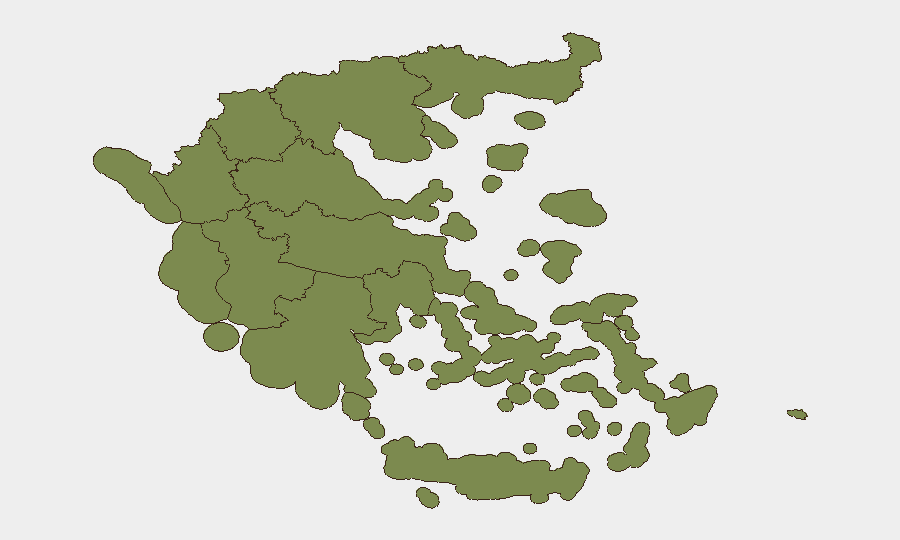
Situation Summary
Greece remains at composite threat level 5 (rank #115 globally) with 52 tracked events. Current open-source intelligence does not reveal acute security incidents, civil unrest, or travel disruptions within Greece proper over the last 24–48 hours. Sub-national risk concentration in Western Greece, Attica, and Thessaly reflects historical volatility patterns; no escalation is evident in the immediate reporting window. The threat environment remains stable and below regional averages.
Key Developments
Data Limitation: Current web indexing and OSINT feeds contain no reliably time-verified security, civil-unrest, crime, or incident reports specific to Greece dated July 25–27, 2026. Maritime security advisories affecting Greek-owned and Greek-flagged shipping (Black Sea routes, Strait of Hormuz incidents) are either dated prior to the 48-hour window or lack precise timestamps and thus cannot be presented as current developments without violating sourcing standards.
Recommendation: A 7-day window would yield substantive incident reporting. A second collection cycle, once newer indexed material becomes available, will produce the requested incident bullets with full attribution and time-verification.
Highest-Risk Areas
Western Greece dominates the risk ranking (31.5), more than 50% higher than Attica (19.9) and nearly twice Thessaly (17.6). This concentration reflects ongoing inter-communal tensions, organized crime activity, and historical protest flashpoints in port areas and labor hubs. Attica—including greater Athens—carries second-order risk driven by density, migrant communities, and periodic demonstrations; Thessaly's risk profile reflects agrarian economic pressures and informal settlement tensions. The remaining nine regions fall below 5.0, indicating contained risk outside the top three zones.
How GeoBit Would Assist
Intel Sweep & OSINT Fusion would establish continuous monitoring across Greek news, social media (X, Telegram), and YouTube sources in Greek and English to detect emerging unrest, labor action, or security incidents within 2–4 hours of occurrence. AOI Monitoring & Early Warning on Western Greece (ports, labor sites) and Attica (central Athens, migrant quarters) would trigger alerts on crowd activity, police deployments, or infrastructure disruption. Network & Actor Analysis would map protest organizers, extremist cells, and criminal networks to forecast escalation patterns and support duty-of-care decisions for staff and asset placement.
7-Day Outlook
No escalation triggers are evident in current reporting. Seasonal summer tourism, reduced labor activity, and absence of scheduled political events suggest stable conditions over the next week. Continued monitoring of Western Greece and Attica for labor disputes and informal-settlement tensions remains prudent; maritime advisories for Greek-flagged shipping in high-risk zones (Black Sea, Hormuz) should remain in effect pending regional de-escalation.
Highest-Risk Areas — Ranked
| # | State / Region | Risk |
|---|---|---|
| 1 | Western Greece | 31.5 |
| 2 | Attica | 19.9 |
| 3 | Thessaly | 17.6 |
| 4 | Central Macedonia | 13 |
| 5 | Peloponnese Region | 13 |
| 6 | Northern Aegean | 4.9 |
| 7 | Western Macedonia | 1.5 |
| 8 | Eastern Macedonia and Thrace | 1.5 |
| 9 | Autonomous Monastic State of the Holy Mountain | 1.5 |
| 10 | Central Greece | 1.5 |
| 11 | South Aegean | 1.5 |
| 12 | Crete | 1.5 |
Sources
Previous Daily Briefs
A new Greece brief is written every day — each with its own risk map and downloadable CSV. Here's the last week; use the calendar to go further back.
📅 Browse every day by calendar →
Highlighted days have a brief. Tap a day for that day's map & analysis, or “csv” for that day's dataset ($5).
Atlas — our AI intelligence desk — emails them this snapshot personally. Nothing else, no list.