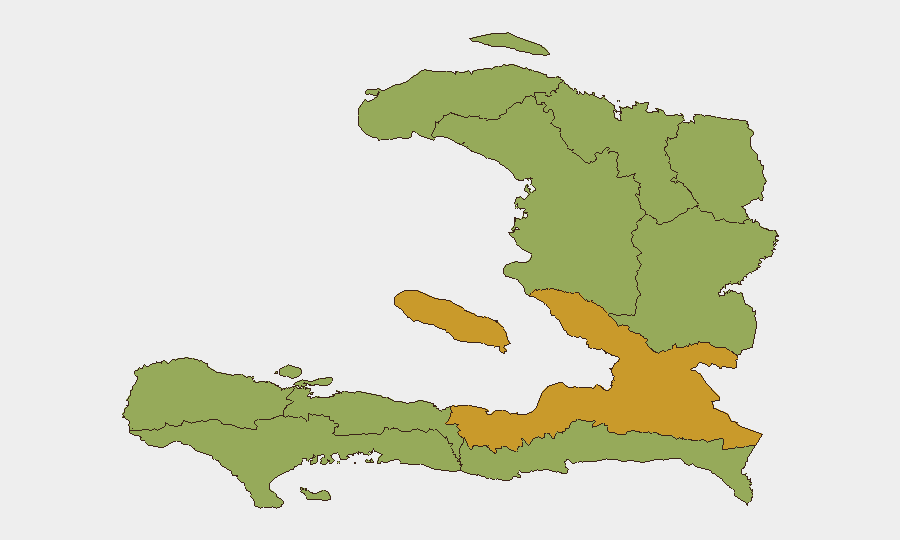
Situation Summary
Haiti remains in acute crisis, ranked #31 globally with a composite threat score of 60 driven primarily by gang warfare and political instability. The assassination of the President on 28 July 2026—confirmed across multiple GeoBit event signals—marks a critical inflection point that has triggered diplomatic tensions (including threats between Haiti and the United States) and heightened internal security volatility. With 102 tracked events and nearly 1.5 million internally displaced persons nationwide, the security environment is deteriorating rapidly, particularly in Port-au-Prince and the western corridor.
Key Developments
- Port-au-Prince, Delmas 31 – 24 July 2026: Senior Education Ministry official Ecclésiaste Thélémaque, chief of staff to the Minister of National Education, was kidnapped early Friday morning near his residence; no ransom demand has been reported yet, signaling possible political rather than purely criminal motivation.
- Port-au-Prince, Delmas 33 – 25 July 2026: Businessman Clifford Handal and his father came under sustained heavy gunfire during an attempted kidnapping near Peace Hospital; their armored vehicle escaped, indicating organized targeting of high-net-worth individuals despite security measures.
- Kenscoff, Viard area – 26 July 2026: The Haitian National Police (PNH) conducted a drone-supported counter-terrorism operation against an armed group, resulting in 6 suspects killed, multiple wounded, and seizure of a heavy-caliber weapon following civilian reports.
- National Level – 28 July 2026: Presidential assassination confirmed; concurrent public statements and threats issued by Haiti toward the United States reflect acute political fracture and potential for unpredictable state actor behavior.
- Nippes Department – 26–27 July 2026: The PNH deployed 30 newly graduated officers from the 36th class to reinforce departmental police stations, indicating acknowledged capacity gaps in secondary departments beyond Port-au-Prince.
- Diplomatic / Investigative – 27–29 July 2026: Florida-based and U.S. federal investigation signals alongside Haiti-based inquiries suggest coordination on presidential assassination investigation; outcomes will likely shape diplomatic posture and potential external intervention.
Highest-Risk Areas
De l'Ouest Department (risk 71.8) is the dominant driver of national threat, more than 1.5 points above the second-ranked Sud Department (46.8), reflecting gang consolidation and political violence concentrated in the Port-au-Prince metropolitan area and southwestern corridor. The remaining eight departments cluster at 41.8, indicating broadly distributed secondary risk from internal displacement, gang territorial conflict, and now presidential-succession instability. Port-au-Prince's Delmas districts and Cité Soleil remain focal points for kidnapping and armed group activity; Sud and Artibonite departments sustain high displacement and resource competition among gang networks.
How GeoBit Would Assist
Organizations with personnel or assets in Haiti should prioritize Intel Sweep and X/Twitter OSINT for real-time monitoring of political statements, gang movements, and police operations; AOI Monitoring with early-warning alerts on Delmas, Cité Soleil, and Sud department hotspots; and Routing & Network Analysis to identify alternative movement corridors and safe transit windows as Port-au-Prince security posture shifts post-assassination. Conflict & Military force structure tracking and regime-stability assessment will clarify succession scenarios and potential for state fragmentation or external intervention.
7-Day Outlook
The presidential assassination and resulting diplomatic tensions create acute uncertainty over Haiti's near-term governance, international relations, and security force posture. Kidnappings of high-profile civilians will likely accelerate in the absence of central authority; police operations may become more aggressive or unpredictable. Organizations should expect worsening mobility restrictions, heightened extortion demands, and possible temporary closure of key infrastructure in Port-au-Prince during any succession or transition period.
Highest-Risk Areas — Ranked
| # | State / Region | Risk |
|---|---|---|
| 1 | de l'Ouest Department | 71.8 |
| 2 | Sud Department | 46.8 |
| 3 | Grande-Anse Department | 41.8 |
| 4 | Nippes Department | 41.8 |
| 5 | Nord-Ouest Department | 41.8 |
| 6 | Artibonite Department | 41.8 |
| 7 | Nord Department | 41.8 |
| 8 | Nord-Est Department | 41.8 |
| 9 | Centre Department | 41.8 |
| 10 | Sud-Est Department | 41.8 |
Sources
Previous Daily Briefs
A new Haiti brief is written every day — each with its own risk map and downloadable CSV. Here's the last week; use the calendar to go further back.
📅 Browse every day by calendar →
Highlighted days have a brief. Tap a day for that day's map & analysis, or “csv” for that day's dataset ($5).
Atlas — our AI intelligence desk — emails them this snapshot personally. Nothing else, no list.