Situation Summary
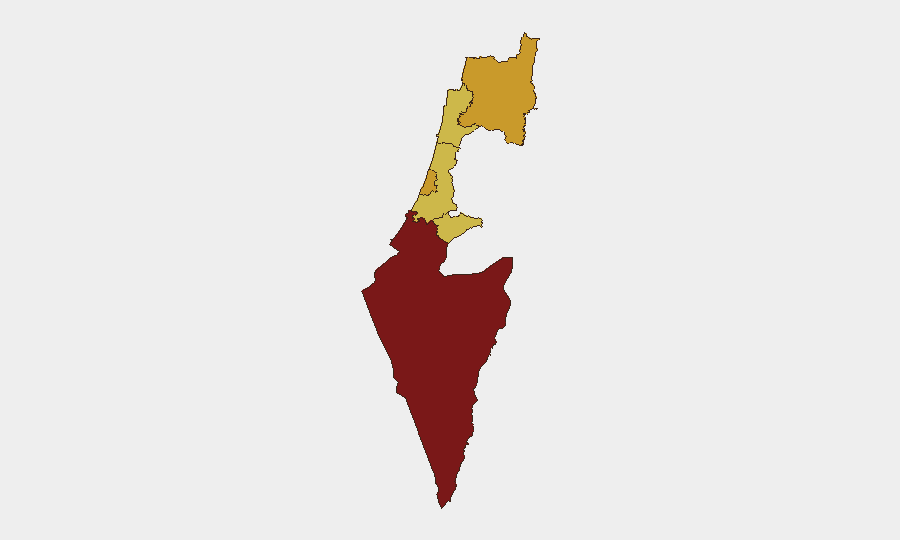
Israel remains in active multi-front conflict with sustained military operations in Gaza and escalating cross-border hostilities with Hezbollah in Lebanon and southern Syria. Active combat, airstrikes, rocket fire, and ground operations across the South and North Districts are driving Israel's global threat ranking (#7, composite score 100). No de-escalation pathway is evident; Israeli leadership has publicly committed to indefinite security-zone presence in Lebanon, Gaza, and Syria, signaling continued kinetic activity over the near term.
Key Developments
- South District / Gaza Strip (June 27–28): Israeli air and artillery strikes continued across multiple Gaza locations, including previously designated "safe zones," with Gaza health authorities reporting at least 24 killed and 60 injured in 24 hours. Simultaneously, localized anti-Hamas protests emerged in Gaza neighborhoods—rare public dissent during active hostilities—indicating internal civilian friction alongside external conflict.
- Southern Lebanon / Nabatieh area (June 28): Israeli airstrikes targeted Nabatieh town and adjacent villages following reported Hezbollah rocket or mortar fire into the Israeli security zone. Lebanese sources documented civilian casualties and structural damage to residential areas, consistent with pattern of cross-border escalation.
- IDF security zone, southern Lebanon (night of June 27–28): The IDF reported a ground clash with Hezbollah fighters that resulted in the death of Captain David Hazut (21, Ashkeleton) and one wounded Israeli soldier. Follow-up Israeli strikes in southern Lebanon and southern Syria targeted armed operatives killed in the engagement.
- Northern Israel border communities (June 27–28): Sustained cross-border fire between Israeli positions and Hezbollah, including rocket and anti-tank fire toward northern Israeli settlements and Israeli counter-shelling and air responses. Border communities in the North District remain under active threat.
- West Bank, Hebron (June 27): Israeli settlers, accompanied by armed personnel, entered a mosque during prayers, disrupted services, and hung Israeli flags. The incident elevated localized civil-unrest risk in Hebron and reflects broader settlement-related tensions in the West Bank.
- Political / Strategic Signal (June 27–28): Prime Minister Netanyahu publicly reaffirmed Israel's intent to maintain security zones in Lebanon, Syria, and Gaza indefinitely, with no fixed withdrawal timeline pending disarmament of Hezbollah and other groups. This statement signals sustained forward military presence and absence of near-term de-escalation.
- Lebanon-Israel Framework (June 27–28): Israeli officials announced a pilot disarmament and Lebanese Army transfer program for designated "Yellow Line" border areas, while confirming the IDF will retain its broader security zone for the foreseeable future. The framework does not presage near-term reduction in military operations or movement restrictions.
Highest-Risk Areas
South District (risk 100) and North District (risk 72.4) dominate the threat landscape, driven by active conventional military operations and cross-border fire. South District risk is sustained by ongoing Gaza strikes and ground operations; North District risk is driven by Hezbollah rocket and anti-tank fire and Israeli counter-operations in Lebanon and Syria. Tel Aviv District (72.7), Jerusalem (70), and Haifa (70) carry elevated secondary risk from broader conflict spillover, civil unrest, and indirect-fire reach. The Center District, though lower-ranked (70.2), remains vulnerable to secondary effects and protest activity.
How GeoBit Would Assist
Security teams should employ persistent AOI (Area-of-Interest) Monitoring & Early Warning across South and North Districts to track airstrikes, artillery, and movement in real time. Multi-language OSINT fusion—combining X/Twitter, Telegram, Lebanese and Israeli military statements, and Gaza health authority reports—provides rapid corroboration of incidents and civilian impact. GIS & Spatial Analysis paired with Conflict & Military battle mapping enables route planning around active strike zones and identification of safer transit corridors for personnel and assets in Tel Aviv, Jerusalem, and Haifa.
7-Day Outlook
Cross-border fire and airstrikes are likely to persist through early July given the absence of ceasefire negotiation signals and Netanyahu's public commitment to indefinite security zones. North District and South District remain acute risk zones; secondary spillover risk (civil unrest, protest, indirect fire) in urban centers (Tel Aviv, Jerusalem, Haifa) warrants continuous monitoring. Duty-of-care teams should anticipate sustained operational restrictions and elevated incident frequency in border regions.
Highest-Risk Areas — Ranked
| # | State / Region | Risk |
|---|---|---|
| 1 | South District | 100 |
| 2 | Tel-Aviv District | 72.7 |
| 3 | North District | 72.4 |
| 4 | Center District | 70.2 |
| 5 | Haifa District | 70 |
| 6 | Jerusalem District | 70 |
Sources
Previous Daily Briefs
A new Israel brief is written every day — each with its own risk map and downloadable CSV. Here's the last week; use the calendar to go further back.
📅 Browse every day by calendar →
Highlighted days have a brief. Tap a day for that day's map & analysis, or “csv” for that day's dataset ($5).