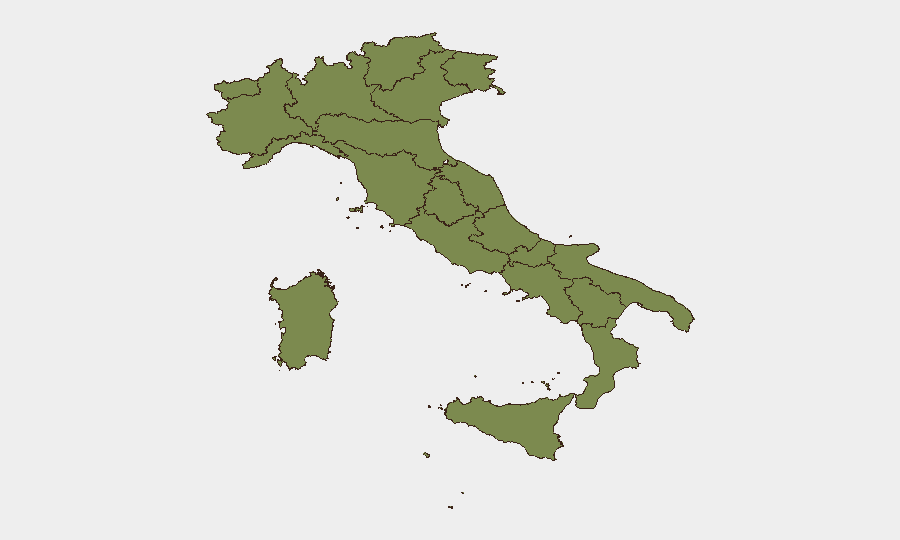
Situation Summary
Italy faces elevated near-term security risk driven by two concurrent flashpoints: custodial death investigation and infrastructure-protest violence in the north, both triggering violent street responses and ongoing law-enforcement engagement. Lazio (primarily Rome) dominates the composite risk ranking at 32.3, reflecting political tensions, government scrutiny, and demonstration activity; Lombardy (11.4) and Trentino–Alto Adige/Südtirol (6.6) contribute secondary volatility. Overall threat remains contained but trajectory shows momentum in labor/protest mobilization and police-accountability contestation.
Key Developments
- Bologna, Emilia-Romagna (July 30–31, 2026): Rioting following death of 42-year-old man in police custody; 11+ injured, municipal vehicle torched, extensive vandalism. Authorities opened manslaughter investigation into six individuals (two police officers, four ambulance staff) and deployed reinforced units. Political fallout centers on new "45-bis" police-protection procedure under recent Security Decree, triggering fresh demonstrations.
- Val di Susa, Chiomonte, Piedmont (July 30, 2026): Hundreds of masked anti-TAV activists attacked police at Turin–Lyon high-speed rail construction sites with stones, fireworks, and Molotov cocktails. Over 60 officers wounded; two Carabinieri vans set alight. A32 motorway (Oulx–Susa Est) temporarily closed and rail services suspended between Bussoleno and Borgone due to protesters on tracks.
- Val di Susa, Piedmont (July 31, 2026): Four foreign nationals arrested in connection with "Blocco Nero"/Black Bloc role in July 30 TAV site attack; investigations ongoing into public-order disturbances and infrastructure damage.
- Rome, Lazio (August 1, 2026): Demonstration/rally activity recorded in central Rome on current date; concurrent investigate event signals suggest government or institutional scrutiny underway.
- Nationwide (July 30–August 1, 2026): Presidential and ministerial public statements issued; government investigation activity noted alongside citizen/deputy-level rejection signals, indicating political contestation at multiple levels over police accountability and security legislation.
Highest-Risk Areas
Lazio dominates at 32.3 due to concentration of government institutions, political visibility, and demonstration frequency in Rome; current rally activity and presidential/ministerial statements underscore ongoing civil-political friction. Lombardy (11.4) reflects Milan's scale and economic sensitivity; Trentino–Alto Adige/Südtirol (6.6) carries transnational border and regional-autonomy dimensions. The northern Piedmont corridor—not separately ranked but hosting Val di Susa clashes—demonstrates that infrastructure-protest flashpoints can generate acute, rapid violence despite lower baseline regional scores.
How GeoBit Would Assist
Security teams managing Italy exposure would use AOI Monitoring & Early Warning on Lazio (Rome), Val di Susa, and Bologna to track demonstration scheduling and pre-event social-media signals (X/Telegram OSINT); Routing & Network Analysis to pre-plan staff or asset movement around A32, rail, and central-city closures; and Event Feed & Sentiment Analysis to detect shifts in anti-police or anti-TAV mobilization momentum before street activation.
7-Day Outlook
Momentum in anti-police accountability protests and anti-TAV direct action suggests demonstration frequency will remain elevated through early August, particularly in Rome, Emilia-Romagna, and the Val di Susa corridor. Secondary strikes or flash gatherings are likely with minimal notice; transport disruption risk remains elevated in north-central corridors.
Highest-Risk Areas — Ranked
| # | State / Region | Risk |
|---|---|---|
| 1 | Lazio | 32.3 |
| 2 | Lombardy | 11.4 |
| 3 | Trentino – Alto Adige/Südtirol | 6.6 |
| 4 | Campania | 5.2 |
| 5 | Veneto | 3.4 |
| 6 | Calabria | 3 |
| 7 | Emilia-Romagna | 2.7 |
| 8 | Umbria | 2.7 |
| 9 | Apulia | 2.7 |
| 10 | Sicily | 2.7 |
| 11 | Sardinia | 2.3 |
| 12 | Tuscany | 2.3 |
Sources
Previous Daily Briefs
A new Italy brief is written every day — each with its own risk map and downloadable CSV. Here's the last week; use the calendar to go further back.
📅 Browse every day by calendar →
Highlighted days have a brief. Tap a day for that day's map & analysis, or “csv” for that day's dataset ($5).
Atlas — our AI intelligence desk — emails them this snapshot personally. Nothing else, no list.