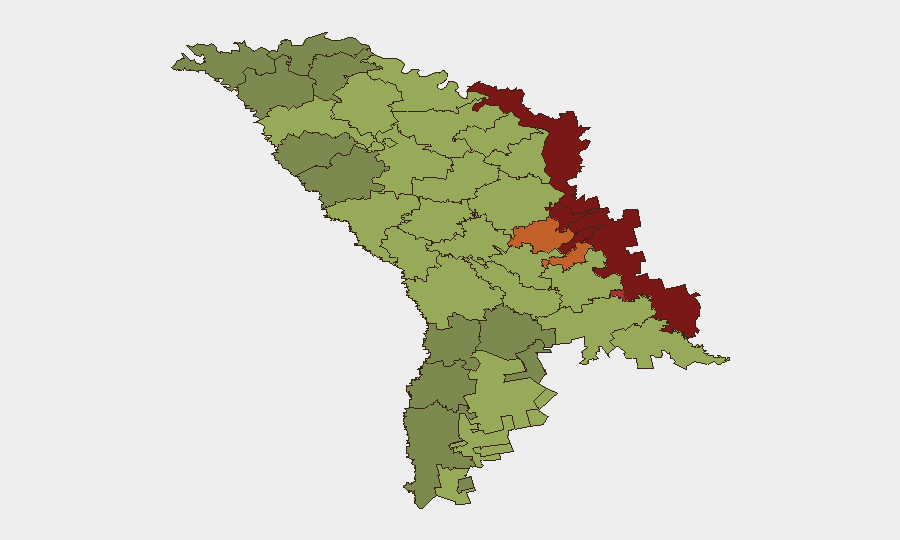
Situation Summary
Moldova faces a confluence of resource-scarcity pressures and external security incursions in late September 2026. A nationwide state of emergency for energy and water supplies (effective 26 September) reflects critically low river levels and rising regional fuel costs, while repeated Russian drone intrusions into Moldovan airspace during attacks on Ukraine have triggered public warnings and diplomatic protest. No mass casualties have been reported, but the normalization of airspace violations and the vulnerability of supply chains underscore persistent regional instability, particularly in areas near Transnistria and the Dniester corridor.
Key Developments
- 24 September — Șoldănești district (Vadul Rașcov), 07:45 local time: Residents reported loud explosion-like noises coinciding with reported Russian drone activity over Moldovan airspace during a major offensive against Ukraine; no confirmed impact assessed in available reporting.
- 24 September — Florești district: Authorities reported explosion-like sounds and issued public warnings against approaching unidentified objects; police directed residents to contact emergency services.
- 24 September — Camenca area (Transnistrian left bank): Preliminary Moldovan reporting indicated one suspected drone-related explosion; no casualties reported.
- 23 September — nationwide: Parliament approved a 60-day state of emergency covering energy and water supplies, citing critically low Dniester and Prut river levels and elevated regional energy costs; measure took effect 26 September.
- 23 September — nationwide (energy sector): State energy company Energocom requested a 29% increase in regulated household natural-gas prices (from ~20.30 lei to ~26.24–26.25 lei/m³), to be reviewed by the energy regulator.
- 25 September — OSCE Permanent Council: Moldova formally condemned Russia's organization of Russian State Duma elections in the Transnistrian region (18–20 September) without Chișinău's consent, raising concerns over de facto territorial governance.
- 24 September — Moldova–Romania bilateral: Parliament ratified a strategic transport-infrastructure agreement with Romania, enhancing cross-border connectivity.
- 27 September — United Nations General Assembly: Prime Minister Vasile Tofan stated that repeated Russian drone incursions risk becoming normalized and called for international condemnation and deterrence measures.
- 26 September — nationwide: Energy and hydrological state-of-emergency powers entered into force, expanding government authority over water and electricity supply responses.
- 29 September — northern Moldova (ongoing): Authorities continued investigation of suspected Russian drone activity linked to 24 September airspace violations; no new casualties reported, but warnings against debris/unexploded ordnance remained active.
Highest-Risk Areas
Transnistria and the left-bank Dniester corridor dominate the risk landscape, with the Administrative-Territorial Units of the Left Bank (risk 85), Dubăsari (82), and Bender (79) significantly elevated due to unresolved territorial status, Russian military presence, and susceptibility to cross-border spillover. Nearby districts—Criuleni (75), Rezina (58), and Căușeni (53)—reflect proximity to the dispute zone and repeated drone-passage corridors. Chișinău itself (49) faces moderate systemic risk from energy supply disruption and administrative strain, while peripheral regions along the Prut (Taraclia, Ștefan Vodă) remain vulnerable to resource scarcity and border-adjacent pressures.
How GeoBit Would Assist
Security teams should deploy AOI Monitoring & Early Warning on the Transnistrian border zone and key infrastructure corridors (energy plants, water treatment, transport hubs) to detect drone activity and supply-chain disruptions in near-real time. OSINT fusion, X/Twitter & Telegram intelligence, and multi-language search enable continuous tracking of official emergency declarations, energy-price announcements, and cross-border incident reporting. Conflict & Military tracking and satellite imagery analysis support assessment of Russian drone patterns and damage assessment, while routing & network analysis helps identify alternative supply and evacuation pathways during prolonged supply disruptions.
7-Day Outlook
Energy-price negotiations and state-of-emergency administration will likely dominate headlines through early October, with immediate focus on water-level recovery and power-supply contracts. Russian drone activity over Moldova is expected to persist as long as Ukraine operations continue; further airspace violations and potential debris incidents in northern and left-bank districts remain plausible. Diplomatic pressure at the OSCE and UN may intensify, but without material changes to Russian operations or additional sanctions, the normalization of incursions will probably continue.
Highest-Risk Areas — Ranked
| # | State / Region | Risk |
|---|---|---|
| 1 | Administrative-Territorial Units of the Left Bank of the Dniester | 85 |
| 2 | Dubăsari | 82 |
| 3 | Bender | 79 |
| 4 | Criuleni | 75 |
| 5 | Rezina | 58 |
| 6 | Taraclia | 55 |
| 7 | Gagauzia | 54 |
| 8 | Căușeni | 53 |
| 9 | Soroca | 52 |
| 10 | Ștefan Vodă | 51 |
| 11 | Orhei | 50 |
| 12 | Chișinău | 49 |
Sources
Previous Weekly Briefs
A new Moldova brief is written every Monday, covering the week — each with its own risk map and downloadable CSV. Use the calendar to go further back.
- September 22, 2026
- September 15, 2026
- September 8, 2026
- September 2, 2026
- August 31, 2026
- August 29, 2026
- August 26, 2026
📅 Browse past briefs by calendar →
Highlighted days have a brief. Tap a day for that day's map & analysis, or “csv” for that day's dataset ($5).
Atlas — our AI intelligence desk — emails them this snapshot personally. Nothing else, no list.