Situation Summary
Nepal is experiencing a period of rising civil unrest characterized by scattered protests, communal tensions, and small-scale police interventions, primarily concentrated in the capital. The past 24–48 hours have seen brief street clashes, inflammatory rhetoric from government and opposition figures, and visible infrastructure damage from recent disturbances, alongside increased security deployments across urban centers. The security environment remains volatile but not yet at critical mass; localized incidents have not coalesced into nationwide coordinated action. The trajectory suggests continued friction between state institutions, monarchist and youth activist groups, and periodic communal provocations, with police resource constraints (evident in reduced traffic enforcement) potentially affecting sustained order maintenance.
Key Developments
- Kathmandu, Bagamati Province – July 11, 2026
Brief street scuffle between police and demonstrators attempting to move protests into roadway; police intervention contained the situation with no major injuries reported.
- Kathmandu, Bagamati Province – July 11, 2026
Observable infrastructure damage remains evident in the city center, including burned-out Parliament, court, and police buildings; heightened security presence and caution noted around political gatherings.
- Kathmandu Metropolitan City – July 11, 2026
Death of traffic officer Ganesh Nepali reported to have sparked local security concerns and reduced police visibility in central Kathmandu due to lapsed parking enforcement and increased illegal parking in busy commercial areas.
- Unspecified district, Nepal – July 11, 2026
Home Minister Sudan Gurung announced ongoing district-by-district security tour in response to rising unrest from monarchist groups and youth activists; framed as law-and-order and political-stability mission.
- Unspecified location, Nepal – July 11, 2026
Communal tension reported following alleged stone attack on Hindu wedding procession by unidentified individuals; social media calls for increased police presence and community mediation highlight escalation risk.
- Multiple urban centers, Nepal – July 11, 2026
Social media and mainstream commentary describe "rising unrest" with increased frequency of small demonstrations and corresponding police crowd-control deployments across several districts.
Highest-Risk Areas
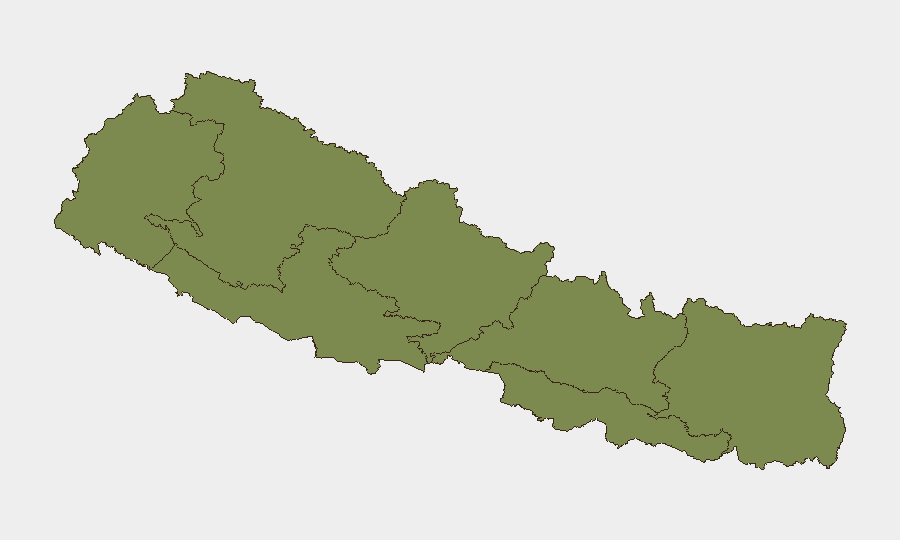
Bagamati Province (composite risk 6.3 times the national average) dominates the threat landscape, driven by Kathmandu's concentration of state institutions, political activism, and communal tensions. The capital's role as the seat of Parliament, judiciary, and national media makes it a focal point for both protest activity and government response, amplifying visibility and political stakes for each incident. Gandaki Province registers the second-highest risk (6.3), but at substantially lower magnitude; remaining provinces show minimal comparative risk. Corporate and NGO assets concentrated in Kathmandu should assume elevated exposure to demonstration spillover, traffic disruption, and police operations; secondary urban centers face lower but non-negligible risk if unrest franchises or communal grievances spread.
How GeoBit Would Assist
Security teams should deploy AOI Monitoring & Early Warning on Kathmandu's central districts (Parliament, courts, police headquarters, major public squares) and secondary urban centers to detect gathering patterns and police mobilization ahead of announced protests. Network & Actor Analysis and Sentiment & Temporal Analysis (via X, Telegram, Facebook, and YouTube feeds) would enable real-time tracking of monarchist and youth-activist messaging, coordination signals, and communal-tension rhetoric to anticipate flashpoint locations and timing. Routing & Network Analysis supports contingency planning for personnel movement and asset repositioning around protest zones and police cordons.
7-Day Outlook
Unrest is likely to remain episodic and localized over the next week, with sporadic small demonstrations, police presence, and communal friction rather than coordinated large-scale action. Home Minister's district tour may temporarily reduce visible tensions through political engagement, but underlying grievances among monarchist and youth groups are unlikely to resolve rapidly. Kathmandu and Bagamati Province will remain the primary exposure zones; organizations with dispersed staff should maintain flexible movement protocols and monitor official security alerts daily.
Highest-Risk Areas — Ranked
| # | State / Region | Risk |
|---|---|---|
| 1 | Bagamati Province | 31.5 |
| 2 | Gandaki Province | 6.3 |
| 3 | Sudurpashchim Province | 1.5 |
| 4 | Karnali Province | 1.5 |
| 5 | Lumbini Province | 1.5 |
| 6 | Koshi Province | 1.5 |
| 7 | Madhesh Province | 1.5 |
Sources
Previous Daily Briefs
A new Nepal brief is written every day — each with its own risk map and downloadable CSV. Here's the last week; use the calendar to go further back.
📅 Browse every day by calendar →
Highlighted days have a brief. Tap a day for that day's map & analysis, or “csv” for that day's dataset ($5).
Atlas — our AI intelligence desk — emails them this snapshot personally. Nothing else, no list.