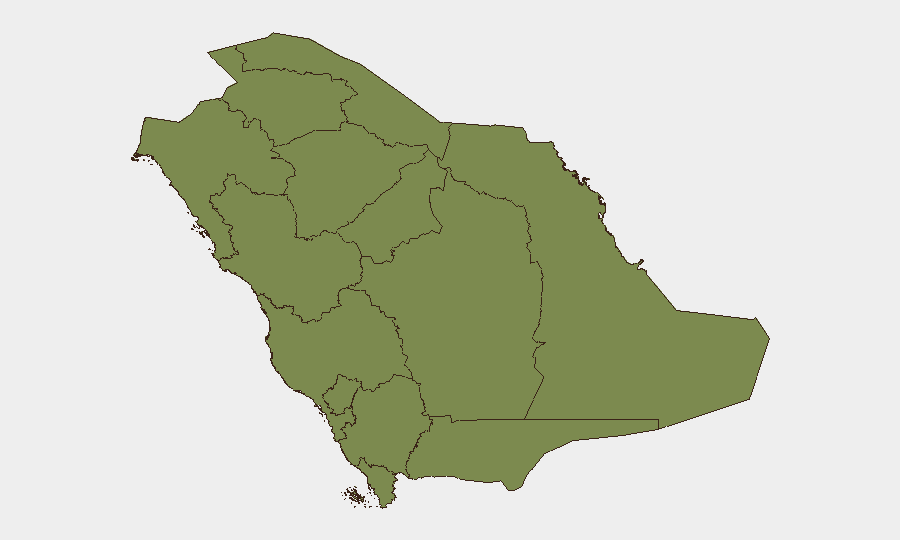
Situation Summary
Saudi Arabia faces an acute escalation in regional conflict risk following coordinated drone attacks on critical energy infrastructure in Riyadh and the Eastern Province on 31 July–1 August 2026. The Kingdom's air defenses have intercepted multiple attack vectors attributed to Iran-backed militias operating from Iraqi territory, with concurrent maritime threats from Houthi actors in the Red Sea targeting Saudi vessels and energy transport. The public attribution and explicit Saudi defense statements signal elevated political tension with Iran and Iraq, compounded by temporary aviation disruptions at King Khalid International Airport; the overall threat environment is moving from baseline operational risk toward acute incident response mode.
Key Developments
- Eastern Province drone interceptions (31 Jul–1 Aug, Dammam/Jubail/Ras Tanura): Saudi air defenses destroyed multiple drones targeting oil facilities; Defense Ministry publicly attributed attacks to Iran-backed militias from Iraqi territory. Civil Defense alerts were issued and lifted in Dammam.
- Riyadh oil-facility drone attacks (31 Jul–1 Aug): Air-defense interceptions of drones targeting Riyadh energy infrastructure; Defense Ministry reserved right to respond unilaterally, signaling operational escalation authority.
- King Khalid International Airport suspension (1 Aug, Riyadh): Flight operations and key runways temporarily closed; NOTAMs issued and aircraft rerouted following reported explosions near airport perimeter. Social-media reports cite smoke plumes; no official casualty or damage confirmation yet.
- Red Sea maritime incident (31 Jul–1 Aug, off Saudi coast): Saudi-flagged vessel NCC MASA sustained minor hull damage; Transport General Authority and Coalition attributed attack to Houthi forces, framed as maritime-law violation.
- Yanbu Civil Defense alert (31 Jul–1 Aug, Red Sea coast): Danger alert issued and rapidly cleared; correlated with Houthi claims of attacks on Saudi oil tankers and crude-transport infrastructure in the region.
- Regional military escalation (31 Jul–1 Aug, multi-location): GeoBit event signals show multiple conventional military-force exchanges involving Saudi Arabia vs. Iran, Syria, Iraq, and internal militant actors within the 24-hour period, indicating broader regional volatility beyond drone/maritime incidents alone.
Highest-Risk Areas
Riyadh Region dominates the sub-national ranking (33.8) by a factor of 1.7 over second-place Medina Province (19.5), reflecting concentration of national security, government, and energy-sector targets in and around the capital. The Eastern Province (10.2) follows, driven by critical Aramco facilities in Dammam, Jubail, and Ras Tanura—the Kingdom's primary crude and petrochemical infrastructure. Both regions are now direct targets in active drone-attack sequences; Medina's elevated score likely reflects historic pilgrimage-security and internal-stability concerns. Remaining provinces show minimal differentiation (3.8–5.7), indicating geographically dispersed but lower-intensity baseline risk; the Red Sea coastal governorates (Yanbu, Jazan) merit elevated monitoring due to concurrent maritime threats.
How GeoBit Would Assist
A security team protecting personnel or assets in Saudi Arabia should deploy persistent AOI Monitoring & Early Warning on Riyadh, Eastern Province energy clusters, and King Khalid Airport to detect air-defense activity, infrastructure damage, or aviation disruptions in real time. Conflict & Military mapping and force-structure tracking would provide granular visibility into Saudi and Iranian/Iraqi proxy movements and air-defense posture. Maritime & Aviation tracking, combined with OSINT fusion (X/Telegram sentiment analysis, Defense Ministry statements, and Houthi-claim corroboration), enables early detection of attack patterns and operational windows for supply-chain and personnel-movement planning.
7-Day Outlook
The trajectory over the next week is likely escalatory unless a diplomatic or ceasefire signal emerges. Saudi Arabia's public reservation of response rights, combined with continued drone and maritime attack attempts, creates high probability of Saudi counterstrikes against Iraqi or Iranian targets within 3–7 days. Aviation, port, and energy-sector operations remain disruption-prone; duty-of-care teams should assume intermittent infrastructure downtime and pre-plan alternative logistics and evacuation routes.
Highest-Risk Areas — Ranked
| # | State / Region | Risk |
|---|---|---|
| 1 | Riyadh Region | 33.8 |
| 2 | Medina Province | 19.5 |
| 3 | Eastern Province | 10.2 |
| 4 | 'Asir Province | 5.7 |
| 5 | Northern Borders Province | 3.8 |
| 6 | Makkah Region | 3.8 |
| 7 | Al-Bahah Province | 3.8 |
| 8 | Jazan Province | 3.8 |
| 9 | Najran Region | 3.8 |
| 10 | Tabuk Province | 3.8 |
| 11 | Al Jawf Region | 3.8 |
| 12 | Ḥa'il Province | 3.8 |
Sources
Previous Daily Briefs
A new Saudi Arabia brief is written every day — each with its own risk map and downloadable CSV. Here's the last week; use the calendar to go further back.
📅 Browse every day by calendar →
Highlighted days have a brief. Tap a day for that day's map & analysis, or “csv” for that day's dataset ($5).
Atlas — our AI intelligence desk — emails them this snapshot personally. Nothing else, no list.