Situation Summary
Sri Lanka's security environment remains moderate but has deteriorated sharply over the past 48 hours due to major prison disturbances and related civil unrest. Two major custodial facilities—Mahara Prison (Gampaha District, ~15 km from Colombo) and Negombo Prison (Western Province)—have experienced severe rioting, fires, and inter-prisoner violence, resulting in at least 27 confirmed deaths and dozens injured. Police and military responses have included localized curfews, helicopter and drone deployment, and heightened security across the national prison system; the incidents reflect systemic overcrowding and management challenges that pose indirect risks to corporate operations, supply chains, and staff movement in affected regions.
Key Developments
- Mahara Prison riot and fire (1–2 Aug, Ragama, Gampaha District): Major disturbance involving gunshots, arson, and at least one confirmed inmate death and six injuries; SLAF deployed Bell-412 helicopter and drones; police imposed localized curfew in three Grama Niladhari divisions near the facility, restricting civilian and commercial movement within ~500 m radius.
- Mahara Prison perimeter unrest (2 Aug, Ragama): Relatives and local residents gathered outside the prison and attempted to breach police barricades, throwing stones at security forces; water cannon deployed; curfew remains "until further notice."
- Negombo Prison renewed rioting (2 Aug morning, Negombo, Western Province): Fresh violence erupted, killing two prison officers and one other individual; part of broader clashes between inmate groups now totaling 25–26 deaths over the incident sequence, making it one of Sri Lanka's deadliest custodial incidents in recent years.
- National prison system security lockdown (2 Aug, multiple locations): Prisons Department increased security at all major facilities near Colombo (Mahara, Negombo, others), restricted prisoner movement, and tightened access controls; officials acknowledged overcrowding as a root cause and indicated ongoing security operations.
- Chinese national murder case follow-up (1–2 Aug, details released; incident 23 Jul): Police released new operational details on the killing of a Chinese national at Colombo Port City and subsequent body disposal in Eheliyagoda (Ratnapura District, Central Province); two Chinese suspects arrested attempting to flee; eight suspects identified overall; recovered weapons (two air pistols), communications devices, and vehicles. Indicates organized crime activity involving transnational actors.
Highest-Risk Areas
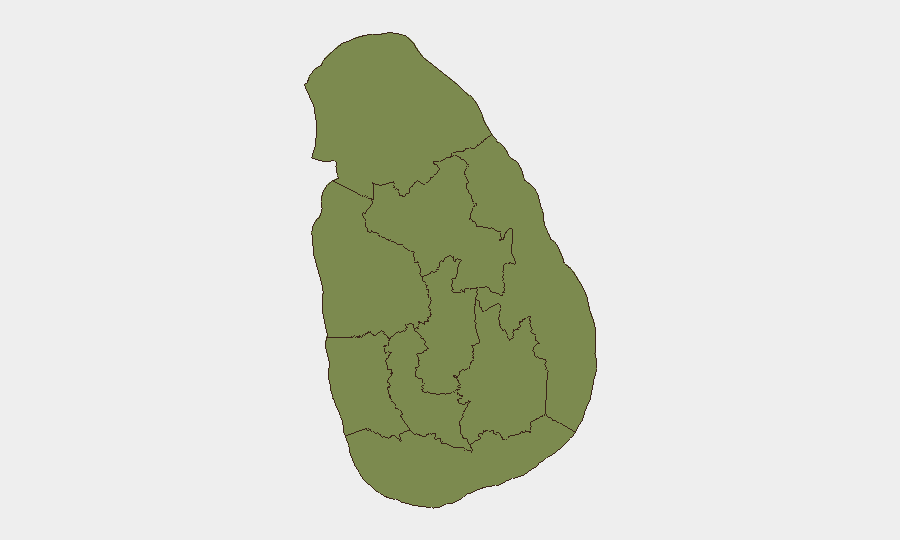
Western Province dominates the sub-national risk ranking (34.7 vs. 6.8 for the next tier), driven by Colombo and its satellite districts (Gampaha, Kalutara). The dual prison crises at Mahara and Negombo are concentrated in this zone and directly impact the capital region's immediate security posture, staff commuting, and logistics corridors. Central Province (6.8) carries secondary risk from the Port City murder case and organized crime indicators in Ratnapura District. All other provinces register lower composite scores (4.7–6.8), reflecting the concentration of high-consequence incidents in the Western Province and limited spillover.
How GeoBit Would Assist
Corporate security teams should deploy AOI Monitoring & Early Warning around Mahara and Negombo Prisons, plus major Colombo logistics nodes, to track curfew enforcement and checkpoint activity in real time. Conflict & Military mapping (including SLAF helicopter/drone deployment patterns) and GIS & Spatial Analysis provide dynamic route alternatives to avoid perimeter restrictions and security cordons. Network & Actor Analysis on the Chinese organized crime case and OSINT fusion of police and media reporting enable risk teams to identify transnational criminal movement and tailor staff briefings on external threat actors.
7-Day Outlook
Prison security operations are likely to remain elevated through at least mid-August, with localized curfews continuing in Gampaha and Western Province. Secondary risks—civil unrest at perimeters, traffic disruption, and checkpoint delays—will persist as investigations continue and authorities manage overcrowding. No indication of national-scale destabilization; risk remains concentrated in Colombo metropolitan and adjacent districts.
Highest-Risk Areas — Ranked
| # | State / Region | Risk |
|---|---|---|
| 1 | Western Province | 34.7 |
| 2 | Central Province | 6.8 |
| 3 | Uva Province | 6.8 |
| 4 | Northern Province | 4.7 |
| 5 | North Western Province | 4.7 |
| 6 | North Central Province | 4.7 |
| 7 | Eastern Province | 4.7 |
| 8 | Sabaragamuwa Province | 4.7 |
| 9 | Southern Province | 4.7 |
Sources
Previous Daily Briefs
A new Sri Lanka brief is written every day — each with its own risk map and downloadable CSV. Here's the last week; use the calendar to go further back.
📅 Browse every day by calendar →
Highlighted days have a brief. Tap a day for that day's map & analysis, or “csv” for that day's dataset ($5).
Atlas — our AI intelligence desk — emails them this snapshot personally. Nothing else, no list.