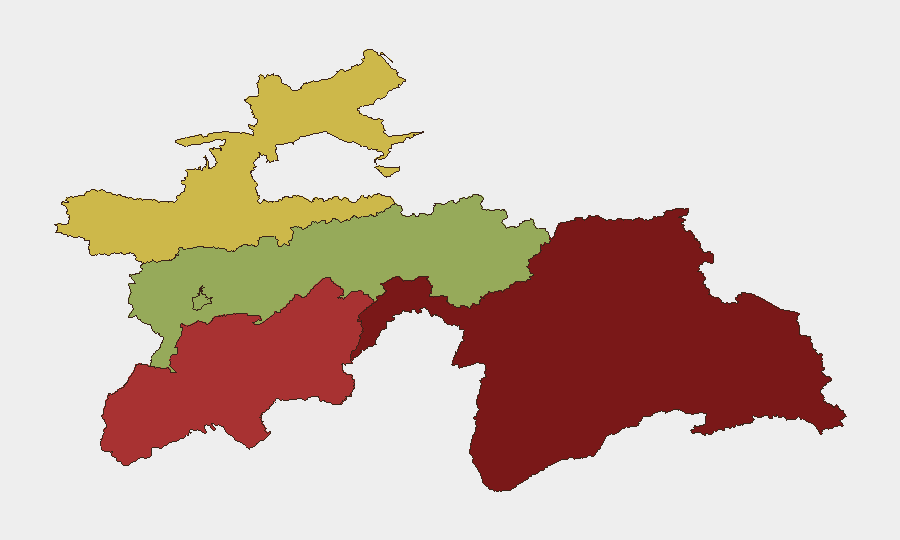
Situation Summary
Tajikistan remains a relatively stable state (ranked #148 globally) but faces persistent transnational security challenges concentrated along the Afghan border and in mountainous autonomous regions. Border-area armed clashes with Afghan drug traffickers and Taliban-linked groups, combined with structural narcotics flows, represent the primary threat vector. Dushanbe and central districts remain comparatively secure, though broader governance concerns and geopolitical tensions with neighboring states create underlying volatility.
Key Developments
No discrete security incidents with confirmed dates falling within 18–20 July 2026 are currently verifiable in open sources. Available reporting reflects aggregate trends and policy announcements from mid-July and earlier:
- Border security reinforcement (mid-July 2026). The Collective Security Treaty Organization announced deployment of weapons and protective equipment to Tajik border forces in response to "escalating security crises and Taliban militant attacks" and infiltration by armed groups and traffickers from Afghanistan. Reflects sustained external support but no single incident date.
- Drug trafficking escalation (reported 13 July, H1 2026 aggregate). Tajik Drug Control Agency reported 28 foreign nationals detained for trafficking in the first half of 2026 (vs. 10 in H1 2025), a threefold rise. Seven armed clashes with Afghan drug couriers on the Tajik–Afghan border in January–June 2026 resulted in 17 Afghan nationals killed and over 1,500 kg of drugs seized.
- Crime trends (reported 13 July, H1 2026 aggregate). Tajik authorities recorded 11,731 crimes in H1 2026 (down 10.4% year-on-year), but drug-related crimes increased to 592 (from 534), now representing ~5% of total crime.
- Seismic activity (recent, dates not specified). Two moderate earthquakes (M 4.8 and M 4.7) were recorded in the Pamir region near Khorugh and Murghob, consistent with ongoing seismic risk in Gorno-Badakhshan.
- Dual-use goods regulatory framework (mid-July 2026, no precise date). A laboratory for checking dual-use goods began operations, indicating tightened control over materials with potential military application.
Highest-Risk Areas
Gorno-Badakhshan Autonomous Region (#1, risk score 92) dominates the threat landscape due to its remote terrain, porous border with Afghanistan, seismic hazard, and limited state capacity. Khatlon Region (#2, score 78) faces similar border-security challenges and narcotics transit exposure. These two regions account for the vast majority of armed clashes, trafficking incidents, and foreign-fighter infiltration. Sughd Region and Districts of Republican Subordination present moderate risk; Dushanbe remains the lowest-risk area but is not immune to terrorism or criminal activity targeting expatriates and infrastructure.
How GeoBit Would Assist
Security teams operating in Tajikistan should deploy Intel Sweep and multi-language OSINT (including Tajik- and Russian-language sources, Telegram channels, and local media) for real-time monitoring of border-area incidents and trafficking flows. AOI Monitoring & Early Warning with persistent watch on Gorno-Badakhshan and the Tajik–Afghan border corridor would provide timely alert to armed clashes, infiltration, or seismic events affecting logistics and staff safety. Network & Actor Analysis on trafficking organizations and cross-border militant groups informs route planning and personnel movement decisions.
7-Day Outlook
No imminent escalation is signaled by current reporting. Border tensions and narcotics activity will remain endemic; CSTO reinforcements suggest some stabilization of border security posture. Seismic risk in the Pamir region warrants ongoing monitoring of transportation corridors and critical infrastructure. Personnel and asset security should continue to focus on border regions and border-adjacent routes.
Highest-Risk Areas — Ranked
| # | State / Region | Risk |
|---|---|---|
| 1 | Gorno-Badakhshan Autonomous Region | 92 |
| 2 | Khatlon Region | 78 |
| 3 | Sughd Region | 65 |
| 4 | Districts of Republican Subordination | 58 |
| 5 | Dushanbe | 42 |
Sources
Previous Daily Briefs
A new Tajikistan brief is written every day — each with its own risk map and downloadable CSV. Here's the last week; use the calendar to go further back.
📅 Browse every day by calendar →
Highlighted days have a brief. Tap a day for that day's map & analysis, or “csv” for that day's dataset ($5).
Atlas — our AI intelligence desk — emails them this snapshot personally. Nothing else, no list.