Situation Summary
The United Arab Emirates maintains a stable overall security posture (global rank #73, composite threat score 16) with no reported physical security incidents, civil unrest, or infrastructure damage in the last 24–48 hours. However, a confirmed nationwide cyber incident targeting the financial sector was detected and thwarted on 3 July 2026, signaling an elevated threat environment in digital infrastructure. Dubai remains the highest-risk sub-national area (score 31.4), though authorities report calm conditions and uninterrupted services. The threat trajectory is characterized by managed cyber risk alongside routine diplomatic tensions with Iran and Sudan.
Key Developments
- Nationwide Financial Sector Cyber Attack (3 July 2026): The UAE Cybersecurity Council announced detection and neutralization of sophisticated coordinated cyberattacks targeting multiple financial-sector organizations. Attack vectors included vulnerability exploitation, advanced phishing, and malware deployment; all services remained operational and heightened monitoring protocols were activated.
- Dubai Security Status Update (29–30 June, reiterated within last 24h): Dubai authorities (Dubai Police, RTA, Government of Dubai Media Office) confirmed a "calm night" with no major incidents, emergencies, or civil unrest. Advisories focus on routine traffic and heat-related safety measures.
- Elevated Cyber-Threat Messaging (late June–early July, reaffirmed within 48h): UAE Cyber Security Council reiterated that cyber threats are an accelerating concern for UAE businesses, citing growing attacks on sensitive data and critical systems, while confirming successful blocking of recent financial-sector targeting.
- Diplomatic Signal – Iran Rejection (4 July 2026): UAE formally rejected an unstated Iranian position or action; context and specifics remain limited in available reporting.
- Sudan Disapproval (4 July 2026, repeated): Sudan issued formal disapproval of UAE conduct or policy (repeated signal on same date); underlying cause not detailed in available intelligence.
Highest-Risk Areas
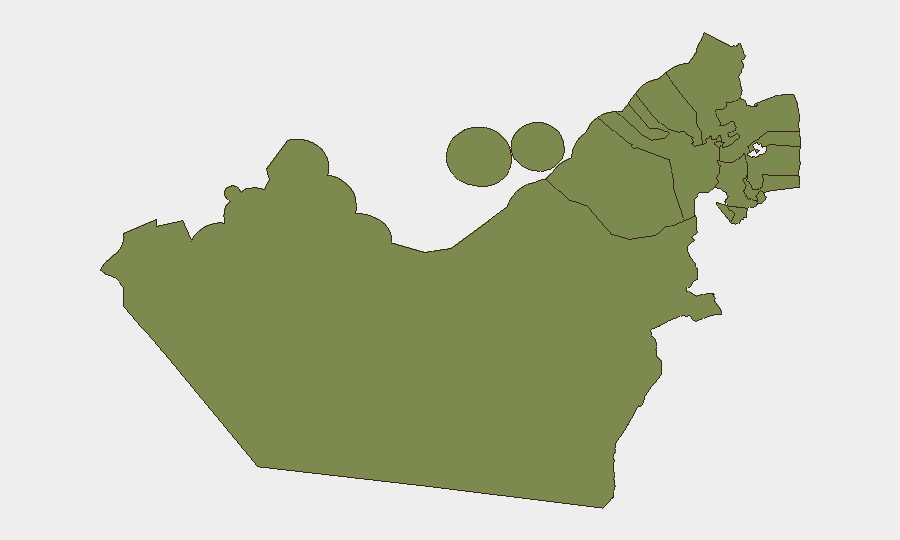
Dubai dominates sub-national risk (31.4 vs. 5.7 for Abu Dhabi Emirate), reflecting its status as the UAE's largest financial, commercial, and tourist hub—making it a higher-value target for cyber, economic, and transnational threats. Abu Dhabi Emirate ranks second (5.7) but substantially lower, suggesting concentration of national-level risk in the capital's commercial districts. The remaining five emirates (Sharjah, Ajman, Ras al-Khaimah, Fujairah, Umm al-Quwain) carry minimal differential risk (1.4 each), indicating homogeneous baseline conditions. Risk in Dubai is driven primarily by cyber exposure in the financial sector, digital infrastructure density, and transnational actor attention; kinetic threats remain low despite regional geopolitical tensions.
How GeoBit Would Assist
Threat Monitoring: GeoBit's Intel Sweep, multi-language OSINT feeds, and X/Telegram intelligence would provide real-time tracking of cyber-threat actors targeting UAE financial infrastructure and supply chains, complemented by Shodan scanning to identify exposed digital assets. Early Warning: AOI Monitoring & Early Warning on Dubai and Abu Dhabi would alert security teams to escalation in cyber indicators, political signaling from Iran/Sudan, or unusual network activity. Operational Support: Network & Actor Analysis and Routing & Network Analysis would enable security teams to model alternative transaction routes, data-flow paths, and communication security in response to active cyber threats.
7-Day Outlook
The cyber-threat environment will likely remain elevated over the next week, with continued financial-sector targeting expected as attackers probe for unpatched vulnerabilities and credential compromise. Diplomatic friction with Iran and Sudan poses low immediate kinetic risk but may correlate with increased cyber and economic-espionage activity. Dubai and Abu Dhabi facilities should maintain heightened digital hygiene and network monitoring protocols; no material change in physical-security posture is warranted absent new intelligence.
Highest-Risk Areas — Ranked
| # | State / Region | Risk |
|---|---|---|
| 1 | Dubai | 31.4 |
| 2 | Abu Dhabi Emirate | 5.7 |
| 3 | Sharjah Emirate | 1.4 |
| 4 | Ajman Emirate | 1.4 |
| 5 | Ras al-Khaimah | 1.4 |
| 6 | Fujairah Emirate | 1.4 |
| 7 | Umm al-Quwain | 1.4 |
Sources
Previous Daily Briefs
A new United Arab Emirates brief is written every day — each with its own risk map and downloadable CSV. Here's the last week; use the calendar to go further back.
📅 Browse every day by calendar →
Highlighted days have a brief. Tap a day for that day's map & analysis, or “csv” for that day's dataset ($5).
Atlas — our AI intelligence desk — emails them this snapshot personally. Nothing else, no list.