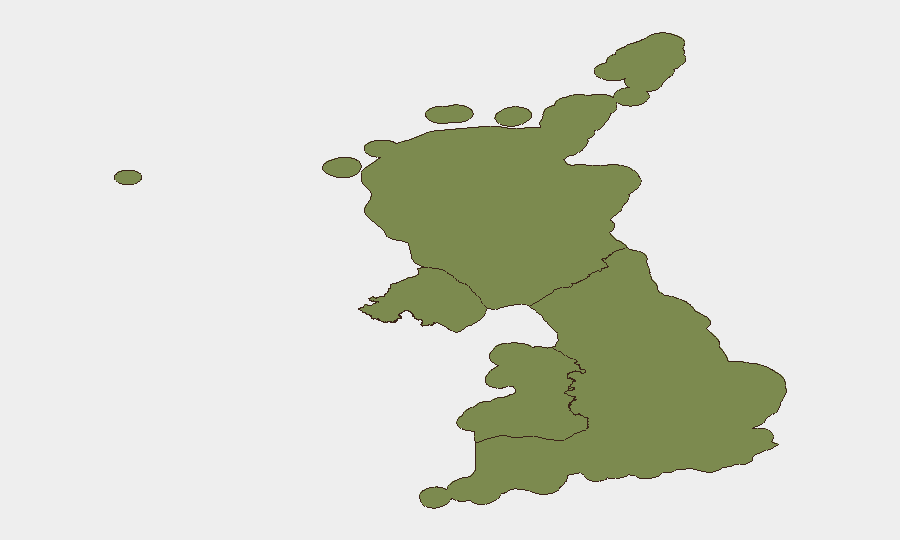
Situation Summary
The United Kingdom faces an elevated but contained near-term security picture marked by three concurrent stress vectors: a spike in mass-casualty incidents (transport collision, vehicle-into-crowd attack), xenophobic civil unrest in Northern Ireland triggered by a prior assault, and a significant cyberattack on law-enforcement infrastructure. While the composite UK threat score remains moderate globally (#154), England—which accounts for the vast majority of the national risk score (31.8 of 38)—is experiencing a concentrated cluster of incidents within 48 hours. The trajectory reflects acute rather than systemic instability, but the confluence of criminal violence, infrastructure failure, and information-security compromise is likely to sustain elevated operational and reputational risk for corporate security operations through early August.
Key Developments
- Liverpool, Merseyside – 31 July 2026
Vehicle drove into parade crowds; 109 people injured. Motive under investigation; major incident declared affecting public-event safety and transport capacity.
- South of Bedford, Bedfordshire – 31 July 2026 (late afternoon)
Collision between two trains resulted in at least one fatality, 11 very seriously injured, 22 seriously injured. Significant rail disruption on the London–Midlands corridor; infrastructure safety review likely.
- London (multiple boroughs) – late July 2026 (48-hour window)
Two killings, including a teenager, in stabbings/shootings under active investigation. Reflects escalated gang-related violence in capital.
- Northern Ireland (unspecified town) – evening 30–31 July 2026
Dozens of masked men attacked homes of foreign-origin residents in response to a prior Sudanese-perpetrator knife assault. Xenophobic violence and localized civil unrest; police presence increased.
- Isle of Wight, English Channel – 30 July 2026 (late morning)
Russian military vessel fired warning shots at UK-flagged yacht. UK Prime Minister characterized as "deeply worrying"; heightened maritime-security risk in coastal waters.
- UK Department for Education / law-enforcement systems – late July 2026
ExfilSquad ransomware group conducted cyberattack; 600,000+ records taken, including police safeguarding database. National information-security and law-enforcement operational risk elevated.
- North-west London – late July 2026
Counter-terrorism and Met Police searches conducted at two addresses under National Security Act investigation. Localized disruption and heightened security posture.
- England (national) – 31 July 2026 onward
Amber and yellow heat-health alerts; temperatures above 30°C. NHS warns of sustained pressure; risk of transport disruptions and power-demand strain affecting public safety and infrastructure.
Highest-Risk Areas
England accounts for approximately 83% of the UK composite risk score (31.8 of 38), driven by the concentration of major incidents in Liverpool, Bedford, London, and north-west London within 48 hours. Scotland (4.4) and Northern Ireland (1.8) show lower but distinct risks: Northern Ireland's xenophobic violence represents a localized but significant community-stability concern, while Scotland has not reported major acute incidents in this cycle. Wales (1.8) presents minimal current threat. London and its immediate commuter belt (Bedfordshire, Merseyside) are the primary operational-risk zones for corporate asset and personnel protection.
How GeoBit Would Assist
Corporate security teams should deploy GeoBit's AOI Monitoring & Early Warning capability to establish persistent watch on high-density corporate locations in London, Liverpool, and Bedford rail corridors, with alert thresholds for transport incidents, civil unrest, and security operations. OSINT fusion (X/Twitter, Telegram, YouTube intelligence, multi-language search) will track emerging xenophobic rhetoric in Northern Ireland and gang-violence signals in London to enable advance protective positioning. Routing & Network Analysis will identify alternative transport and supply-chain corridors given the Bedford rail closure and potential for further disruption during the heat-health alert period.
7-Day Outlook
The current incident cluster is expected to sustain elevated police and emergency-services activity through early August, with ongoing investigations into the Liverpool and Bedford incidents likely to generate intermittent transport and crowd-control restrictions. Xenophobic tensions in Northern Ireland may persist and spread if community dialogue fails; heat stress will increase infrastructure fragility and public-order management demands. No systemic destabilization is indicated, but duty-of-care teams should assume elevated baseline risk for mass-gathering attendance and transport reliability through 7 August.
Highest-Risk Areas — Ranked
| # | State / Region | Risk |
|---|---|---|
| 1 | England | 31.8 |
| 2 | Scotland | 4.4 |
| 3 | Northern Ireland | 1.8 |
| 4 | Wales | 1.8 |
Sources
Previous Daily Briefs
A new United Kingdom brief is written every day — each with its own risk map and downloadable CSV. Here's the last week; use the calendar to go further back.
📅 Browse every day by calendar →
Highlighted days have a brief. Tap a day for that day's map & analysis, or “csv” for that day's dataset ($5).
Atlas — our AI intelligence desk — emails them this snapshot personally. Nothing else, no list.