Situation Summary
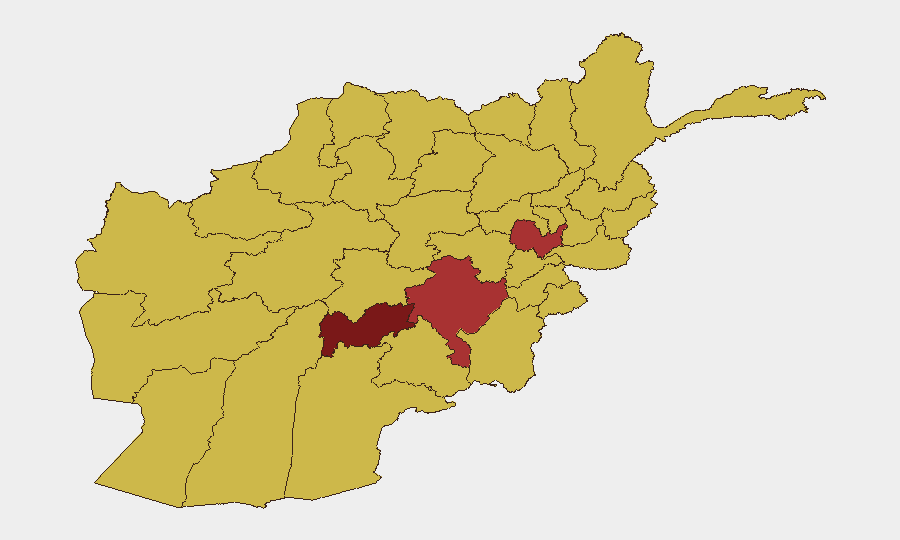
Afghanistan remains a high-threat operating environment (global rank #11, composite score 99) driven primarily by active insurgency and state fragmentation. Taliban consolidation of security apparatus is concurrent with sustained anti-Taliban insurgent activity in eastern and central provinces, while cross-border strikes from Pakistan continue to generate civilian casualties in frontier areas. The security picture is deteriorating in specific high-value zones—notably Uruzgan, Kabul, and Ghazni—while Taliban expansion of coercive capacity and tightening of civil liberties signals a shift toward harder security control in urban centers.
Key Developments
- Laghman Province, Alingar district (Qolak village) – 24 June 2026
Afghanistan Freedom Front (AFF) claimed a 15-minute attack on a Taliban base using rocket-propelled grenades and small arms fire, reporting Taliban casualties. Risk of follow-on Taliban security sweeps and heightened volatility in Alingar district.
- Nangarhar Province – 24–25 June 2026
AFF claimed killing three Taliban fighters in an unspecified military operation, indicating continued anti-Taliban insurgent pressure in eastern Nangarhar. Travel in known insurgent corridors faces elevated ambush and armed-clash risk.
- Pakistan–Afghanistan border areas (multiple provinces) – ongoing as of 26 June 2026
UN OCHA reported continued cross-border strikes killing civilians and destroying homes in frontier communities. Civilian exposure to air and artillery strikes remains acute in border zones.
- Badakhshan Province, Shahr-e Buzurg district – 25–26 June 2026
Taliban governor and mining chief reported conducting weapon-permit confiscation and arms seizures from residents, escalating tensions with local armed actors. Risk of confrontation, house searches, and localized unrest in district and surrounding rural areas.
- Kabul city – Tamadon TV headquarters – reported by 25 June 2026
Taliban raided Tamadon TV headquarters and halted broadcasts, part of broader media and civil-society tightening. Central Kabul media and NGO hubs face increased raid and detention risk.
- Kabul and Mazar-e-Sharif – 24–25 June 2026
Taliban conducted raids on Shia mosques in Kabul and detained Muharram mourners in Mazar-e-Sharif at a Ministry of Justice detention facility before release. Shia communities and religious gatherings face heightened disruption and detention risk.
- National level (Taliban security apparatus) – 24 June 2026 meeting, reported 25 June
Taliban Central Security and Vetting Commission discussed formation of an 8,000-member "Hibati Force" special unit with reported Russian funding and training. Future deployments could concentrate coercive capacity in urban centers and border areas, affecting travel security and civil-unrest response.
Highest-Risk Areas
Uruzgan Province (99.2) remains critically unstable, likely reflecting both Taliban consolidation efforts and residual insurgent presence. Kabul (78.4) and Ghazni (77.3) follow, with Kabul's elevated risk driven by Taliban security raids on media and religious sites, state surveillance expansion, and the capital's concentration of foreign nationals, NGOs, and high-value targets. Nuristan (70.3) and the southern tier (Zabul, Kandahar, Paktika, Farah, Nimruz, Helmand) all register 69.2+ scores, reflecting insurgent activity, cross-border strikes, and limited state control. Border provinces in particular face compounding risk from Pakistani military strikes and AFF operations.
How GeoBit Would Assist
Teams with personnel or assets in Afghanistan should use AOI Monitoring & Early Warning for persistent watch on Kabul media/NGO hubs, border crossing points, and known insurgent corridors in Laghman, Nangarhar, and the southern provinces. Network & Actor Analysis would map Taliban security-force expansion (including the Hibati Force) and AFF operational patterns. Routing & Network Analysis supports real-time alternative-route planning for staff movement, avoiding active conflict zones and Taliban checkpoints. Conflict & Military tracking provides force-structure updates and weapons-capability assessment as the Taliban operationalizes new units.
7-Day Outlook
Taliban consolidation of the Hibati Force and concurrent crackdowns on media and religious gatherings suggest a near-term tightening of internal security and surveillance. Insurgent activity in eastern and central provinces will likely persist, with elevated risk of cross-border escalation. Corporate and NGO operations should anticipate continued detention risk for staff in Kabul, heightened checkpoint activity, and intermittent disruption in eastern provinces.
Highest-Risk Areas — Ranked
| # | State / Region | Risk |
|---|---|---|
| 1 | Uruzgan Province | 99.2 |
| 2 | Kabul Province | 78.4 |
| 3 | Ghazni Province | 77.3 |
| 4 | Nuristan Province | 70.3 |
| 5 | Zabul Province | 69.2 |
| 6 | Kandahar Province | 69.2 |
| 7 | Paktika Province | 69.2 |
| 8 | Farah Province | 69.2 |
| 9 | Nimruz Province | 69.2 |
| 10 | Helmand Province | 69.2 |
| 11 | Jowzjan Province | 69.2 |
| 12 | Balkh Province | 69.2 |
Sources
Previous Daily Briefs
A new Afghanistan brief is written every day — each with its own risk map and downloadable CSV. Here's the last week; use the calendar to go further back.
📅 Browse every day by calendar →
Highlighted days have a brief. Tap a day for that day's map & analysis, or “csv” for that day's dataset ($5).