Situation Summary
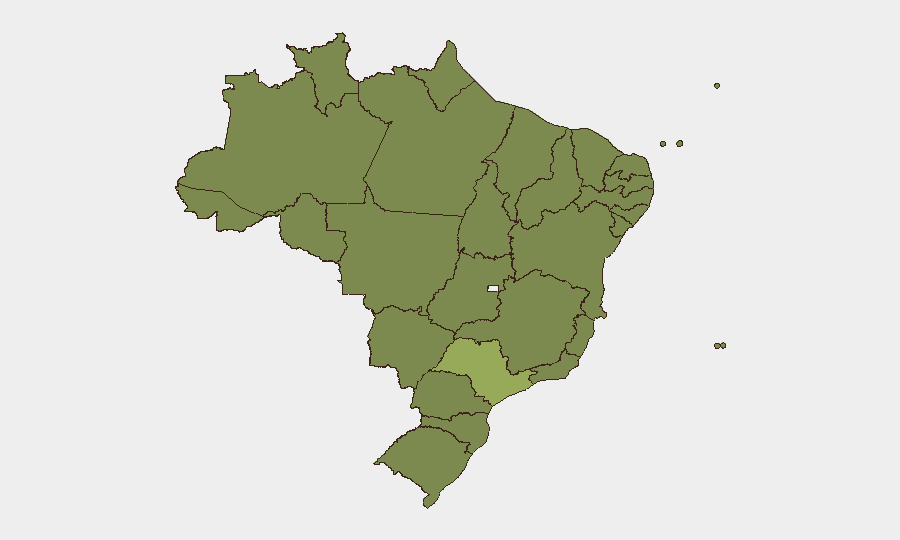
Brazil's national security environment remains moderately elevated (composite threat score 35, rank #41 globally) with 935 tracked events. The event signal pattern from July 31–August 1 shows a concentration of police operations, small-arms confrontations with criminal and drug-trafficking actors, and administrative/judicial responses, indicating sustained engagement between law-enforcement and organized crime rather than systemic destabilization. São Paulo dominates the risk profile at nearly double the national average, driven by gang violence, trafficking networks, and police responses; however, risk is dispersed across 12 states, with Paraná, Minas Gerais, Pernambuco, and Espírito Santo forming a secondary tier.
Key Developments
- 2026-08-01 · São Paulo (implied): Police conducted small-arms combat operations against drug traffickers; concurrent investigation and administrative magistrate sanctions signal reactive law-enforcement and judicial oversight activity.
- 2026-08-01: Police arrests/detention operations ongoing; simultaneous disapproval signaling between police and legal actors suggests tension over operational scope or procedure.
- 2026-08-01 · Countrywide: Government issued threat communications against Brazilian actors; nature and target remain unclear from available signals, but timing aligns with arrest/detention surge.
- 2026-07-31: Brazilian Armed Forces deployed (conventional military force event); ministerial investigation and public statements followed, indicating potential civil-military coordination or review of operations.
- 2026-07-31 · São Paulo: Disapproval signal suggests public or institutional friction, possibly related to security operations, administrative policy, or political statement by São Paulo authorities.
Note: Live web research for the 24–48-hour window (July 30–August 1) did not yield independently dated, discrete incident reports beyond the GEOBIT event signals above. Reference to June–July 2026 police operations (e.g., Rio de Janeiro July 29 shootout) available in research is outside the recency constraint and is treated as contextual trend data, not current development.
Highest-Risk Areas
São Paulo (54.6) is the dominant driver, representing nearly 56% higher risk than the national average and reflecting the concentration of organized crime, gang turf conflict, and police counter-narcotics operations in Brazil's largest metropolitan and economic center. The secondary tier—Paraná (28.5), Minas Gerais (27.1), and the Northeast cluster (Pernambuco, Paraíba, 25.8–25 each)—indicates sustained criminal activity along trafficking corridors and in densely populated urban zones. Amazonas and Mato Grosso reflect illicit mining, drug production, and logistical hubs; Rio de Janeiro and Rio Grande do Sul remain elevated despite lower ranking, driven by favela violence and gang consolidation. Risk concentration in these 12 states suggests the threat is not uniform nationwide but heavily weighted to major urban centers, interstate trafficking routes, and remote production zones.
How GeoBit Would Assist
Security teams should employ AOI Monitoring & Early Warning to maintain persistent watch on São Paulo, Paraná, and Minas Gerais for police operations, gang activity, and infrastructure disruption. Network & Actor Analysis and OSINT fusion (X/Twitter, Telegram, YouTube) combined with multi-language search enable real-time tracking of criminal organization communications, police announcements, and civil unrest signals. Risk & Threat Assessment dashboards, updated daily with global event feeds and sentiment analysis, provide duty-of-care teams with early warning of convoy disruption, protest activity, or escalation that could affect personnel or supply chains.
7-Day Outlook
Police-criminal engagement is expected to remain elevated across São Paulo and secondary-tier states through early August, with arrests and small-arms incidents likely continuing as law-enforcement targets trafficking operations. No systemic governance collapse or large-scale unrest is evident in current signals, but persistent friction between judicial and police actors suggests operational strain and possible policy review. Corporate assets and personnel in São Paulo, Paraná, and Northeast metros should expect sustained background tension and localized disruption.
Highest-Risk Areas — Ranked
| # | State / Region | Risk |
|---|---|---|
| 1 | São Paulo | 54.6 |
| 2 | Paraná | 28.5 |
| 3 | Minas Gerais | 27.1 |
| 4 | Pernambuco | 25.8 |
| 5 | Espírito Santo | 25.8 |
| 6 | Amazonas | 25.2 |
| 7 | Mato Grosso | 25 |
| 8 | Paraíba | 25 |
| 9 | Rio de Janeiro | 25 |
| 10 | Pará | 24.7 |
| 11 | Rio Grande do Sul | 24.7 |
| 12 | Rondônia | 24.7 |
Sources
Previous Daily Briefs
A new Brazil brief is written every day — each with its own risk map and downloadable CSV. Here's the last week; use the calendar to go further back.
📅 Browse every day by calendar →
Highlighted days have a brief. Tap a day for that day's map & analysis, or “csv” for that day's dataset ($5).
Atlas — our AI intelligence desk — emails them this snapshot personally. Nothing else, no list.