Situation Summary
Equatorial Guinea remains a low-frequency threat environment globally (ranked #161), with no confirmed security incidents, civil unrest, or infrastructure disruptions reported in the last 24–48 hours. The country's composite threat score of 5 reflects endemic governance challenges and localized crime rather than acute destabilization. Sub-national risk is concentrated in the northern provinces, particularly Bioko Norte and Litoral, driven by historical trafficking activity and limited state capacity rather than active conflict or organized violence in the current reporting window.
Key Developments
No discrete security, conflict, crime, civil-unrest, or travel-risk incidents have been independently verified in Equatorial Guinea during 19–20 August 2026. Open-source intelligence retrieved does not surface new events meeting operational significance criteria for this 24–48 hour window.
Contextual item (external to Equatorial Guinea): A French court on 18 August 2026 ordered further asset seizures from properties belonging to Vice President Teodorin Obiang as part of ongoing corruption-related proceedings in Paris. This is a judicial action in France, not an incident within Equatorial Guinea's borders, but may carry longer-term implications for regime stability and asset flows if enforcement accelerates.
Highest-Risk Areas
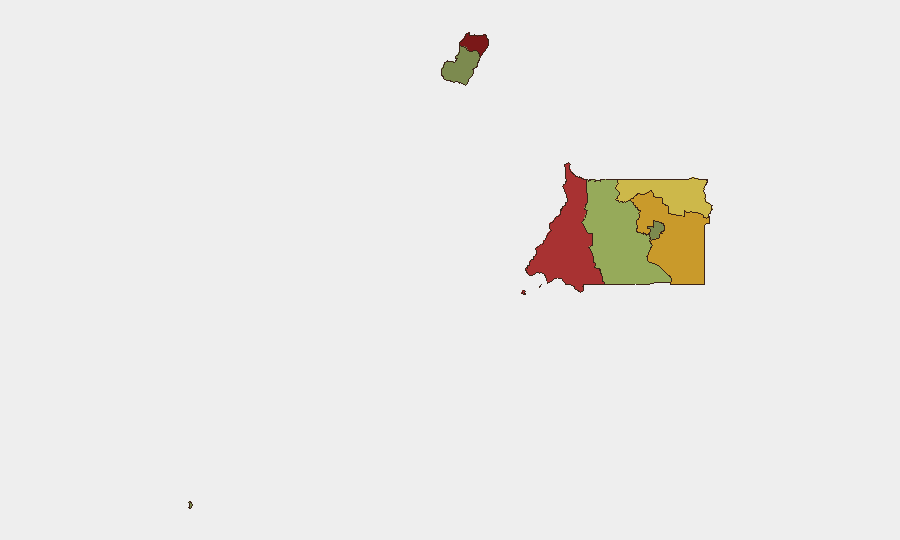
Bioko Norte (risk score 85) and Litoral Province (risk 78) dominate the threat profile and account for the majority of sub-national vulnerability. Both regions experience elevated trafficking (human and narcotics) transshipment activity, limited police capacity, and porous borders; Bioko Norte includes the capital Malabo and concentrates government infrastructure alongside informal settlement zones with weak service delivery. Wele-Nzas Province (risk 72) and Kié-Ntem Province (risk 68) follow, reflecting similar cross-border criminality and governance gaps. Centro Sur, Bioko Sur, Djibloho, and Annobón are substantially lower-risk, with Annobón (risk 8) representing minimal reported threat activity.
How GeoBit Would Assist
Corporate security and duty-of-care teams with personnel or assets in Equatorial Guinea should activate persistent area-of-interest (AOI) monitoring and early-warning alerting for Bioko Norte and Litoral Province to detect emerging trafficking, protest activity, or port/airport disruptions before operational impact. Intel Sweep across regional OSINT feeds, local news, and Telegram/X channels in Spanish and French, combined with multi-language sentiment and temporal analysis, will surface localized crime reports, administrative changes, or community tensions not yet reflected in English-language wire services. Routing and network analysis tools help security teams pre-plan alternative transportation and supply routes around known high-risk zones and trafficking corridors.
7-Day Outlook
No acute deterioration is forecast over the next seven days. Equatorial Guinea's risk profile is chronic and characterized by persistent low-level trafficking and governance constraints rather than event-driven volatility. Routine monitoring of French asset-seizure proceedings and any statements from the Obiang regime should continue, as escalating international judicial pressure could eventually trigger political or economic instability; however, no near-term trigger is visible in current reporting.
Highest-Risk Areas — Ranked
| # | State / Region | Risk |
|---|---|---|
| 1 | Bioko Norte | 85 |
| 2 | Litoral Province | 78 |
| 3 | Wele-Nzas Province | 72 |
| 4 | Kié-Ntem Province | 68 |
| 5 | Centro Sur Province | 45 |
| 6 | Bioko Sur | 38 |
| 7 | Djibloho | 15 |
| 8 | Annobón Province | 8 |
Sources
Previous Daily Briefs
A new Equatorial Guinea brief is written every day — each with its own risk map and downloadable CSV. Here's the last week; use the calendar to go further back.
- August 18, 2026
- August 16, 2026
- August 14, 2026
- August 12, 2026
- August 10, 2026
- August 8, 2026
- August 6, 2026
📅 Browse every day by calendar →
Highlighted days have a brief. Tap a day for that day's map & analysis, or “csv” for that day's dataset ($5).
Atlas — our AI intelligence desk — emails them this snapshot personally. Nothing else, no list.