Situation Summary
Eswatini remains a low-threat environment globally (rank #131), with no active armed conflict or mass civil unrest. However, the country faces a significant organized cybercrime and fraud problem involving foreign nationals, which has prompted a Chinese government travel advisory and a defensive government response. The security picture is characterized by localized crime patterns rather than systemic instability, though reputational and political sensitivities around law enforcement and third-country deportation agreements are rising.
Key Developments
- Mbabane, national level – 28 Aug 2026
China's travel advisory warning its citizens to avoid Eswatini and depart if present continues to circulate internationally. The advisory cites "rampant cybercrime, online gambling and telecommunications fraud" as the primary concern, reflecting Beijing's perception of risk to its nationals and business interests.
- Mbabane, national level – 26 Aug 2026
The Eswatini government publicly rejected China's travel advisory, characterizing a recent law-enforcement operation against foreign nationals as evidence of effective policing rather than state breakdown. Officials stated Eswatini "remains a peaceful, stable and law-governed State," implying the operation targeted a discrete organized criminal network.
- Nationwide – 2026 (ongoing)
At least 55 Chinese nationals have been arrested throughout 2026 as part of a crackdown on an alleged online gambling, extortion, and cyber-fraud network. This large-scale operation underscores the scale of foreign-led cybercrime activity in the country.
- Eswatini, immigration domain – 28 Aug 2026
Two migrants deported from the United States arrived in Eswatini under a controversial third-country deportation agreement. This raises political sensitivity around Eswatini's role in U.S. deportation policy, though no civil unrest has been reported in connection with the arrival.
Highest-Risk Areas
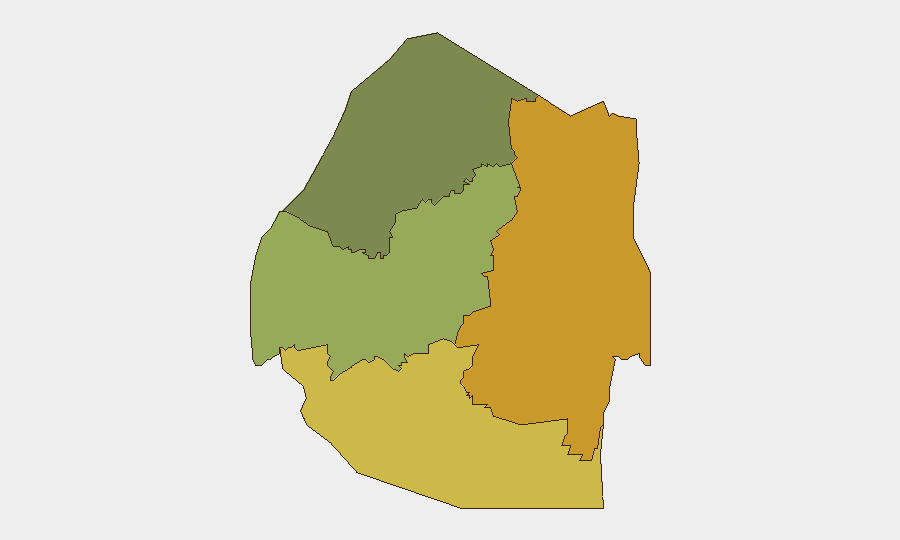
Lubombo (risk 72) and Shiselweni (risk 68) regions drive the country's sub-national threat score; both substantially exceed the national risk level. These southern and eastern regions show elevated crime and cross-border vulnerability signals. Manzini Region (risk 55) represents a secondary concern, while Hhohho (risk 35) is the lowest-risk region. The concentration of risk in border-adjacent areas suggests organized crime activity, smuggling networks, and transnational criminal enterprise rather than political instability.
How GeoBit Would Assist
Corporate security and duty-of-care teams should employ AOI Monitoring & Early Warning on Lubombo and Shiselweni to detect emerging crime patterns and cross-border movement in real time. OSINT Fusion & Corroboration (Intel Sweep, X/Twitter & Telegram monitoring, multi-language search) can track ongoing cybercrime operations, arrests, and diplomatic friction between Eswatini and foreign governments. Network & Actor Analysis would map the structure and reach of organized crime syndicates targeting expatriate communities and supply chains.
7-Day Outlook
No escalation of civil unrest or political violence is anticipated. The cybercrime issue is likely to remain a diplomatic and reputational concern for Eswatini, with potential for additional arrests or international law-enforcement coordination. Personnel and asset security should remain attentive to localized crime in high-risk regions (Lubombo, Shiselweni) and to evolving restrictions on foreign nationals, but the overall security trajectory remains stable.
Highest-Risk Areas — Ranked
| # | State / Region | Risk |
|---|---|---|
| 1 | Lubombo | 72 |
| 2 | Shiselweni | 68 |
| 3 | Manzini Region | 55 |
| 4 | Hhohho Region | 35 |
Sources
Previous Daily Briefs
A new Eswatini brief is written every day — each with its own risk map and downloadable CSV. Here's the last week; use the calendar to go further back.
- August 26, 2026
- August 24, 2026
- August 22, 2026
- August 20, 2026
- August 17, 2026
- August 15, 2026
- August 13, 2026
📅 Browse every day by calendar →
Highlighted days have a brief. Tap a day for that day's map & analysis, or “csv” for that day's dataset ($5).
Atlas — our AI intelligence desk — emails them this snapshot personally. Nothing else, no list.