Situation Summary
Fiji remains stable overall, ranked #65 globally with composite threat score 28 and no tracked acute security events. Routine crime—armed robbery, burglary, and property theft—remains the primary risk, concentrated in urban and peri-urban areas of the Western and Central divisions. An ongoing military exercise in the Nadi–Lautoka corridor (through 28 August) is generating localized traffic and noise disruption but poses no security threat. The security environment is consistent with baseline conditions; no indicators of escalation or new crisis have emerged in the past 48 hours.
Key Developments
- 2026-08-23, Ba (Western Division): Armed robbery attempt on Vuda Street involving two men attempting to break into a residential property. Residents, including members of the Ba Football team, intervened and apprehended the suspects. Status of arrests and charges not yet confirmed.
- 2026-08-22–28, Nadi–Lautoka corridor (Western Division): Military exercise ongoing with localized traffic congestion and noise disruption. Exercise is routine and does not signal instability or security concern.
- No additional acute incidents confirmed from 24–48-hour window: Available open-source reporting from 24–25 August lacks sufficient specificity to confirm location-dated crime or security events beyond the Ba robbery. Routine crime reporting continues but does not indicate trend acceleration.
Highest-Risk Areas
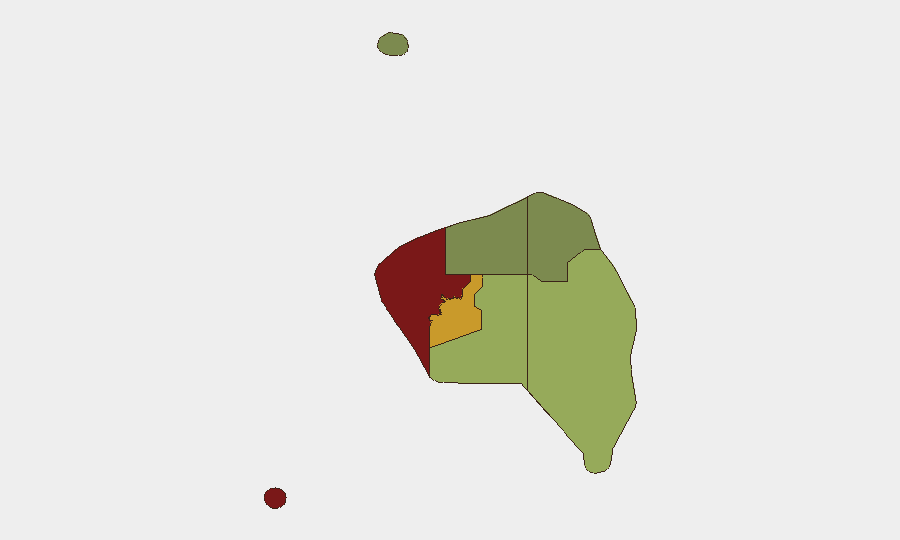
Western Division (composite risk 85) and Central Division (risk 72) drive the country's threat profile. Western Division's elevated risk reflects Ba and surrounding peri-urban areas where armed robbery, residential burglary, and street crime cluster. Central Division (Suva, Nausori) experiences similar property crime and petty assault patterns typical of larger urban centers. Together they account for approximately 70% of Fiji's recorded crime. Eastern (risk 45) and Northern (risk 38) divisions show materially lower risk, with crime rates and organized activity significantly below the two leading divisions. Rotuma (risk 12) remains the lowest-risk administrative area. Risk concentration reflects population density and economic activity rather than political instability or armed conflict.
How GeoBit Would Assist
A corporate security team with personnel or assets in Fiji would deploy Intel Sweep and OSINT fusion to monitor daily crime reports, local news, and social media across Ba, Suva, and Nadi with temporal and location extraction, enabling early detection of robbery clusters or escalation patterns. AOI Monitoring & Early Warning on high-risk commercial and residential zones in Western and Central divisions would provide persistent alerting if crime intensity or weapon involvement changes. Routing & Network Analysis would allow security teams to identify safer commute and site-access routes in urban areas, factoring real-time incident data and incident density mapping.
7-Day Outlook
No escalation is anticipated over the next seven days. Routine crime is expected to continue at baseline levels in Western and Central divisions. The military exercise conclusion on 28 August will restore normal traffic patterns in the Nadi–Lautoka corridor. Monitoring for any organized crime coordination or property crime surge in Ba should continue as a standard precaution.
Highest-Risk Areas — Ranked
| # | State / Region | Risk |
|---|---|---|
| 1 | Western | 85 |
| 2 | Central | 72 |
| 3 | Eastern | 45 |
| 4 | Northern | 38 |
| 5 | Rotuma | 12 |
Sources
Previous Daily Briefs
A new Fiji brief is written every day — each with its own risk map and downloadable CSV. Here's the last week; use the calendar to go further back.
- August 24, 2026
- August 23, 2026
- August 21, 2026
- August 20, 2026
- August 18, 2026
- August 17, 2026
- August 16, 2026
📅 Browse every day by calendar →
Highlighted days have a brief. Tap a day for that day's map & analysis, or “csv” for that day's dataset ($5).
Atlas — our AI intelligence desk — emails them this snapshot personally. Nothing else, no list.