Situation Summary
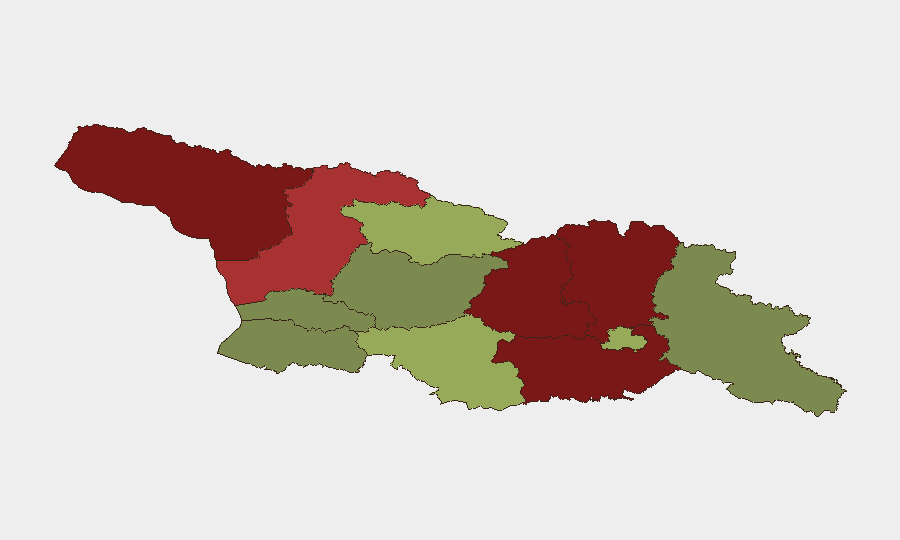
Georgia faces a mixed threat environment characterized by elevated organized-crime enforcement activity in the capital and ongoing sub-national instability in occupied and disputed territories, while critical infrastructure cyber vulnerabilities have emerged alongside routine public-order incidents. The country's overall composite threat score remains low (2/100), but regional disparities are acute: the Autonomous Republic of Abkhazia and South Ossetia-adjacent zones (Shida Kartli, Lower Kartli) register critical risk, while Tbilisi and lower-risk western regions show manageable but monitored security postures. Recent mass arrests targeting criminal networks and increased policing of protest logistics suggest heightened internal-security operations, concurrent with emerging cyber threats to water and state infrastructure systems.
Key Developments
- Tbilisi (capital) – August 1–2, 2026: Ministry of Internal Affairs reported detention of 29 individuals allegedly linked to organized crime ("thief-in-law" networks) across Georgia in the preceding 24 hours, with operations concentrated in Tbilisi and major urban centers; charges focus on organized-crime conspiracy and related offenses.
- Tbilisi International Airport – August 1–2, 2026: Airport authorities reported three flight diversions amid operational disruption, maintaining normal operational status overall but indicating targeted impact on air traffic.
- Gori (Shida Kartli region) – July 31–August 1, 2026: Former deputy head of the State Security Service, Levan Akhobadze, was detained on allegations of abuse of official power and misconduct; legal disputes between defense counsel and prosecutors are ongoing.
- Tbilisi (protest logistics) – August 1–2, 2026: Police enforcement actions included fining and license suspension for a driver transporting protest equipment and seizure of an opposition figure's vehicle; incidents reflect heightened policing of demonstration organization.
- Tbilisi (Patriarchate residence vicinity) – August 1, 2026: A suspect was ordered into pre-trial detention and psychiatric evaluation following a hooliganism incident near the Patriarchate residence; police responded to the public-order breach.
- Georgia (USA) – July 31–August 1, 2026: Federal investigation underway into cyberattacks targeting state systems in Georgia and multiple other U.S. states; federal agencies are coordinating incident response with state authorities.
- Water and infrastructure systems (Georgia, USA) – July 31–August 1, 2026: Reports indicate attacks on water-treatment or related infrastructure in Georgia and Michigan, following a breach affecting 30+ systems in Minnesota days prior.
Highest-Risk Areas
Abkhazia (risk 95) and Shida Kartli (88) represent the dominant threat drivers, reflecting longstanding territorial disputes, Russian military presence, and limited Georgian state control; Lower Kartli (85) and Mtskheta-Mtianeti (82) follow, encompassing South Ossetia-adjacent zones and border areas vulnerable to cross-border incidents and weapons trafficking. Samegrelo-Upper Svaneti (78) and Samtskhe-Javakheti (48) present secondary concerns tied to smuggling networks and regional instability. By contrast, Tbilisi (45) and western regions (Imereti, Guria, Adjara) register significantly lower risk profiles, though Tbilisi's recent organized-crime enforcement activity underscores operational security demands in the capital.
How GeoBit Would Assist
Intel Sweep, OSINT fusion, and network/actor analysis would track organized-crime networks, arrest patterns, and prosecution momentum to forecast enforcement escalation or retaliation. Persistent AOI monitoring and early-warning alerts on Abkhazia, Shida Kartli, and border checkpoints would provide real-time situational updates on military activity, crossing restrictions, and humanitarian access changes. Cyber threat tracking and infrastructure vulnerability intelligence via Shodan and sector-specific feeds would enable proactive exposure assessment of water systems, government networks, and critical services in Georgia.
7-Day Outlook
Organized-crime enforcement operations are likely to continue at current or elevated tempo, with potential for secondary disruptions (transport restrictions, asset freezes) affecting business and travel. Cyber-targeting of critical infrastructure may persist or expand, warranting heightened vigilance on utility and government-services availability. Northern and central territorial zones will remain high-risk; no significant de-escalation is anticipated in the near term.
Highest-Risk Areas — Ranked
| # | State / Region | Risk |
|---|---|---|
| 1 | Autonomous Republic of Abkhazia | 95 |
| 2 | Shida Kartli | 88 |
| 3 | Lower Kartli | 85 |
| 4 | Mtskheta-Mtianeti | 82 |
| 5 | Samegrelo-Upper Svaneti | 78 |
| 6 | Samtskhe-Javakheti | 48 |
| 7 | Tbilisi | 45 |
| 8 | Racha-Lechkhumi and Kvemo Svaneti | 42 |
| 9 | Kakheti | 38 |
| 10 | Autonomous Republic of Adjara | 35 |
| 11 | Imereti | 32 |
| 12 | Guria | 28 |
Sources
Previous Daily Briefs
A new Georgia brief is written every day — each with its own risk map and downloadable CSV. Here's the last week; use the calendar to go further back.
📅 Browse every day by calendar →
Highlighted days have a brief. Tap a day for that day's map & analysis, or “csv” for that day's dataset ($5).
Atlas — our AI intelligence desk — emails them this snapshot personally. Nothing else, no list.