Situation Summary
Germany remains at elevated national security posture following Interior Minister Dobrindt's July 18 declaration of "high threat level" due to intelligence assessments of potential attacks on critical infrastructure and key institutions. The composite national threat score of 5 (rank #155 globally) reflects localized but significant concentrations of risk, particularly in Thuringia and Berlin, rather than systemic nationwide instability. Recent 24–48 hour incidents—including rail-worker assault, motorway collisions, and police-logged crime in Berlin—indicate operational-level security challenges across transport and urban centers. The activation of NATO exercise "Steadfast Dart 26" with large military deployments adds visibility and infrastructure demand to an already heightened alert posture.
Key Developments
- Berlin – Fresh criminal incidents logged (July 20–21): Berlin police bulletins report arson at a medical practice in Spandau and other criminal events; consistent with heightened urban crime-reporting during elevated threat posture, though classified as routine criminal matters rather than coordinated unrest.
- Offenburg–Karlsruhe rail corridor – Deutsche Bahn security guard critically injured (July 17, ongoing investigation): Railway security worker suffered life-threatening injuries after falling from a moving train during violent passenger confrontation; train-door mechanism under investigation, raising safety concerns on key southwestern transport link.
- Offenbach–Hanau rail line, Hesse – High-speed train emergency stop after collision with livestock (July 17): Intercity train struck flock of sheep, killing 10–15 animals and causing disruption; operational impact persisted into subsequent days on central Germany corridor.
- A5 motorway near French border – Multi-vehicle collision with injuries (July 17): Two-car and coach collision in rain-soaked conditions left ten injured; significant disruption on major cross-border route into France.
- A19 motorway, Mecklenburg-Vorpommern – Vehicle leaves roadway near Linstow (July 20–21): Mercedes ejected approximately 30 meters into forest after loss of control; driver injured; temporary disruption on north–south transport corridor.
- Berlin-Brandenburg Airport (BER) – New external border facility operational (mid-July, active through reporting period): Enhanced border-control infrastructure now in place at major international hub; reflects operational adjustment to heightened threat environment.
- NATO exercise "Steadfast Dart 26" – Large-scale military deployment underway (mid-July through current period): Thousands of servicemembers, vehicles, and equipment arriving via Emden and other hubs; visible military presence and infrastructure impacts across deployment zones.
- National security posture sustained at high alert (July 18 onwards, in effect): Interior Ministry maintains elevated threat declaration citing intelligence on potential infrastructure and institution-targeting attacks occurring "at any time."
Highest-Risk Areas
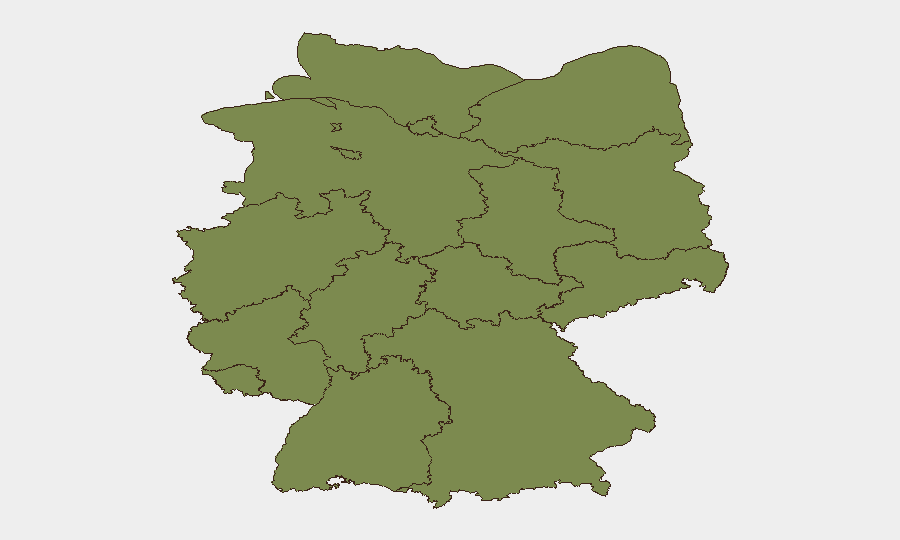
Thuringia (score 32.5) and Berlin (26.2) drive the majority of recorded threat activity, representing a 5-to-1 risk differential over Bavaria and significantly higher concentrations than remaining states. Thuringia's elevated score reflects political polarization and protest dynamics; Berlin's reflects high-volume urban crime, infrastructure sensitivity, and historical protest activity. Lower-risk states (Schleswig-Holstein, Mecklenburg-Vorpommern, Rhineland-Palatinate, Saxony all ≤2.7) suggest threat concentration in eastern and capital-region areas rather than dispersed national risk. Transport corridors in southwestern and central regions (A5, Offenburg–Karlsruhe, Offenbach–Hanau) show recent incident clustering, warranting operational attention for personnel and asset mobility.
How GeoBit Would Assist
Security teams would deploy AOI Monitoring & Early Warning on Thuringia and Berlin districts, coupled with multi-language OSINT and Telegram/X monitoring to track emerging protest or threat messaging in real time. Routing & Network Analysis would enable dynamic route re-planning for personnel and cargo around recent motorway/rail incidents and NATO exercise zones. Risk & Threat Assessment with persistent Intel Sweep across German police bulletins, institutional alerts, and NATO exercise schedules would maintain current operational picture and enable duty-of-care compliance during the sustained high-threat-level period.
7-Day Outlook
The high-threat-level declaration and active NATO exercise are expected to sustain heightened security posture and visible military activity through at least late July. Motorway and rail incidents will likely continue at baseline rates; transport operators should maintain incident-response readiness. Berlin and Thuringia will remain priority monitoring zones; no de-escalation indicators are evident in the 24–48 hour reporting window.
Highest-Risk Areas — Ranked
| # | State / Region | Risk |
|---|---|---|
| 1 | Thuringia | 32.5 |
| 2 | Berlin | 26.2 |
| 3 | Bavaria | 8.4 |
| 4 | Lower Saxony | 4.3 |
| 5 | Hamburg | 4.3 |
| 6 | Hesse | 4.3 |
| 7 | Baden-Württemberg | 3.2 |
| 8 | Brandenburg | 3.2 |
| 9 | Rhineland-Palatinate | 2.7 |
| 10 | Saxony | 2.7 |
| 11 | Schleswig-Holstein | 2.5 |
| 12 | Mecklenburg-Vorpommern | 2.5 |
Sources
Previous Daily Briefs
A new Germany brief is written every day — each with its own risk map and downloadable CSV. Here's the last week; use the calendar to go further back.
📅 Browse every day by calendar →
Highlighted days have a brief. Tap a day for that day's map & analysis, or “csv” for that day's dataset ($5).
Atlas — our AI intelligence desk — emails them this snapshot personally. Nothing else, no list.