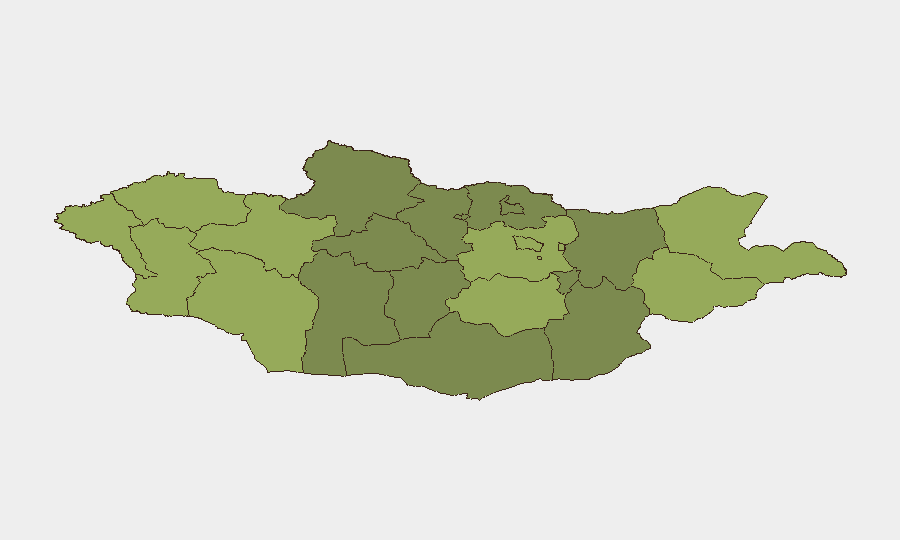
Situation Summary
Mongolia remains a lower-tier global security risk (#126 globally, composite score 10), with no tracked major violent incidents in the current reporting window. However, three concurrent developments—Indigenous-rights activism at an international summit, diplomatic friction following protests at a Chinese energy project, and an ongoing regional cyber campaign targeting government entities—indicate elevated political sensitivity and cross-border risk vectors. The security environment is stable but increasingly contested around resource extraction, environmental governance, and foreign investment.
Key Developments
- Ulaanbaatar – Indigenous rights protest at UN desertification summit (20–21 August 2026)
Approximately 50 Indigenous representatives and civil-society activists staged a peaceful demonstration at COP17/UN desertification summit venues demanding greater recognition of Indigenous Peoples' rights and meaningful participation in land-degradation and drought-policy negotiations. No violence or police clashes reported, but the action signals heightened activism around environmental governance and land rights in the capital.
- Sukhbaatar Province – Diplomatic fallout from energy-camp intrusion (14–15 August incident; active response 19–21 August 2026)
Protesters entered the Mongolia Foison Energy camp at Kherlen Tohoi XXVIII oil exploration block, disrupted operations, harassed Chinese workers, and livestreamed property damage. Mongolian authorities detained 2–4 activists, opened criminal cases, and a Ministry of Industry and Mineral Resources official issued a formal apology to the Chinese embassy. Criminal investigations and diplomatic assurances remain active as of 20–21 August, sustaining political sensitivity for foreign energy workers and cross-border relations.
- Regional cyber intrusion campaign targeting Mongolia (disclosed 17–19 August 2026)
Cybersecurity researchers identified an updated "CoolClient" backdoor malware used in ongoing intrusions against government and organizational targets in Mongolia, Myanmar, Pakistan, India, and Russia. The campaign is described as active, elevating cyber-risk for Mongolian government and critical-infrastructure operators despite no specific incident detailed in the last 24–48 hours.
Highest-Risk Areas
Eastern and western border provinces dominate the risk ranking, with Dornod (58) and Sükhbaatar (55) leading due to cross-border activity, resource-extraction tensions, and proximity to Russia and China. Sükhbaatar's elevated rank reflects the active energy-project friction and activist mobilization documented this week. Western regions (Uvs, Khovd, Bayan-Ölgii) cluster at 48–52 owing to remote terrain, limited state capacity, and historical smuggling/trafficking corridors. Ulaanbaatar (45), despite lower ranking than border zones, remains a concentration point for political activism, foreign presence, and cyber-targeting of government systems.
How GeoBit Would Assist
Organizations operating in or with personnel in Mongolia should prioritize AOI Monitoring & Early Warning on Sukhbaatar Province and Ulaanbaatar to track activist organizing, protest calendars, and energy-sector disruptions; Intel Sweep and multi-language OSINT (including X/Telegram and Mongolian-language sources) to detect emerging civil-society campaigns and diplomatic statements; and Cyber threat intelligence integrated with Network & Actor Analysis to map CoolClient and related malware threats targeting corporate IT infrastructure and government systems. Persistent geographic and social-media surveillance would provide 48–72 hour lead time on protest escalation or cross-border incidents.
7-Day Outlook
Near-term trajectory is stable with residual political friction. The energy-sector confrontation is unlikely to escalate violently given Mongolian authorities' diplomatic response, but continued activism around resource extraction and environmental policy should be expected through late August as the desertification summit closes. Cyber intrusion activity will remain elevated; organizations should assume persistent targeting of government and critical sectors.
Highest-Risk Areas — Ranked
| # | State / Region | Risk |
|---|---|---|
| 1 | Dornod | 58 |
| 2 | Sükhbaatar | 55 |
| 3 | Uvs | 52 |
| 4 | Khovd | 50 |
| 5 | Bayan-Ölgii | 48 |
| 6 | Govi-Altai | 46 |
| 7 | Ulaanbaatar | 45 |
| 8 | Zavkhan | 44 |
| 9 | Töv | 42 |
| 10 | Dundgovi | 40 |
| 11 | Darkhan-Uul | 38 |
| 12 | Ömnögovi | 37 |
Sources
Previous Daily Briefs
A new Mongolia brief is written every day — each with its own risk map and downloadable CSV. Here's the last week; use the calendar to go further back.
- August 19, 2026
- August 17, 2026
- August 15, 2026
- August 13, 2026
- August 11, 2026
- August 9, 2026
- August 8, 2026
📅 Browse every day by calendar →
Highlighted days have a brief. Tap a day for that day's map & analysis, or “csv” for that day's dataset ($5).
Atlas — our AI intelligence desk — emails them this snapshot personally. Nothing else, no list.