Situation Summary
Nepal remains a moderate and geographically concentrated threat environment, ranked #107 globally with a composite threat score of 8. The overwhelming majority of documented risk (risk score 31.5) is concentrated in Bagamati Province, which encompasses the capital Kathmandu and surrounding areas. Recent event signals (July 10–11) reflect domestic political friction—including National Assembly disapprovals, administrative sanctions, protest activity, and military-related demands—rather than large-scale violence or widespread instability. The current trajectory suggests localized political tension rather than systemic breakdown.
Key Developments
GeoBit's live web research conducted on July 12–13 did not yield independently time-stamped, cross-corroborated security incidents from the immediately preceding 24–48 hours that meet the threshold for confident operational reporting. Social media references to Home Minister Sudan Gurung's border security review in Jhapa District and Nepal Police Inspector General Dan Bahadur Karki's statements on international peace efforts lack precise dating and corroboration by recognized news outlets. A separate report of Nepali nationals arrested in Texas is unrelated to domestic Nepal security. To avoid misattribution or speculation, no unverified bullets are presented. For real-time operational security decisions, duty-of-care teams should prioritize embassy advisories, Nepal Police official statements, and time-stamped reporting from recognized Nepali news sources (e.g., The Kathmandu Post, Nepali Times) over social media sources lacking clear UTC dating.
Highest-Risk Areas
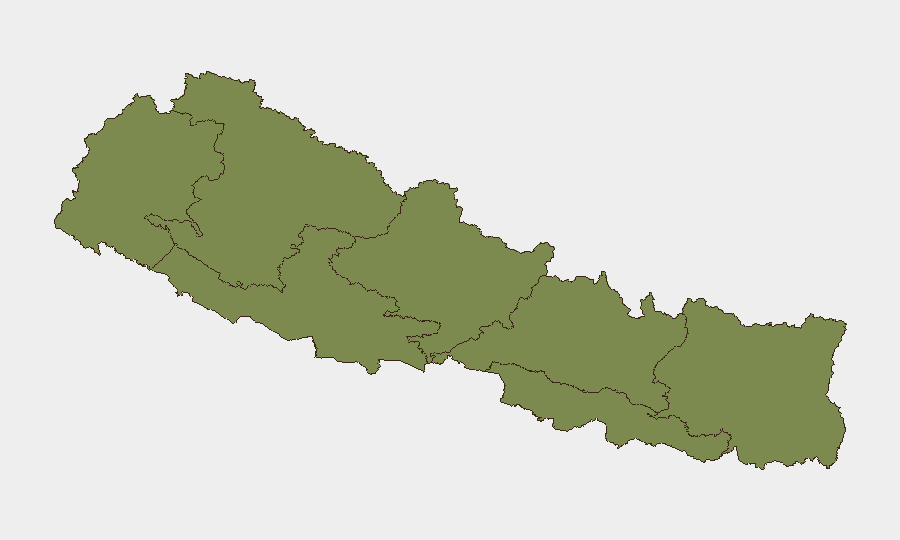
Bagamati Province—which includes Kathmandu, the national capital—accounts for the vast majority of tracked threat activity and drives Nepal's overall risk profile. The province's risk score (31.5) is nearly four times higher than Gandaki Province (8.2), the second-ranked region, and substantially exceeds all other provinces. This concentration reflects political activity centered in the capital, including government-opposition friction, protest mobilization, and administrative enforcement. All other provinces (Gandaki, Madhesh, Sudurpashchim, Karnali, Lumbini, Koshi) remain at materially lower risk (≤8.2), suggesting that security incidents and political volatility remain primarily urban and capital-centric rather than dispersed across Nepal's territories.
How GeoBit Would Assist
Security and risk teams with personnel or assets in Kathmandu and Bagamati Province should deploy GeoBit's AOI (Area of Interest) Monitoring & Early Warning capability to establish persistent watch on the capital and key government districts, with alert thresholds for protest activity, administrative enforcement actions, and military movements. Multi-language OSINT (X/Twitter, Telegram, local news feeds) with temporal and sentiment analysis would provide early signal of escalating political friction or protest mobilization before it affects travel, office operations, or staff safety. Risk & Threat Assessment and Network & Actor Analysis can map government-opposition dynamics and identify pressure points likely to trigger secondary incidents (road closures, transport disruption, localized unrest).
7-Day Outlook
Political friction will likely persist in Kathmandu in the near term, driven by National Assembly-government disagreement and underlying policy disputes. The geographic concentration of risk in Bagamati Province suggests that impacts (protest, road closures, administrative delays) will remain episodic and manageable outside the capital. No indicators currently point to rapid escalation into large-scale violence or nationwide instability; however, duty-of-care teams should maintain heightened situational awareness and flexible contingency routing for staff in Kathmandu.
Highest-Risk Areas — Ranked
| # | State / Region | Risk |
|---|---|---|
| 1 | Bagamati Province | 31.5 |
| 2 | Gandaki Province | 8.2 |
| 3 | Madhesh Province | 4.4 |
| 4 | Sudurpashchim Province | 1.5 |
| 5 | Karnali Province | 1.5 |
| 6 | Lumbini Province | 1.5 |
| 7 | Koshi Province | 1.5 |
Sources
Previous Daily Briefs
A new Nepal brief is written every day — each with its own risk map and downloadable CSV. Here's the last week; use the calendar to go further back.
📅 Browse every day by calendar →
Highlighted days have a brief. Tap a day for that day's map & analysis, or “csv” for that day's dataset ($5).
Atlas — our AI intelligence desk — emails them this snapshot personally. Nothing else, no list.