Situation Summary
New Zealand maintains an overall low global threat profile (rank #157) with a composite threat score of 4.0, but is experiencing a concurrent spike in localized security incidents, infrastructure disruption, and cyber-compromise across 24–48 hours. Canterbury region presents significantly elevated risk (31.5), driven by multiple simultaneous incidents across governance, law enforcement, and public order. The country is simultaneously navigating elevated diplomatic and defence posture following India's Prime Minister visit and prospective Ocean of Peace alliance membership, which may expand security obligations and operational complexity in coming months.
Key Developments
- Canterbury (Christchurch) – 2026-07-14, ongoing: Actor has made public statements directed at the region; simultaneous Ministry investigation, administrative sanctions against a politician, and disapproval signals across governance bodies indicate unresolved institutional tension or procedural breach.
- Auckland – 2026-07-14: Police have deployed unconventional violence protocols during law enforcement operations; authorities have conducted arrests and detentions linked to public-order incidents, signalling escalated enforcement posture in the city.
- Nationwide – 2026-07-12 to 2026-07-14: Fleet-tracking data breach affecting 30,000+ vehicles and thousands of drivers has exposed logistics, business-travel, and personal-movement data; cyber-security teams should assess exposure of corporate vehicle fleets and driver itineraries.
- Auckland – 2026-07-14: Radio station has been subject to public statement from Auckland authorities, suggesting potential regulatory or public-safety dispute; context of elevated police activity suggests possible media-related compliance or reporting issue.
- Auckland (transport) – ongoing through 2026-07-13: Rail network closure for four consecutive days (from 9 July) continues to disrupt commuting and inter-city travel; City Rail Link rehearsal and upgrade work will persist into mid-week.
- South Island, State Highway 1 (Kaikōura–Waipara–Ward corridor) – 2026-07-08 to 2026-07-13: Severe weather has closed a critical stretch of SH1 overnight; heavy rain and isolation persist, affecting road freight, supply chains, and South Island connectivity.
- Wellington / National Policy Level – 2026-07-11 to 2026-07-14: Government confirmed active discussions on Ocean of Peace alliance membership (collective defence pact with Australia and Fiji), representing a formal shift in New Zealand's security posture and likely increasing diplomatic and operational commitments.
- Auckland – 2026-07-10 to 2026-07-11 (post-event): PM Modi's official visit concluded; India–New Zealand strategic defence and security partnership was announced, including naval-exercise commitments and expanded defence cooperation.
Highest-Risk Areas
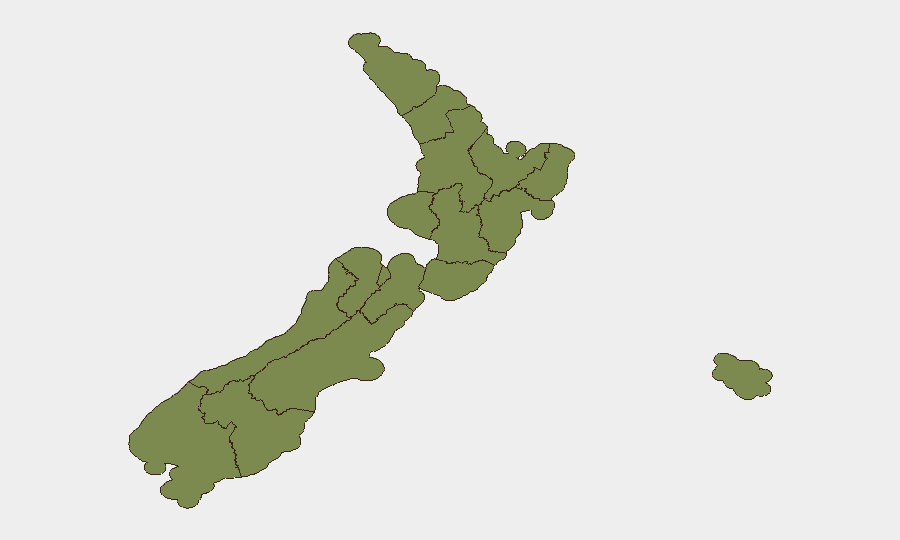
Canterbury dominates the sub-national risk landscape (31.5), with concentrated signals across regulatory, law-enforcement, and political domains on 2026-07-14 alone. Otago (18.4) and Auckland (16.3) follow; Auckland's elevated score reflects vehicle crime arrests, police deployments, and transport disruption, while Otago's drivers remain unclear from current signals. Wellington (16.3) aligns with national-level policy activity and government statements. All other regions score below 5.0, indicating risk is concentrated in three major urban centres and one South Island district.
How GeoBit Would Assist
Intel Sweep and OSINT fusion capabilities would correlate the Canterbury governance signals with the legislative or administrative context behind the investigation and sanctions, clarifying whether incidents pose broader institutional or public-safety risk. AOI Monitoring & Early Warning would flag continued escalation in Auckland law-enforcement activity and transport disruption, with automated alerting if arrests or closures expand. Routing & Network Analysis would identify alternative transport corridors for corporate travel and logistics given SH1 closure and rail disruption, and cross-reference vehicle-fleet exposure against the reported data breach.
7-Day Outlook
Near-term risk is expected to remain elevated in Canterbury and Auckland through mid-week as investigations and enforcement actions proceed; rail service restoration is scheduled imminently, likely easing Auckland commuter and inter-city pressure by 2026-07-15 or 2026-07-16. South Island road connectivity depends on rainfall abatement; if SH1 remains closed beyond 2026-07-14, supply-chain and travel delays will extend. Diplomatic and defence-posture changes (India partnership, Ocean of Peace) are medium-term policy shifts unlikely to generate acute security incidents domestically in the next seven days.
Highest-Risk Areas — Ranked
| # | State / Region | Risk |
|---|---|---|
| 1 | Canterbury | 31.5 |
| 2 | Otago | 18.4 |
| 3 | Auckland | 16.3 |
| 4 | Wellington | 16.3 |
| 5 | West Coast | 4.8 |
| 6 | Northland | 2.6 |
| 7 | Bay of Plenty | 2.6 |
| 8 | Waikato | 2.1 |
| 9 | Tasman | 2.1 |
| 10 | Chatham Islands | 1.5 |
| 11 | Taranaki | 1.5 |
| 12 | Manawatū-Whanganui | 1.5 |
Sources
Previous Daily Briefs
A new New Zealand brief is written every day — each with its own risk map and downloadable CSV. Here's the last week; use the calendar to go further back.
📅 Browse every day by calendar →
Highlighted days have a brief. Tap a day for that day's map & analysis, or “csv” for that day's dataset ($5).
Atlas — our AI intelligence desk — emails them this snapshot personally. Nothing else, no list.