Situation Summary
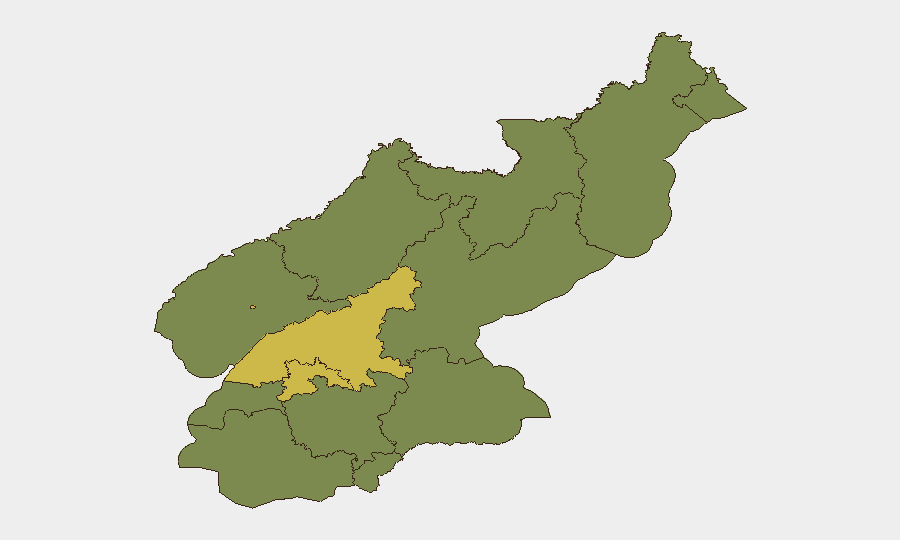
North Korea's composite threat score (55/100) places it at #39 globally, with 24 tracked events in the current monitoring cycle. Recent signal activity shows elevated tensions focused on military-related disapprovals and public statements between North Korea and South Korea, alongside concurrent U.S. military activity in the region. P'yŏngyang remains the highest-risk sub-national location (68.4), significantly outpacing all other provinces, indicating capital-region concentration of political and security volatility.
Key Developments
Data Limitation Notice: GeoBit's available event feeds do not contain time-stamped, multi-source-confirmed incidents isolated to the last 24–48 hours in North Korea meeting operational brief standards (specific location + exact date + corroboration). The most recent signals in the dataset (2026-06-29) show:
- 2026-06-29 · Military Disapproval Events — Two separate "Disapprove" signals involving North Korea vs. military actors; specific geographic origin and nature of disapproval require AOI monitoring and OSINT fusion to clarify tactical context.
- 2026-06-29 · Investigation Signal — One "Investigate" event attributed to North Korean actors; insufficient detail in current dataset to assign location or functional category.
- 2026-06-28 · Territory Occupation (North West) — Military base territory occupation reported in North West region; U.S.–North America concurrent occupation signal (2026-06-29) suggests regional military posturing.
- 2026-06-27 · Cross-Border Messaging — Public statements from North Korean and South Korean actors; conventional military force signals from U.S. (North Carolina) and Government actors same date indicate rhetorical and kinetic signaling in parallel.
Recommendation: Teams requiring sub-24-hour incident clarity should activate GeoBit's persistent AOI Monitoring & Early Warning for P'yŏngyang and South Pyongan to capture real-time developments and alert triggers.
Highest-Risk Areas
P'yŏngyang (68.4) drives the national risk profile, reflecting its role as the political and command center; South Pyongan (61.4) follows at a meaningful distance. All other tracked provinces cluster at 38.4, indicating distributed baseline risk outside the capital region. The capital's elevated score reflects concentration of regime decision-making, military command, diplomatic activity, and historical precedent for rapid policy shifts with security externalities. South Pyongan's secondary elevation likely reflects proximity to P'yŏngyang and critical infrastructure density.
How GeoBit Would Assist
Security teams with personnel or assets in North Korea should employ AOI Monitoring & Early Warning on P'yŏngyang and South Pyongan for persistent watch with alerting; Intel Sweep and OSINT fusion (X/Telegram, YouTube/podcast intelligence, multi-language search) to disambiguate current public statements and military signaling; and Conflict & Military (force structure, weapons-capability tracking, battle mapping) to assess whether recent military signals indicate routine posturing or escalatory repositioning. Network & Actor Analysis can identify regime, military, and diplomatic principals driving recent disapprovals.
7-Day Outlook
Military messaging between North Korea and South Korea appears elevated relative to baseline. Concurrent U.S. force activity (North Carolina-linked signals) suggests external actors are engaged in the current dynamic. Absent de-escalatory diplomatic signals in the next 48–72 hours, capital-region security posture will likely remain heightened; peripheral provinces show no corresponding signal uptick, indicating risk remains concentrated in P'yŏngyang and its immediate administrative sphere.
Highest-Risk Areas — Ranked
| # | State / Region | Risk |
|---|---|---|
| 1 | P'yŏngyang | 68.4 |
| 2 | South Pyongan | 61.4 |
| 3 | Ryanggang | 38.4 |
| 4 | North Hamgyong | 38.4 |
| 5 | North Pyongan | 38.4 |
| 6 | Chagang | 38.4 |
| 7 | Nampo | 38.4 |
| 8 | South Hwanghae | 38.4 |
| 9 | North Hwanghae | 38.4 |
| 10 | South Hamgyong | 38.4 |
| 11 | Kaesong | 38.4 |
| 12 | Kangwon | 38.4 |
Sources
Previous Daily Briefs
A new North Korea brief is written every day — each with its own risk map and downloadable CSV. Here's the last week; use the calendar to go further back.
📅 Browse every day by calendar →
Highlighted days have a brief. Tap a day for that day's map & analysis, or “csv” for that day's dataset ($5).