Situation Summary
South Korea remains at a moderate composite threat level (rank #117 globally, score 8/100) but is experiencing a notably volatile 48-hour security window driven by armed civilian–police confrontations, intra-governmental institutional friction, and North Korean rhetorical escalation. Seoul is the primary locus of concern, with a risk score (31.8) nearly thirteen times higher than the national baseline, reflecting both protest activity and armed incidents in the capital. The current environment is characterized by episodic rather than sustained crisis, but elevated institutional tension and law-enforcement operations signal a risk trajectory that warrants close monitoring through early July.
Key Developments
- Seoul, 2026-06-27 (overnight) – A small-arms confrontation between civilians and South Korean police occurred in the Seoul metropolitan area, followed by arrest and detention operations; casualty counts and incident triggers remain unconfirmed, but multiple security feeds classify the event as a genuine armed encounter rather than routine police activity.
- National level, 2026-06-27 – The Prosecutor's Office issued a formal public disapproval of government actions in parallel with detention activity linked to a prison-related incident, signaling institutional pushback on executive-branch law enforcement and elevating risk of politically motivated legal proceedings or public clashes between branches.
- Seoul, 2026-06-26 – A public demonstration/rally occurred in Seoul in response to recent North Korean statements; concurrent North Korean disapproval messaging directed at Seoul amplified short-term crowd risk and protest-related confrontation potential in the capital.
- National level, 2026-06-25–26 – The South Korea Marine Corps formally demanded government action; the government rejected the demand and issued a presidential statement, reflecting civil–military friction and risk of further institutional discord or disciplinary escalation.
- Cross-border / National level, 2026-06-26–27 – North Korean messaging referenced prisoner assault and humanitarian concerns, followed by settlement-related statements from South Korean entities; this sustained rhetorical volatility and cross-border diplomatic friction increases travel-risk and potential for sudden regional posturing.
- National level (ongoing) – Multiple consecutive disapproval statements from government bodies (2026-06-28) suggest unresolved intra-governmental disputes or policy reversals, indicating further public statements or enforcement actions are likely in the near term.
Highest-Risk Areas
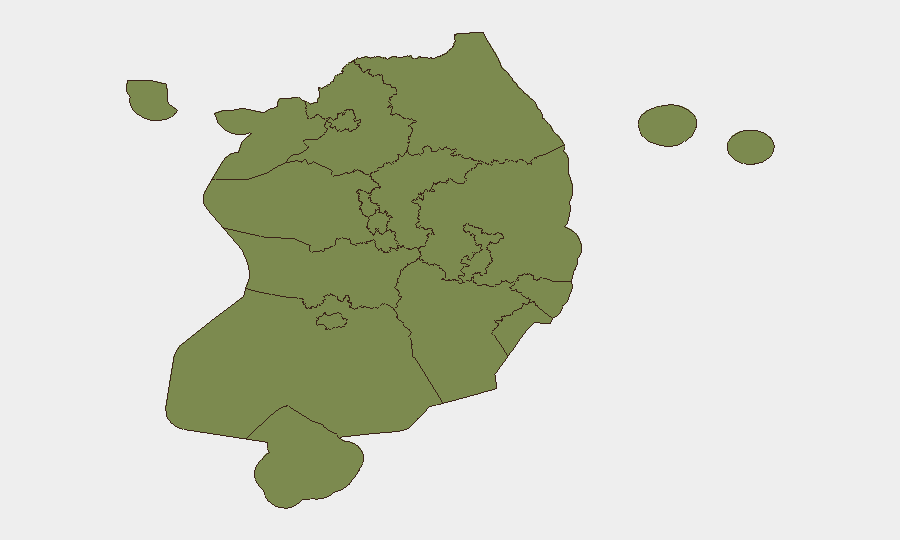
Seoul (risk 31.8) dominates the sub-national ranking and accounts for the majority of tracked armed and protest-related events over the past 48 hours. North Chungcheong (25.4), while geographically distant from Seoul, shows elevated risk signals likely tied to detention facilities or institutional security operations related to the national-level prosecutor–government friction. Gyeonggi province (3.4), which surrounds Seoul, remains secondary but warrants monitoring for spillover protest or enforcement activity. All other tracked regions remain below risk score 2.5, indicating that current volatility is concentrated in the Seoul metropolitan and institutional spheres rather than distributed geographically.
How GeoBit Would Assist
Teams with personnel or assets in Seoul should activate AOI (area-of-interest) monitoring and early-warning capabilities to track protest formations, police deployments, and crowd movements in real time. Multi-language OSINT fusion and sentiment analysis across Korean-language social media, government statements, and North Korean messaging would provide continuous corroboration of institutional friction and cross-border rhetorical trends. Network and actor analysis focused on prosecutor–government interactions, Marine Corps messaging, and settlement/diplomatic activity would enable duty-of-care teams to anticipate secondary enforcement actions or public confrontations.
7-Day Outlook
The security trajectory over the next seven days will likely remain volatile but contained. Continued intra-governmental dispute resolution, potential further arrests or detention orders, and ongoing North Korean diplomatic messaging are expected. A sustained escalation into mass civil unrest or critical infrastructure disruption is not currently indicated, but episodic armed incidents and protest activity in Seoul should be assumed ongoing through early July pending institutional stabilization.
Highest-Risk Areas — Ranked
| # | State / Region | Risk |
|---|---|---|
| 1 | Seoul | 31.8 |
| 2 | North Chungcheong | 25.4 |
| 3 | Gyeonggi | 3.4 |
| 4 | Gangwon State | 2.4 |
| 5 | South Chungcheong | 2.4 |
| 6 | Jeju | 2.4 |
| 7 | Busan | 2.4 |
| 8 | Incheon | 2.1 |
| 9 | Jeonbuk State | 2.1 |
| 10 | South Gyeongsang | 2.1 |
| 11 | South Jeolla | 1.8 |
| 12 | Sejong | 1.8 |
Sources
Previous Daily Briefs
A new South Korea brief is written every day — each with its own risk map and downloadable CSV. Here's the last week; use the calendar to go further back.
📅 Browse every day by calendar →
Highlighted days have a brief. Tap a day for that day's map & analysis, or “csv” for that day's dataset ($5).