Situation Summary
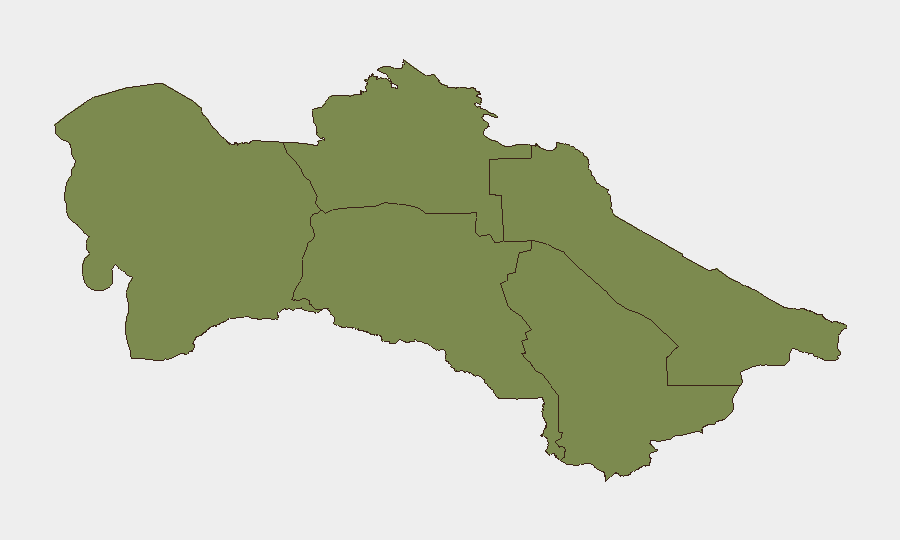
Turkmenistan remains a low-threat environment globally (rank #164; composite threat score 4/100) with no verified security incidents or civil unrest reported in the last 24–48 hours. Risk concentration is overwhelmingly localized to Ashgabat City (composite score 31.8), which accounts for the majority of the country's tracked events, while five regional areas register minimal individual risk (1.8 each). The security posture is stable, though standing cautions around crime in the capital and border-area access restrictions remain in effect.
Key Developments
No verified security, conflict, civil-unrest, crime, political-instability, or infrastructure incidents were detected in Turkmenistan during the reporting period (2026-07-15 to 2026-07-17). Recent public statements and event signals flagged by the platform reflect routine diplomatic activity—including Turkmen–French and Turkmen–PETRONAS communications—rather than new security disruptions or risk escalations.
*Note: Standing travel cautions persist (crime risk in urban centers; border-area entry restrictions; visa and movement limitations), but these are longstanding administrative conditions, not new developments.*
Highest-Risk Areas
Ashgabat City dominates the threat landscape, with a composite risk score nearly 19 times higher than the next-ranked region (Dashoguz, 16.8). This concentration reflects the capital's role as the country's political, economic, and diplomatic hub, where the majority of foreign nationals, critical infrastructure, and official activity are concentrated. Dashoguz Region ranks second, likely reflecting its proximity to Uzbekistan and historical cross-border dynamics, though its absolute risk remains low. The four remaining regions (Balkan, Lebap, Ahal, Mary) all register identical, minimal scores (1.8), indicating geographically distributed but negligible security events or conditions outside the capital.
How GeoBit Would Assist
Intel Sweep and multi-language OSINT feeds targeting Turkmen government, security-force, and diplomatic channels (MFA statements, Telegram, X) would provide early warning of policy shifts, visa restrictions, or official security directives affecting corporate operations. AOI Monitoring and persistent area-of-interest watch can alert security teams to emerging incidents or unrest in Ashgabat and border regions (Dashoguz) in near-real time, enabling duty-of-care response before incidents escalate. Network & Actor Analysis and sentiment analysis on Turkmen and regional media would flag shifts in regime stability or international tensions affecting investment or travel safety.
7-Day Outlook
No material change in the security environment is anticipated over the next seven days. Routine diplomatic engagement (bilateral agreements, forum participation) is likely to continue without disruption. Security teams should maintain standard protocols for Ashgabat operations while monitoring for any policy announcements (visa, border, or movement restrictions) that could affect personnel or asset access.
Note to stakeholders: GeoBit's live research did not surface recent Turkmenistan-specific incidents. To improve alert sensitivity, consider configuring a dedicated watchlist with Turkmen-language terms, regional Uzbek and Russian media sources, and border-crossing activity feeds for real-time notification of emerging events.
Highest-Risk Areas — Ranked
| # | State / Region | Risk |
|---|---|---|
| 1 | Ashgabat City | 31.8 |
| 2 | Dashoguz Region | 16.8 |
| 3 | Balkan Region | 1.8 |
| 4 | Lebap Region | 1.8 |
| 5 | Ahal Region | 1.8 |
| 6 | Mary Region | 1.8 |
Sources
Previous Daily Briefs
A new Turkmenistan brief is written every day — each with its own risk map and downloadable CSV. Here's the last week; use the calendar to go further back.
📅 Browse every day by calendar →
Highlighted days have a brief. Tap a day for that day's map & analysis, or “csv” for that day's dataset ($5).
Atlas — our AI intelligence desk — emails them this snapshot personally. Nothing else, no list.