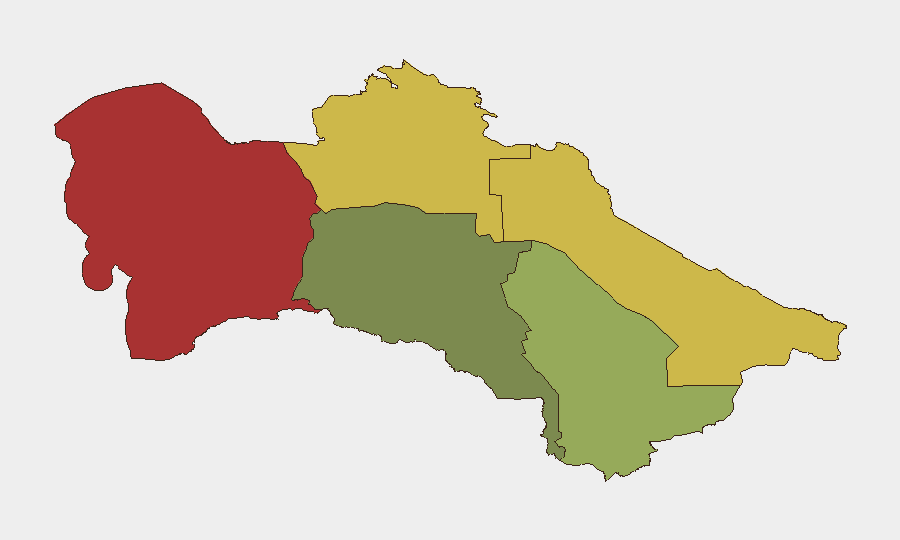
Situation Summary
Turkmenistan remains a stable operating environment with no acute security incidents reported in the last 24–48 hours. The country maintains a composite threat ranking of 4 globally (#168), reflecting baseline structural risks—primarily petty crime and restricted civil freedoms—rather than active conflict, unrest, or infrastructure breakdown. Recent government activity (AI policy announcement, presidential visits) proceeds without indication of instability. The security baseline is steady and predictable for corporate operations.
Key Developments
- No discrete security incidents reported in Turkmenistan, 18–19 July 2026. Open-source monitoring across news, social media, and OSINT feeds reveals no documented protests, violent crime spikes, infrastructure failures, border operations, or political disturbances in the last 48 hours.
- Ashgabat, 17–18 July 2026 – Government AI policy initiative. Turkmenistan's Minister of Communications announced a National Strategy for Artificial Intelligence at the World Conference on Artificial Intelligence in Shanghai. This reflects routine government policy development with no security implications.
- Ashgabat, mid-July 2026 – Presidential visit concludes without incident. President Serdar Berdimuhamedov returned from an official visit to Georgia where he discussed bilateral economic and diplomatic partnerships. No unrest or instability associated with his travel or return.
- Nationwide baseline caution advisory remains in effect. The Australian government's Smartraveller service continues to recommend exercising a high degree of caution in Turkmenistan due to ambient crime risk, particularly in less-developed regions. This reflects chronic structural risk, not new developments.
- No changes to border, transit, or movement restrictions reported. Routine visa, customs, and internal movement controls persist; no emergency measures or sudden closures have been signaled in the last 48 hours.
Highest-Risk Areas
Balkan Region (risk 78) and Lebap Region (risk 68) drive the country's composite threat score and warrant priority focus by security teams. Both regions are characterized by lower state capacity, higher petty crime, and weaker corporate oversight infrastructure compared to Ashgabat (risk 18). Dashoguz Region (risk 62) follows, while Mary and Ahal regions present moderate structural risk. Teams with personnel or assets in Balkan and Lebap should maintain elevated situational awareness and consider localized security protocols; Ashgabat, by contrast, presents lower day-to-day risk and supports routine business operations.
How GeoBit Would Assist
Security teams operating in Turkmenistan should leverage AOI Monitoring & Early Warning to track Balkan and Lebap regions persistently for signs of crime spikes, unrest, or infrastructure failure, with automated alerting. Intel Sweep and multi-language OSINT (X/Twitter, Telegram, local news aggregation) provide continuous 24-hour visibility into emerging incidents before they escalate. Route & Network Analysis can identify safer transit corridors and alternative logistics routes in high-risk regions, reducing exposure to ambient crime. GIS & Spatial Analysis overlays risk zones with personnel locations and asset footprints for rapid duty-of-care assessment.
7-Day Outlook
No acute deterioration is anticipated over the next seven days. The government remains firmly in control, routine diplomatic and economic activity continues, and there are no indicators of civil unrest, border instability, or emergency policy shifts. Teams should maintain standard baseline security postures and monitor for any sudden changes in government rhetoric, border activity, or crime reporting in outlying regions.
Highest-Risk Areas — Ranked
| # | State / Region | Risk |
|---|---|---|
| 1 | Balkan Region | 78 |
| 2 | Lebap Region | 68 |
| 3 | Dashoguz Region | 62 |
| 4 | Mary Region | 42 |
| 5 | Ahal Region | 35 |
| 6 | Ashgabat City | 18 |
Sources
Previous Daily Briefs
A new Turkmenistan brief is written every day — each with its own risk map and downloadable CSV. Here's the last week; use the calendar to go further back.
📅 Browse every day by calendar →
Highlighted days have a brief. Tap a day for that day's map & analysis, or “csv” for that day's dataset ($5).
Atlas — our AI intelligence desk — emails them this snapshot personally. Nothing else, no list.