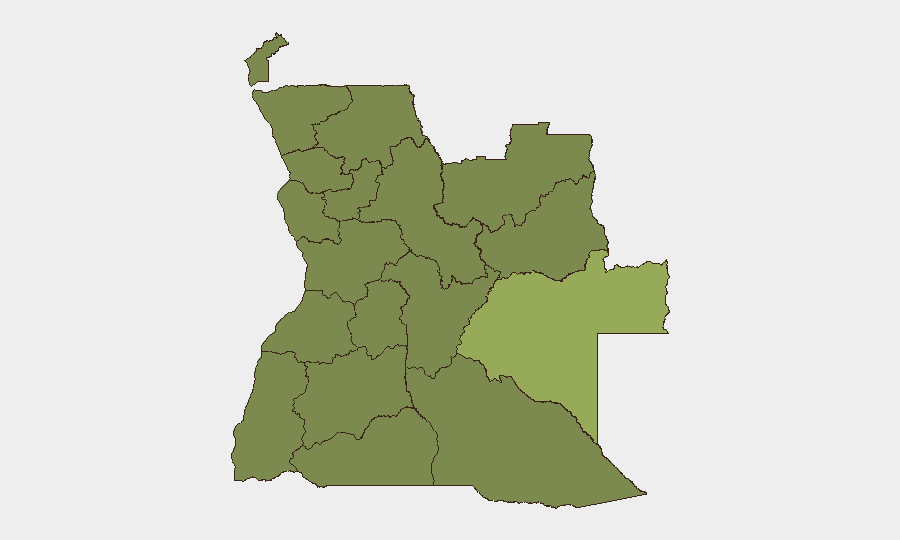
Situation Summary
Angola remains at composite threat rank #49 globally with a stable security environment over the past 24–48 hours; no multi-source-confirmed incidents of conflict, civil unrest, crime spikes, or infrastructure failure have been documented in the most recent reporting window. Endemic risk drivers—petty and organized crime in urban centers, resource-sector tensions in eastern provinces, and ongoing cholera circulation—persist but have not escalated into acute events. The security baseline reflects chronic vulnerabilities rather than imminent systemic destabilization.
Key Developments
No specific security, conflict, civil-unrest, or infrastructure incidents meeting corroboration and recency criteria (last 24–48 hours with precise location and date) have been identified in Angola. Recent monitoring across open media and X/Twitter feeds confirms the absence of new discrete security events at the national or sub-national level in this timeframe. Cholera remains an active public-health concern with ongoing government and WHO response activity, but no new outbreak clusters or epidemiological escalation have been reported in the last two days. Routine administrative and law-enforcement activity continues; no anomalies in police or state operations have been flagged. Travel advisories from major sources (Australian Smartraveller, Spanish MFA) remain unchanged in status, reflecting stable advisory language around endemic crime and regional caution zones rather than new incident notices.
Highest-Risk Areas
Moxico Province dominates the sub-national risk landscape (score 55.9), significantly outpacing all other regions and reflecting ongoing tensions linked to resource competition, informal-sector activity, and limited state presence in remote border areas. The Lunda provinces (Norte, Sul) and Cabinda each score 25.9 and carry elevated risk tied to diamond-sector criminality, cross-border smuggling networks, and historical instability; Cabinda's risk also reflects periodic separatist activity and security-force operations. Luanda and Bengo provinces, despite matching the 25.9 baseline, concentrate risk through high urban crime rates, robbery, and carjacking affecting expatriate and corporate populations. The remaining provinces score uniformly at 25.9, indicating either more stable operating conditions or lower event density; risk within each remains non-negligible and warrants contingency planning for organizations with dispersed operations.
How GeoBit Would Assist
Security teams operating in Angola should deploy AOI Monitoring & Early Warning on Moxico and Lunda provinces to detect emerging resource-sector tensions or cross-border criminal activity before escalation. OSINT fusion and multi-language search across local news, X/Twitter, and sector-specific channels will provide real-time situational awareness of crime trends, health alerts, and informal governance shifts affecting duty-of-care obligations. Routing & Network Analysis enables rapid alternative-route planning for personnel and supply chains if specific corridors (e.g., Luanda–Moxico road networks) experience temporary closure or security degradation.
7-Day Outlook
No acute security deterioration is forecast for the immediate seven-day period; the operating environment is expected to remain consistent with current baseline risk. Cholera surveillance and routine crime patterns will remain the primary monitoring focus. Organizations should maintain standard due-diligence protocols for high-risk provinces and monitor government health updates for any epidemiological acceleration.
Highest-Risk Areas — Ranked
| # | State / Region | Risk |
|---|---|---|
| 1 | Moxico Province | 55.9 |
| 2 | Lunda Norte Province | 25.9 |
| 3 | Lunda Sul Province | 25.9 |
| 4 | Cabinda Province | 25.9 |
| 5 | Zaire Province | 25.9 |
| 6 | Bengo Province | 25.9 |
| 7 | Luanda Province | 25.9 |
| 8 | Uíge Province | 25.9 |
| 9 | Cuanza Norte Province | 25.9 |
| 10 | Cuanza Sul Province | 25.9 |
| 11 | Malanje Province | 25.9 |
| 12 | Bié Province | 25.9 |
Sources
Previous Daily Briefs
A new Angola brief is written every day — each with its own risk map and downloadable CSV. Here's the last week; use the calendar to go further back.
📅 Browse every day by calendar →
Highlighted days have a brief. Tap a day for that day's map & analysis, or “csv” for that day's dataset ($5).
Atlas — our AI intelligence desk — emails them this snapshot personally. Nothing else, no list.