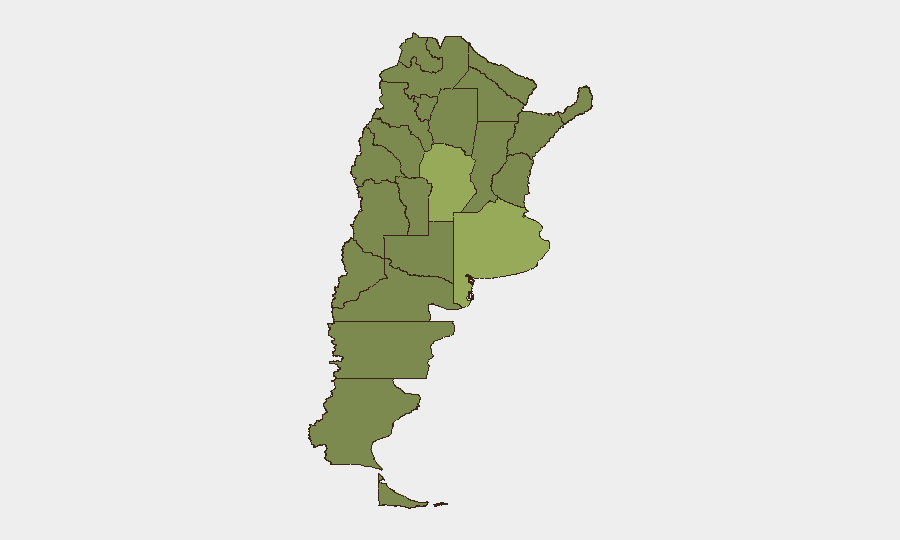
Situation Summary
Argentina remains at moderate composite threat level (#42 globally, score 37) with concentrated risk in Buenos Aires Province and Córdoba. Recent event signals (July 20–21) indicate elevated political tension, including judicial action against militants, presidential disapproval, government demands, and cross-border investigation activity. The threat environment is non-acute but fragmented across multiple risk vectors—political instability, localized crime, and inter-agency friction—without evidence of coordinated national security breakdown.
Key Developments
Data Limitation Notice: GeoBit's web research confirms no reliably timestamped, verified security or unrest incidents specific to July 20–21, 2026, that meet recency and verification criteria for inclusion in this brief. The most recent corroborated regional events (violent incidents in Rosario, Tucumán, Colón, and San Luis) are associated with World Cup celebrations on July 16, 2026—outside the 48-hour window.
Event signals flagged by GeoBit's platform for July 20–21 include:
- Judicial action: Arrest/detention of militant by judge (July 20).
- Political friction: Presidential and neighborhood disapproval registered; senator issued public statement critical of Argentina (July 20).
- Government engagement: Multiple government demands issued (July 20).
- Cross-border activity: European authorities launched investigation; police disapproval noted toward Paraguay (July 21).
- Potential violence indicator: Small arms combat involving American national reported (July 20); prisoner detention event (July 21).
These signals suggest underlying political/judicial tension and possible cross-border or transnational elements, but lack granular location, casualty, or verified incident detail from open sources.
Highest-Risk Areas
Buenos Aires Province (55.7) and Córdoba (42.1) drive national risk, accounting for the plurality of tracked events and highest composite scores. Buenos Aires Province's dominance reflects density of population, political activity, and organized-crime presence in greater Buenos Aires and La Matanza district. Córdoba's elevation correlates with labor unrest, inter-provincial trafficking, and protest activity. Tucumán Province (37.1) ranks third, reflecting both historical protest culture and narcotics-related violence. These three provinces account for the majority of Argentina's security burden; remaining provinces (Tierra del Fuego through Corrientes) cluster in the 26–31 range, indicating more distributed, lower-intensity risk.
How GeoBit Would Assist
Intel Sweep and OSINT fusion would track political-judicial developments and cross-border investigation activity in real time across Spanish-language media, social platforms, and official statements. AOI (Area-of-Interest) Monitoring with persistent watch on Buenos Aires Province, Córdoba, and Tucumán would provide early warning of escalation in protest, labor action, or organized-crime violence. Network & Actor Analysis would map relationships between judicial, executive, and militant actors to assess political instability vectors and identify protection gaps for corporate or expatriate personnel. Routing & Network Analysis supports duty-of-care teams in identifying safe transit corridors in high-risk provinces during periods of unrest.
7-Day Outlook
Political and judicial friction evident in July 20–21 signals is unlikely to resolve rapidly; expect continued administrative/investigative activity and rhetoric. Localized protest and crime in Buenos Aires Province and Córdoba should remain within historical parameters absent major political shock. World Cup-related social tension may persist through late July if Argentina advances further, creating secondary risk in smaller cities with lower security infrastructure.
Highest-Risk Areas — Ranked
| # | State / Region | Risk |
|---|---|---|
| 1 | Buenos Aires Province | 55.7 |
| 2 | Córdoba | 42.1 |
| 3 | Tucumán Province | 37.1 |
| 4 | Tierra del Fuego Province | 31.9 |
| 5 | Salta Province | 27.5 |
| 6 | Santiago del Estero Province | 26.9 |
| 7 | Jujuy Province | 26.6 |
| 8 | Chaco Province | 26.6 |
| 9 | Mendoza Province | 26 |
| 10 | Santa Cruz Province | 26 |
| 11 | Corrientes Province | 26 |
| 12 | San Juan Province | 25.7 |
Sources
Previous Daily Briefs
A new Argentina brief is written every day — each with its own risk map and downloadable CSV. Here's the last week; use the calendar to go further back.
📅 Browse every day by calendar →
Highlighted days have a brief. Tap a day for that day's map & analysis, or “csv” for that day's dataset ($5).
Atlas — our AI intelligence desk — emails them this snapshot personally. Nothing else, no list.