Situation Summary
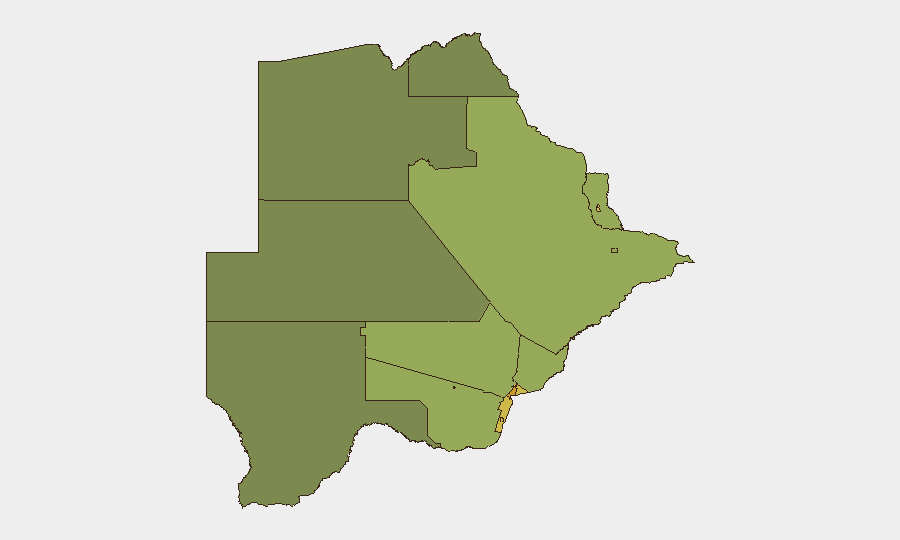
Botswana remains a low-threat environment globally (rank #153, composite score 7) with no tracked security events in the current reporting window. Sub-national risk concentration is evident in urban centers—particularly Gaborone, South-East District, and Lobatse—driven by volume-crime patterns typical of middle-income Southern African cities. The security posture is stable; no acute destabilization signals are present.
Key Developments
No discrete security incidents have been verified for 28–29 August 2026. Recent reportage (24–26 August) included a police shooting death in Palapye under DPP inquest, a child sexual assault near Serove, and alleged police misconduct in Dukwi village during stock-theft investigation—all outside the current 24–48-hour window. A government announcement (24 August) noted disruption of recruitment efforts targeting Botswana nationals for Russian armed forces, reflecting low-level foreign recruitment probing rather than active deployment. Current web research does not surface additional incident-level data meeting verification and timestamp criteria for the last two days.
Highest-Risk Areas
Urban crime and economic crime risk is concentrated in Gaborone (score 72) and South-East District (68), reflecting population density, cash-economy activity, and organized retail/transport theft. Secondary clusters in Lobatse (65) and Francistown (62)—both significant commercial hubs—indicate that robbery, burglary, and vehicle crime correlate with trade corridors and diamond-sector employment zones. Rural and northern districts (North-West, Central, North-East) register substantially lower composite scores (38–45), suggesting that duty-of-care focus for corporate and NGO teams should prioritize urban perimeter security, personnel movement protocols, and asset protection in the southern and central business districts.
How GeoBit Would Assist
Security teams should deploy AOI Monitoring & Early Warning against high-risk districts (Gaborone, South-East, Lobatse) to receive real-time alerts on crime spikes, civil unrest, or infrastructure disruption. OSINT fusion (X/Twitter geotagging, Telegram monitoring, local-outlet feeds from Mmegi and Botswana Guardian) enables 24-hour tracking of street-level incidents and police operations. Routing & Network Analysis and conflict/crime search capabilities support rapid alternative-route planning and risk assessment during personnel movement in urban areas, reducing exposure to volatile micro-zones.
7-Day Outlook
No significant escalation is forecast over the next week. Routine urban crime and occasional police operations are expected to remain the primary operational consideration; international attention to foreign recruitment activity may generate periodic government announcements but poses negligible direct risk to corporate or NGO personnel. Continued monitoring of Gaborone and South-East District sub-national alerts is recommended as standard practice.
Highest-Risk Areas — Ranked
| # | State / Region | Risk |
|---|---|---|
| 1 | Gaborone | 72 |
| 2 | South-East District | 68 |
| 3 | Lobatse | 65 |
| 4 | Francistown | 62 |
| 5 | Jwaneng | 61 |
| 6 | Selebi Phikwe | 58 |
| 7 | Southern District | 55 |
| 8 | Kgatleng District | 50 |
| 9 | Kweneng District | 48 |
| 10 | North-East District | 45 |
| 11 | Central District | 42 |
| 12 | North-West District | 38 |
Sources
Previous Daily Briefs
A new Botswana brief is written every day — each with its own risk map and downloadable CSV. Here's the last week; use the calendar to go further back.
- August 26, 2026
- August 24, 2026
- August 22, 2026
- August 20, 2026
- August 18, 2026
- August 16, 2026
- August 14, 2026
📅 Browse every day by calendar →
Highlighted days have a brief. Tap a day for that day's map & analysis, or “csv” for that day's dataset ($5).
Atlas — our AI intelligence desk — emails them this snapshot personally. Nothing else, no list.