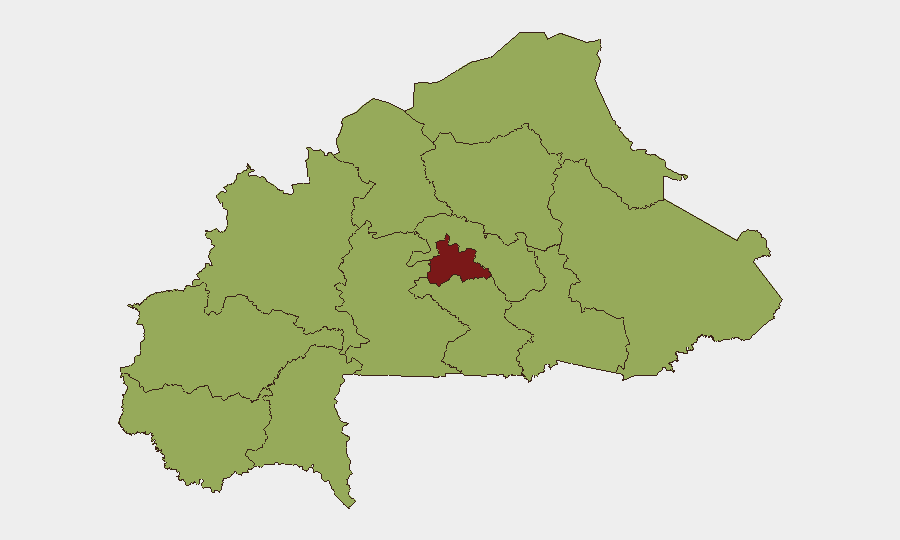
Situation Summary
Burkina Faso remains classified as a high-threat environment (global rank #13, composite threat score 83) driven primarily by active insurgency and elevated internal political tension. No major kinetic incidents have been verified in the last 24–48 hours, but the country is experiencing concurrent pressures: heightened internal security operations in the capital, ongoing military purges following an alleged mutiny, sustained diplomatic friction with neighboring states and Western partners, and unresolved confrontation between the military government and religious leadership. The overall trajectory reflects a tightening security posture by the ruling junta combined with persistent terrorist and criminal activity, creating an unpredictable operational environment for corporate and expatriate presence.
Key Developments
- Ouagadougou – security checkpoint expansion near presidential palace (22 July 2026)
Roads previously closed around the presidential compound have been reopened with newly established security checkpoints as part of an intensified internal security operation. This signals enhanced perimeter control and potential for civilian traffic delays and movement restrictions in central Ouagadougou.
- Nationwide – military leader reasserts sole leadership and warns against internal rivals (22 July 2026)
Captain Ibrahim Traoré publicly reaffirmed his exclusive hold on power and warned against internal challengers, signaling concern over rumored power struggles within the security establishment and raising near-term risk of further internal purges or instability.
- Nationwide – military purges continue amid alleged mutiny investigations (ongoing through 24 July 2026)
Arrests and investigations within the armed forces remain active following reported failed mutiny attempts, creating uncertainty in security decision-making and the reliability of local security partner engagement.
- Nationwide – escalated religious policy enforcement and detention of imams (reported 22 July 2026)
The military government continues enforcement of its June Religious Freedoms Law with detention of prominent Islamic scholars and public rhetoric against "radical Islam," increasing risk of civil-society friction and potential tension around religious gatherings.
- Nationwide – border and diplomatic instability persists (status reaffirmed 20–22 July 2026)
Ongoing tensions with Ghana, Niger, and France; reduced EU and French consular presence; and heightened border security create limited external support infrastructure and increased uncertainty for cross-border travel and operations.
- Nationwide – high baseline terrorism, kidnapping, and armed-crime threat (confirmed in late July advisories)
German and Australian government travel advisories updated in July 2026 confirm sustained high threat of terrorist attacks, kidnapping, armed robbery, and highway ambush even in major cities, with no decline in incident frequency reported.
Highest-Risk Areas
Centre region (composite risk 87.8) is assessed as significantly more dangerous than all other provinces, driven by proximity to Ouagadougou and concentration of state assets, personnel, and insurgent targeting. The remaining eleven regions cluster at risk 57.8, reflecting nationwide exposure to both terrorist/insurgent operations and armed-crime networks. Upper-Basins, Boucle du Mouhoun, and Sahel regions present elevated threats due to established militant presence and limited government control. Risk concentration in Centre combined with elevated baseline threat across the periphery indicates that no region offers a materially lower-risk operational baseline.
How GeoBit Would Assist
Security teams would employ AOI Monitoring & Early Warning to track real-time developments in Ouagadougou and provincial flashpoints, Network & Actor Analysis to assess shifting internal military power dynamics and armed-group activity, OSINT fusion (X/Telegram/radio SIGINT) to detect emerging unrest or checkpoint changes ahead of major incidents, and Routing & Network Analysis to identify safe transit corridors and avoid areas of elevated checkpoint activity or known ambush zones.
7-Day Outlook
Internal military consolidation and religious-policy enforcement will likely continue without major public incident, though the risk of secondary purges or localized unrest around religious sites remains elevated. Terrorist and criminal activity is expected to persist at current elevated baseline. Expatriate and corporate teams should anticipate ongoing checkpoint friction, limited consular support, and sustained need for movement security protocols.
Highest-Risk Areas — Ranked
| # | State / Region | Risk |
|---|---|---|
| 1 | Centre | 87.8 |
| 2 | Upper-Basins | 57.8 |
| 3 | Boucle du Mouhoun | 57.8 |
| 4 | Central-West | 57.8 |
| 5 | Central-South | 57.8 |
| 6 | Central-East | 57.8 |
| 7 | Waterfalls | 57.8 |
| 8 | Southwest | 57.8 |
| 9 | Sahel | 57.8 |
| 10 | Central-North | 57.8 |
| 11 | East | 57.8 |
| 12 | North | 57.8 |
Sources
Previous Daily Briefs
A new Burkina Faso brief is written every day — each with its own risk map and downloadable CSV. Here's the last week; use the calendar to go further back.
📅 Browse every day by calendar →
Highlighted days have a brief. Tap a day for that day's map & analysis, or “csv” for that day's dataset ($5).
Atlas — our AI intelligence desk — emails them this snapshot personally. Nothing else, no list.