Situation Summary
Canada remains a low-threat environment globally (rank #170, composite score 4), but recent event signals indicate elevated activity in Ontario and localized tension in major urban centers. A cluster of police-involved incidents, small-arms events, and judicial/criminal threats emerged in the 24–48 hours prior to 2026-07-05, concentrated in Ontario and Toronto specifically. The overall security trajectory remains stable, but the concentration and nature of signals warrant active monitoring of Ontario and Alberta.
Key Developments
- 2026-07-04 · Toronto, Ontario – Small arms combat incident involving hired gun; police response and arrest of gunmen reported. This represents the most acute public-safety signal in the current reporting window.
- 2026-07-04 · Ontario (location unspecified) – Police officer arrest/detainment related to confrontation with gunmen; jurisdictional and operational implications under investigation.
- 2026-07-04 · Ontario (location unspecified) – Unconventional violence incident involving judicial target (judge); motive and scope under clarification.
- 2026-07-04 · National – Criminal threat directed at Canada; details and actor attribution pending police/media investigation.
- 2026-07-04 · National – Administrative sanctions imposed on tanker (maritime/trade event); potential supply-chain or regulatory implication.
- 2026-07-03 · National – Supreme Court disapproval of criminal matter; indicates ongoing legal/justice-system stress.
- 2026-07-04 · National – Public statement by Canadian entity expressing disapproval of industry; labor, environmental, or regulatory dispute signaled.
Note: Web research did not independently corroborate specific incident details or locations beyond Ontario and Toronto in the 24–48-hour window. Additional primary-source confirmation is recommended.
Highest-Risk Areas
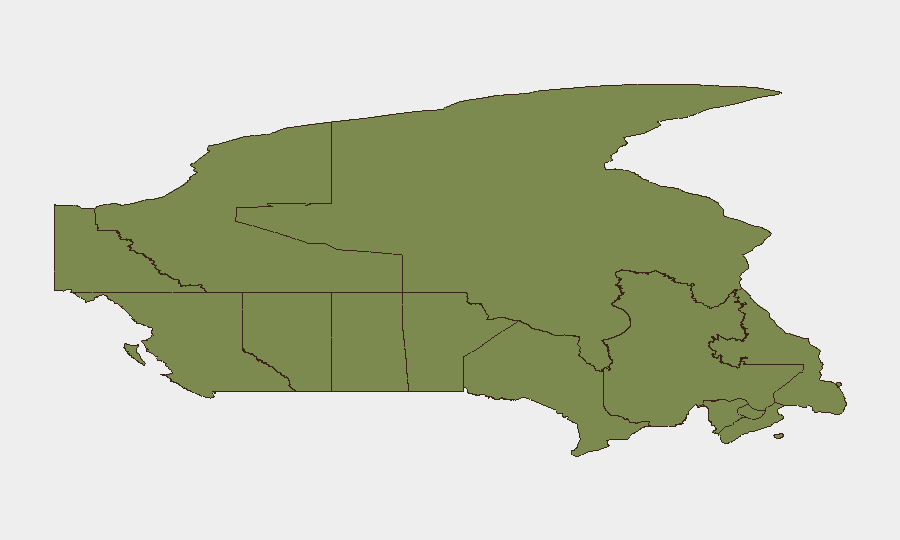
Ontario dominates the sub-national threat profile (risk score 31.5), accounting for roughly 50% of Canada's composite risk. This concentration reflects the density of incidents in Toronto and the Greater Toronto Area, including armed confrontations, judicial targeting, and police-involved events. Nunavut (16) and Alberta (15.7) follow, though signals from those regions are less acute; Alberta warrants attention due to historical resource-sector tensions and protest activity. British Columbia (13.9) and Quebec (9.4) remain moderate-risk, while Atlantic and Prairie provinces show minimal current elevation. Ontario's risk is driven primarily by criminal and civil-unrest signals rather than terrorism or organized conflict.
How GeoBit Would Assist
Security teams with personnel or assets in Ontario should deploy Intel Sweep and X/Twitter OSINT to monitor emerging criminal-network activity and public-safety announcements in real time. AOI (Area-of-Interest) Monitoring with persistent alerting on Toronto and surrounding municipalities would provide early warning of follow-on violent incidents or court-related threats. Entity extraction and network analysis applied to the judge-targeting and criminal-threat signals would help identify actor motivation, affiliations, and escalation risk. Lastly, Risk & Threat Assessment workflows can track whether the July 4 cluster represents random incidents or a coordinated campaign.
7-Day Outlook
The next 7 days will likely see continued police investigation and media reporting on the Toronto armed incidents and judicial threat. Criminal-justice proceedings and public statements may clarify motive and scope. Ontario should remain on elevated monitoring status; any indication of copycat activity, organized coordination, or further judicial threats would warrant escalation to national law-enforcement liaison and public-safety review.
Highest-Risk Areas — Ranked
| # | State / Region | Risk |
|---|---|---|
| 1 | Ontario | 31.5 |
| 2 | Nunavut | 16 |
| 3 | Alberta | 15.7 |
| 4 | British Columbia | 13.9 |
| 5 | Quebec | 9.4 |
| 6 | Saskatchewan | 3.9 |
| 7 | Manitoba | 3.9 |
| 8 | Northwest Territories | 3.7 |
| 9 | Yukon | 3.3 |
| 10 | New Brunswick | 1.9 |
| 11 | Nova Scotia | 1.7 |
| 12 | Newfoundland and Labrador | 1.5 |
Sources
Previous Daily Briefs
A new Canada brief is written every day — each with its own risk map and downloadable CSV. Here's the last week; use the calendar to go further back.
📅 Browse every day by calendar →
Highlighted days have a brief. Tap a day for that day's map & analysis, or “csv” for that day's dataset ($5).
Atlas — our AI intelligence desk — emails them this snapshot personally. Nothing else, no list.