Situation Summary
Cuba faces a critical convergence of infrastructure failure, civil unrest, and security-force escalation as cascading nationwide blackouts trigger widespread anti-government protests across multiple provinces. The third major grid collapse in eight days (21 July) has catalyzed demonstrations in Havana, Santiago de Cuba, and Guantánamo, with documented arrests and heightened police/Interior Ministry presence. Security forces have deployed surveillance assets and made multiple detentions; simultaneously, official acknowledgment of corruption in the electrical sector signals internal regime concern and potential governance strain.
Key Developments
- Havana (multiple neighborhoods) – 21–22 July 2026: Anti-blackout and anti-government protests erupted in Guanabacoa, Regla, and Playa overnight, with residents blocking streets and burning trash containers. "Boinas negras" (special police units) and Interior Ministry forces deployed, reportedly using drone surveillance; arrests reported but unconfirmed in number.
- Nationwide electricity grid collapse – 21 July 2026, morning: Cuba's entire national grid failed for the third time in approximately eight days, triggering mobile-internet disruptions and leaving major population centers without power for extended hours.
- Santiago de Cuba – 21–22 July 2026: Street protests over prolonged blackouts and economic hardship documented in central Santiago; security forces visibly positioned at major intersections and state facilities; video evidence shared on Cuban social media.
- Guantánamo City (Loma del Chivo) – night of 21 July 2026: Anti-blackout demonstration led to at least six documented detentions by State Security and police; two detainees identified as Yeansg Carlos Pérez George and Cristian Jesús Bergondo George; whereabouts of all six unclear.
- Holguín Province (Mayarí) – incident this week, reported 22 July 2026: Death of a young mother following transfusion at municipal hospital; family and community activists demanding investigation into alleged medical negligence; case framed on social media as symptom of health-sector collapse.
- Official acknowledgment of electrical-sector corruption – 22 July 2026: Cuban official Morales Ojeda publicly stated that corruption within the electrical sector exists, remarks widely cited and discussed on Cuban social networks as confirmation of systemic mismanagement and resource diversion.
- U.S. Embassy humanitarian-aid distribution – 21–22 July 2026: Embassy coordinated arrival and distribution of hygiene kits and food through Caritas Cuba and faith-based organizations; Cuban online commentary links aid to rising social tension and shortages tied to power crisis.
Highest-Risk Areas
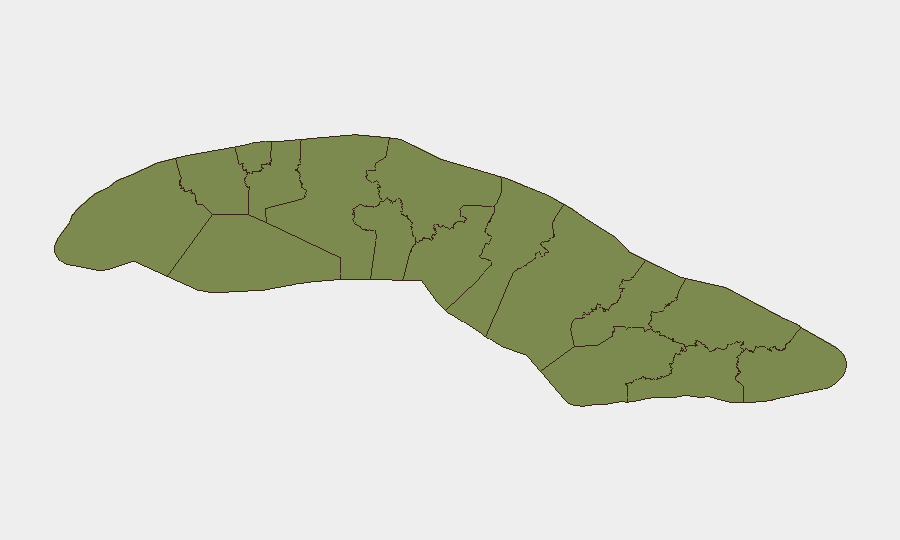
Havana dominates the risk profile (34.5) due to population density, visibility of anti-government activity, and documented security-force response in multiple neighborhoods simultaneously. Santiago de Cuba (9.6) and Sancti Spiritus (10.5) show elevated risk from coordinated protest activity and grid-dependent critical infrastructure. The concentration of recent detentions and demonstrations in Havana, Santiago, and Guantánamo indicates that protests are not isolated incidents but part of a coordinated wave of civil unrest tied to infrastructure failure and economic hardship.
How GeoBit Would Assist
Intel Sweep and OSINT Fusion on Cuban social media, Telegram, and independent news feeds provide real-time corroboration of protest locations, police deployments, and detainee identities. AOI Monitoring & Early Warning with persistent watch on Havana, Santiago, and Guantánamo neighborhoods enables advance alerting when security-force activity or crowd assembly reaches operational thresholds. Network & Actor Analysis of protest organizers, regime response chains, and detention patterns helps forecast escalation risk and identify safest travel corridors for personnel and asset movement.
7-Day Outlook
Blackout recurrence and protest spread remain highly likely given documented grid instability and the absence of near-term repair timelines. Regime security-force posture will probably remain elevated and visible, with increased checkpoint activity and social-media surveillance. Risk of secondary detentions, transport disruptions, and healthcare access degradation is high; contingency planning for extended power loss and restricted movement is advisable for all personnel and operations in Havana and Santiago de Cuba.
Highest-Risk Areas — Ranked
| # | State / Region | Risk |
|---|---|---|
| 1 | Havana | 34.5 |
| 2 | Sancti Spiritus | 10.5 |
| 3 | Santiago de Cuba | 9.6 |
| 4 | Matanzas | 6.4 |
| 5 | Villa Clara | 5.5 |
| 6 | Artemisa | 5.3 |
| 7 | Camagüey | 5.3 |
| 8 | Granma | 4.9 |
| 9 | Pinar del Rio | 4.5 |
| 10 | Mayabeque | 4.5 |
| 11 | Cienfuegos | 4.5 |
| 12 | Isle of Youth | 4.5 |
Sources
Previous Daily Briefs
A new Cuba brief is written every day — each with its own risk map and downloadable CSV. Here's the last week; use the calendar to go further back.
📅 Browse every day by calendar →
Highlighted days have a brief. Tap a day for that day's map & analysis, or “csv” for that day's dataset ($5).
Atlas — our AI intelligence desk — emails them this snapshot personally. Nothing else, no list.