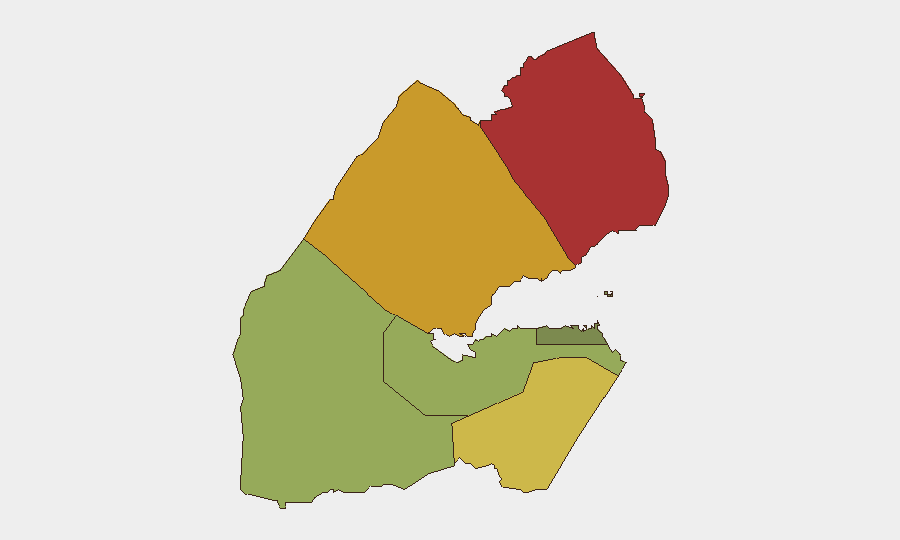
Situation Summary
Djibouti remains at low-to-moderate risk globally (rank #87, composite score 18) with no active tracked security events as of 2026-08-17. A brief shelter-in-place order issued by the U.S. Embassy on August 16 was lifted the same day, signaling either a precautionary measure or rapid de-escalation of a localized threat. The country's security profile is dominated by regional maritime risk and northern border volatility rather than capital-city instability, though corporate and diplomatic operations should maintain heightened awareness pending clarification of the August 16 incident.
Key Developments
- Djibouti City – August 16, 2026 – U.S. Embassy shelter-in-place order issued and lifted. The U.S. Embassy instructed staff and recommended U.S. citizens shelter in place due to potential incoming threats; a follow-up alert the same day lifted the order and advised resumption of normal activities with continued caution. Nature of the threat was not disclosed in public alerts.
- Regional maritime escalation (Red Sea/Gulf of Aden) – August 8–11, 2026 – Continued smuggling and naval intercepts. On August 8, Djiboutian naval patrols intercepted a suspected Yemeni smuggling vessel in territorial waters with exchange of fire as the vessel attempted to escape. This incident reflects ongoing maritime interdiction operations but does not indicate a domestic security failure.
- Chabelley Airfield – August 9, 2026 – U.S. military MQ-9 Reaper drone crash. A U.S. AFRICOM unmanned aircraft crashed near the airfield; AFRICOM stated no evidence of hostile action. Incident remains under investigation and may have prompted heightened alert posture among embassy security personnel on August 16.
Highest-Risk Areas
Northern border regions dominate Djibouti's sub-national risk profile. Obock (risk 78) and Tadjourah (risk 72) face significant cross-border instability linked to Yemen and Somalia, including smuggling networks, irregular migration, and potential militant activity. Ali Sabieh (risk 65) is exposed to tensions along the Eritrea border. By contrast, the capital region (Djibouti City, risk 35) and southern/central zones (Arta, Dikhil) are substantially lower-risk, though August 16's embassy alert suggests even the capital warrants intermittent security reassessment tied to regional events rather than local triggers.
How GeoBit Would Assist
Security teams should deploy AOI (Area-of-Interest) Monitoring & Early Warning on Djibouti City, Obock, and maritime zones to detect emerging incidents in real time and reduce reaction lag similar to the August 16 incident. Maritime & Aviation Tracking, combined with Intel Sweep (event feeds, OSINT fusion, X/Twitter/Telegram monitoring, multi-language search) would provide early signals of smuggling escalation, port disruptions, or cross-border militant movement before they affect corporate personnel. Routing & Network Analysis enables duty-of-care teams to pre-plan alternative transport and evacuation corridors away from high-risk northern regions.
7-Day Outlook
Near-term security posture will remain stable unless regional Red Sea tensions (Houthi activity, Yemen instability) sharpen. The August 16 incident appears contained; absent new intelligence, typical business continuity and travel risk controls remain appropriate for Djibouti City and southern zones. Monitor northern regions (Obock, Tadjourah) for maritime interdiction escalation and Eritrea border friction, which could elevate national risk rating if spillover occurs.
Highest-Risk Areas — Ranked
| # | State / Region | Risk |
|---|---|---|
| 1 | Obock | 78 |
| 2 | Tadjourah | 72 |
| 3 | Ali Sabieh | 65 |
| 4 | Arta | 48 |
| 5 | Dikhil | 42 |
| 6 | Djibouti | 35 |
Sources
Previous Daily Briefs
A new Djibouti brief is written every day — each with its own risk map and downloadable CSV. Here's the last week; use the calendar to go further back.
- August 15, 2026
- August 13, 2026
- August 11, 2026
- August 9, 2026
- August 7, 2026
- August 6, 2026
- August 5, 2026
📅 Browse every day by calendar →
Highlighted days have a brief. Tap a day for that day's map & analysis, or “csv” for that day's dataset ($5).
Atlas — our AI intelligence desk — emails them this snapshot personally. Nothing else, no list.