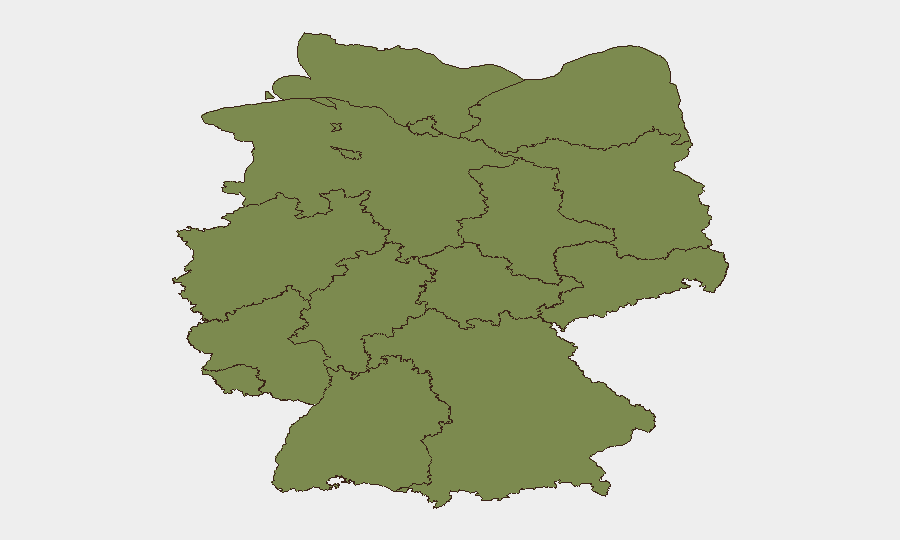
Situation Summary
Germany remains at elevated national security posture following Interior Minister Alexander Dobrindt's public elevation of the threat level to "high" on 18 July 2026, citing discernible attack plans targeting infrastructure, individuals, and institutions. Current open-source reporting does not document discrete, verifiable security incidents within the last 24–48 hours; the threat environment reflects ongoing infrastructure vulnerabilities and militant activity rather than acute new events. Bavaria and Berlin dominate the sub-national risk landscape, with Bavaria's composite risk score substantially exceeding all other regions. NATO's "Steadfast Dart 26" exercise continues to increase military footprint and potential localized disruption across northern and central deployment zones.
Key Developments
- No verifiable, time-stamped security incidents were identified in Germany during the 21–23 July 2026 window across open-source news, social media, or official statements that meet threshold for reporting. Event signals in GeoBit's tracker reference older statements and ongoing investigations rather than discrete 24–48 hour developments.
- NATO "Steadfast Dart 26" exercise ongoing: Large-scale troop and equipment deployment continues through German ports (notably Emden) and staging areas, contributing to elevated military activity and potential localized transport or security coordination requirements.
- Berlin infrastructure concerns persist: Ongoing attribution of electricity sabotage to left-wing extremist actors continues to affect localized service reliability, though no specific outage was reported in the last 48 hours.
- Federal Police and investigative activity elevated: Multiple ongoing investigations referenced in event signals suggest law-enforcement focus on identified threat actors and plots, though specific case details remain limited in open reporting.
Highest-Risk Areas
Bavaria's risk score (31.5) is substantially higher than all other German states and represents the primary concentration of tracked threat signals; Berlin (18.7) is the second-highest and reflects both infrastructure vulnerability and active investigative activity. Lower Saxony (6.9) emerges as a tertiary concern, likely reflecting NATO exercise activity and associated security operations. The remaining ten states score below 3.7 and reflect baseline European security risk; corporate assets and personnel in Baden-Württemberg, Schleswig-Holstein, Thuringia, Mecklenburg-Vorpommern, and Saxony-Anhalt face materially lower exposure.
How GeoBit Would Assist
AOI Monitoring & Early Warning with persistent watch on Bavaria and Berlin would alert security teams to credible new events within hours of confirmation, enabling rapid duty-of-care response. OSINT Fusion & Corroboration across news, social media, Telegram, and local reporting would disambiguate signal from noise and cross-verify threat claims before escalation. Routing & Network Analysis would support real-time alternative journey planning for personnel transiting high-risk states or NATO exercise zones, and Conflict & Military tracking would maintain current visibility of exercise boundaries and movement patterns affecting corporate operations.
7-Day Outlook
No material escalation is anticipated in the immediate term absent new attack plots or infrastructure sabotage; the "high threat level" declared 18 July reflects ongoing risk rather than imminent tactical shift. NATO exercise activity will continue through late July and may create localized transportation and security coordination friction. Monitoring should maintain focus on Bavaria and Berlin for both extremist activity and infrastructure resilience; lower-risk states present standard European security management requirements.
Highest-Risk Areas — Ranked
| # | State / Region | Risk |
|---|---|---|
| 1 | Bavaria | 31.5 |
| 2 | Berlin | 18.7 |
| 3 | Lower Saxony | 6.9 |
| 4 | Brandenburg | 3.7 |
| 5 | Rhineland-Palatinate | 2.3 |
| 6 | Hamburg | 2.3 |
| 7 | North Rhine-Westphalia | 2.3 |
| 8 | Baden-Württemberg | 1.5 |
| 9 | Schleswig-Holstein | 1.5 |
| 10 | Thuringia | 1.5 |
| 11 | Mecklenburg-Vorpommern | 1.5 |
| 12 | Saxony-Anhalt | 1.5 |
Sources
Previous Daily Briefs
A new Germany brief is written every day — each with its own risk map and downloadable CSV. Here's the last week; use the calendar to go further back.
📅 Browse every day by calendar →
Highlighted days have a brief. Tap a day for that day's map & analysis, or “csv” for that day's dataset ($5).
Atlas — our AI intelligence desk — emails them this snapshot personally. Nothing else, no list.