Situation Summary
Guinea-Bissau remains at elevated political-instability risk following the constitutional referendum on 30 August 2026, which consolidated presidential power under a military-backed transitional government that seized control in late 2025. While no armed incidents, major unrest, or travel-disrupting violence were documented in the past week, opposition boycotts, low visible turnout, and international concern over civil liberties signal substantial governance risk ahead of December general elections. The shift to a strongly presidential system, combined with restricted political space and opposition resistance, creates conditions for future confrontation or institutional crisis, though the current security environment remains relatively orderly in public reporting.
Key Developments
- Bissau (nationwide) – 30 August 2026: Constitutional referendum held to replace semi-parliamentary system with strongly presidential model, concentrating appointment and dismissal powers in the presidency and enabling legislative dissolution in "grave political crisis." Vote conducted under military-led transitional authority.[23][18][3]
- Bissau (capital, national announcement) – 1 September 2026: Electoral commission announced provisional results approving new constitution with approximately 70–70.4% "yes" on turnout between 55–62.6%, translating to 383,116 yes versus 160,954 no votes.[25][5][16][20]
- Bissau and nationwide polling sites – 30 August 2026, reported 1–2 September: Opposition parties including PAIGC boycotted referendum, citing restrictions on public freedoms and warning the new framework would entrench junta-backed President Horta N'Tam's authority. Reporters documented mostly empty polling stations in Bissau, indicating low visible turnout and political polarization despite official participation figures.[25][5][4]
- United Nations (statement, global) – 1 September 2026: UN Secretary-General publicly called on Guinea-Bissau authorities to maintain peaceful, inclusive transition, protect civic/political space, and guarantee fundamental freedoms ahead of 6 December general elections, reflecting international concern over opposition repression and civil unrest risk.[30][9]
- Nationwide (opposition political space) – 1–4 September 2026: Opposition factions intensified criticism of transitional authorities, labeling the new constitution a tool to strengthen executive power and calling for political dialogue. No large-scale protests or violent clashes documented, but rhetorical escalation signals heightened medium-term contestation risk.[29][14][4]
- Bissau and urban centers (international assessment) – Early September 2026: Regional and international media characterized the referendum as undermining democracy by expanding presidential powers and shrinking parliament in the immediate aftermath of military coup, emphasizing governance risk and potential institutional crisis around December elections.[4][15][23]
- Bissau and polling sites (security operations) – 1 September 2026: Vote counting and result consolidation proceeded without reported major security incidents at polling sites, suggesting referendum-day operations remained relatively secure in documented sources despite underlying political tension.[21][11][23]
- Nationwide (transition framework) – 1–7 September 2026: New constitution approved and general election date confirmed for 6 December 2026; analyses emphasize military-backed presidential system may increase elite power struggles, opposition suppression, and legal uncertainty through election and beyond, though no specific travel-disrupting incidents (curfews, roadblocks, large riots) reported this week.[1][2][4][16]
Highest-Risk Areas
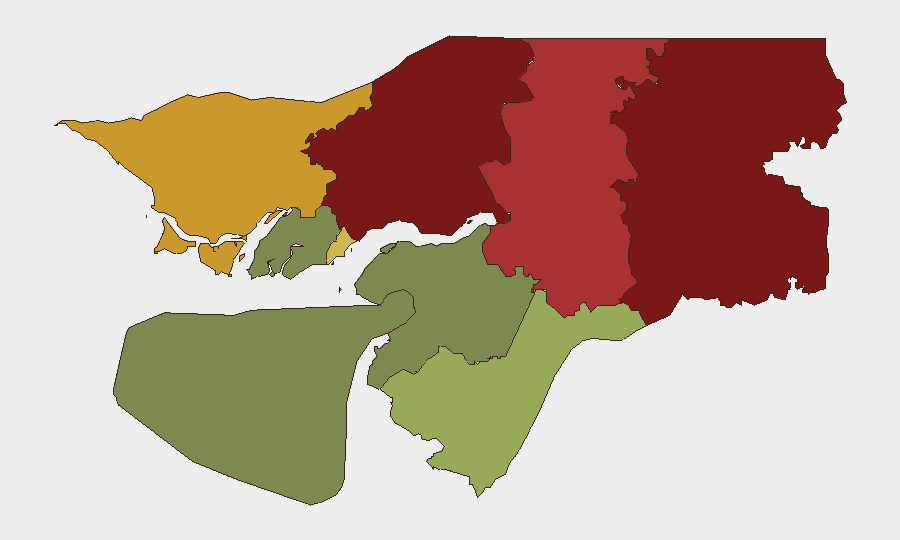
Gabu, Oio, and Bafatá regions (risk scores 92, 85, and 78 respectively) dominate the sub-national threat landscape, driven primarily by historical instability, governance gaps, and proximity to border areas vulnerable to smuggling and cross-border criminal activity. Bissau Autonomous Sector (risk 68), despite being the capital and seat of transitional power, ranks fifth due to political volatility and institutional uncertainty stemming from the referendum and opposition dynamics. Southern and island regions (Tombali, Quinara, Bolama) carry substantially lower risk scores, reflecting relative stability and lower population density. Organizations with personnel or assets in the north-eastern and central regions should prioritize governance-risk monitoring alongside baseline criminal and migration threat assessment.
How GeoBit Would Assist
Security teams should deploy AOI Monitoring & Early Warning on Gabu, Oio, and Bissau to track opposition mobilization, protest formation, and government response patterns ahead of December elections. Election Monitoring and Sentiment & Temporal Analysis (via social media and local media OSINT) would provide early indicators of escalating political tension, planned demonstrations, or localized unrest. Regime-Stability Search and Network & Actor Analysis would map opposition leadership, faction dynamics, and potential flashpoints within the transitional government, enabling proactive risk flagging for duty-of-care protocols.
7-Day Outlook
The immediate period (7–14 September 2026) is expected to remain operationally quiet, with political consolidation and opposition regrouping dominating. However, the medium-term trajectory (September–December) carries substantial risk of escalating opposition challenges, potential civil society protests, and possible government repression, particularly as the 6 December general election approaches and the new institutional framework enters enforcement phase.
Highest-Risk Areas — Ranked
| # | State / Region | Risk |
|---|---|---|
| 1 | Gabu Region | 92 |
| 2 | Oio Region | 85 |
| 3 | Bafatá Region | 78 |
| 4 | Cacheu Region | 72 |
| 5 | Bissau Autonomous Sector | 68 |
| 6 | Tombali Region | 45 |
| 7 | Quinara Region | 38 |
| 8 | Biombo Region | 32 |
| 9 | Bolama Region | 15 |
Sources
Previous Weekly Briefs
A new Guinea-Bissau brief is written every Monday, covering the week — each with its own risk map and downloadable CSV. Use the calendar to go further back.
- September 1, 2026
- August 30, 2026
- August 28, 2026
- August 26, 2026
- August 24, 2026
- August 22, 2026
- August 20, 2026
📅 Browse past briefs by calendar →
Highlighted days have a brief. Tap a day for that day's map & analysis, or “csv” for that day's dataset ($5).
Atlas — our AI intelligence desk — emails them this snapshot personally. Nothing else, no list.