Situation Summary
India remains at elevated composite threat level (#5 globally, score 100) with 869 tracked events, driven by a combination of communal tensions, industrial-safety failures, critical infrastructure compromise, mass-gathering vulnerabilities, and persistent organized-crime and transit-violence clusters. The past 48 hours have surfaced a nuclear-infrastructure cyber breach, fatal crowd-management failures, road-safety crises triggering spontaneous protests, and armed-force engagement in contested peripheral regions. Overall trajectory reflects systemic enforcement and operational-safety gaps compounded by seasonal mass gatherings and ongoing communal/political sensitivities.
Key Developments
- Kudankulam Nuclear Power Plant, Tamil Nadu (2026-07-15–16): Confirmed ransomware breach by "World Leaks" group; blueprints, supplier data, and operational files exfiltrated to dark web. Critical infrastructure compromise with ongoing adversary-access risk to power generation and supply-chain security.
- Vastral, Ahmedabad, Gujarat (2026-07-18): Massive explosion at illegal firecracker manufacturing unit killed ≥5, injured 9. Underscores industrial-safety and enforcement gaps in hazardous informal manufacturing within urban centers.
- Puri, Odisha – Rath Yatra (2026-07-16): Crowd crush during major religious procession killed ≥1, injured ~100. High-density mass-gathering safety vulnerability and emergency-response strain during peak-attendance religious events.
- Bhaderwah, Doda district, Jammu & Kashmir (2026-07-17): Armed confrontation resulted in one civilian fatality and three SOG personnel injured during alleged rifle-snatch attempt. Reflects heightened volatility and armed-force engagement in J&K peripheral districts.
- NH-48, Mumbai region, Maharashtra (2026-07-16): Dumper truck fatality of delivery agent triggered angry local protests and traffic disruption on major logistics corridor. Road-safety failure with potential for spontaneous unrest and supply-chain impact.
- Senapati, Manipur – Assam Rifles camp (2026-07-14–15): Mob attack involving stone-throwing and arson; vehicles damaged, trucks overturned. Anti-military sentiment and repeat-unrest risk in contested northeastern areas.
- Bengaluru, Karnataka – Chokkanahalli (2026-07-16, case registered within 48h): Video-documented assault on suspected illegal Bangladeshi nationals circulated on social media. Migrant-targeted violence and communal/immigration-linked tension escalation.
- Mumbai suburban rail network (2026-07-16): Two separate violent incidents (pepper spray, multi-person fight) within cluster period. Persistent petty crime and passenger-safety vulnerabilities on high-capacity commuter routes.
Highest-Risk Areas
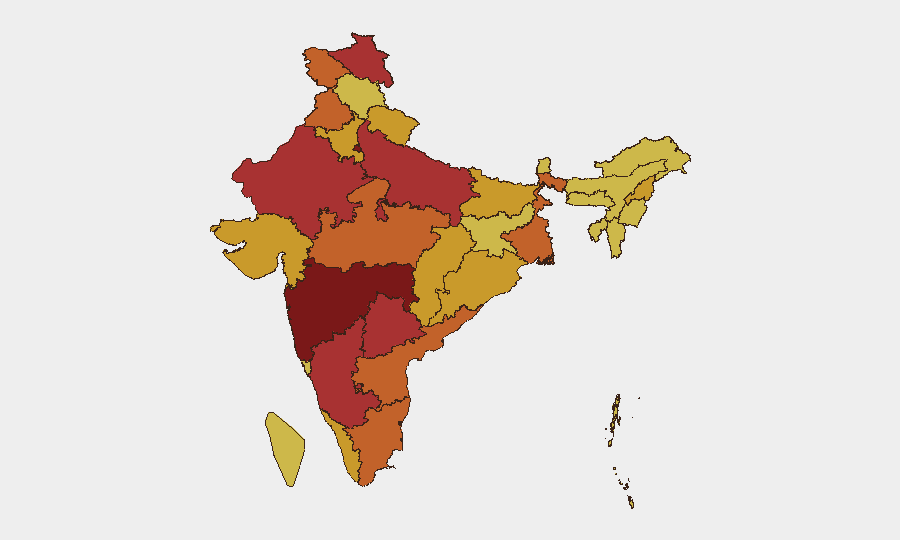
Delhi (100) and Maharashtra (97.5) command the national risk composite, driven by governance-instability signals, police-disapproval sentiment, Congress–state friction, and concentrated transit/crowd-management failures in Mumbai and surrounding districts. Karnataka (79.5), Rajasthan (78.6), and Ladakh (77.8) follow, with critical infrastructure, border-security, and activist-protest drivers. The nuclear-infrastructure breach in Tamil Nadu (not yet in top 12 due to composite timing) and Manipur's armed-tension escalation underscore that risk concentration masks distributed sectoral vulnerabilities—particularly in nuclear operations, mass gatherings, and frontier-region stability.
How GeoBit Would Assist
Teams protecting personnel and assets in India should deploy Intel Sweep and global event feeds to track evolving communal and political signals in high-risk metros (Delhi, Mumbai); AOI Monitoring & Early Warning on Kudankulam and other CRITIS sites to detect cyber-compromise indicators and operational anomalies; and multi-language OSINT fusion (X/Telegram/YouTube) to identify migrant-violence, mass-gathering, and road-safety clusters before escalation. Routing & Network Analysis supports alternative logistics planning around disruption-prone corridors (NH-48, Mumbai rail); GIS & Spatial Analysis maps sub-national risk concentration for duty-of-care resource deployment.
7-Day Outlook
Immediate near-term risk centers on mass-gathering vulnerability (Rath Yatra season ongoing) and response to nuclear-breach forensics and remediation. Communal and migrant-violence tensions are likely to persist and potentially re-ignite on social media, with localized protest spillover on transport corridors. J&K peripheral volatility and Manipur anti-military sentiment remain high-friction zones requiring close monitoring.
Highest-Risk Areas — Ranked
| # | State / Region | Risk |
|---|---|---|
| 1 | Delhi | 100 |
| 2 | Maharashtra | 97.5 |
| 3 | Karnataka | 79.5 |
| 4 | Rajasthan | 78.6 |
| 5 | Ladakh | 77.8 |
| 6 | Uttar Pradesh | 77.6 |
| 7 | Telangana | 76.4 |
| 8 | Punjab | 75.9 |
| 9 | Jammu and Kashmir | 75.3 |
| 10 | Andhra Pradesh | 74.9 |
| 11 | West Bengal | 74.5 |
| 12 | Tamil Nadu | 73.9 |
Sources
Previous Daily Briefs
A new India brief is written every day — each with its own risk map and downloadable CSV. Here's the last week; use the calendar to go further back.
📅 Browse every day by calendar →
Highlighted days have a brief. Tap a day for that day's map & analysis, or “csv” for that day's dataset ($5).
Atlas — our AI intelligence desk — emails them this snapshot personally. Nothing else, no list.