Situation Summary
Iran's security posture remains elevated amid active maritime escalation in the Strait of Hormuz and fragile high-level negotiations with the United States. Over the past 48 hours, Iranian military forces have conducted multiple assertive operations against commercial shipping, including drone strikes and alleged projectile attacks, while simultaneously reiterating readiness for armed response to perceived ceasefire violations. The confluence of military assertiveness, regional proxy activity (Hezbollah in Lebanon), and ongoing diplomatic talks creates a volatile environment with rapid escalation potential affecting both personnel safety and critical infrastructure.
Key Developments
- Strait of Hormuz (June 25, 2026): IRGC Navy asserted exclusive control over designated transit routes, issuing warnings to commercial vessels. Multiple tankers diverted or reversed course in response to the threat environment.
- Strait of Hormuz (June 25, 2026): Unidentified cargo vessel struck by projectile near Oman coast; U.S. officials attributed the strike to Iranian IRGC assets, causing bridge damage with no reported casualties.
- Strait of Hormuz (June 25, 2026): IRGC conducted multiple one-way attack drone operations targeting commercial shipping transiting the corridor, consistent with broader pattern of maritime harassment.
- Tehran (June 25, 2026): Iranian officials publicly restated control over Strait of Hormuz administration and explicitly signaled armed forces readiness to respond to U.S. and Israeli actions, characterizing current actions as "first response" with implicit threat of escalation.
- Bürgenstock, Switzerland (June 25, 2026): Iran-U.S. negotiations proceeded with U.S. delegation demanding guaranteed open Hormuz transit and nuclear program cessation; Iranian negotiators reiterated armed-forces readiness, underscoring fragile ceasefire context.
- Southern Lebanon (June 25, 2026): Israeli strike on vehicle killed three, wounded one; incident involved Iranian-backed Hezbollah forces testing newly agreed ceasefire and signals cross-border escalation risk tied to Iran's regional networks.
Highest-Risk Areas
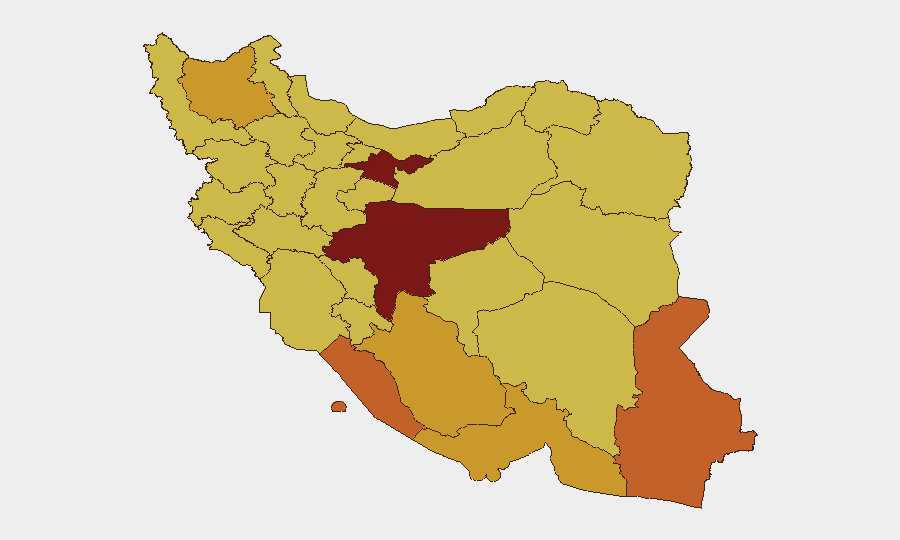
Tehran Province (risk 100) and Isfahan Province (risk 95.7) dominate the sub-national risk landscape, reflecting concentration of political authority, military command centers, and regime-critical infrastructure in Tehran and sensitive nuclear/industrial facilities in Isfahan. Coastal provinces—Bushehr (74.3), Hormozgan (71.5), and Khuzestan (70.1)—carry elevated risk due to direct exposure to Strait of Hormuz volatility, maritime military operations, and critical energy infrastructure. The eastern borderlands (Sistan and Baluchestan, 73.4; Razavi Khorasan, 70.1) remain vulnerable to cross-border spillover from regional conflict and proxy activity. Risk concentration in Tehran and along maritime/industrial corridors reflects both centralized regime vulnerability and operational exposure tied to current escalation.
How GeoBit Would Assist
Dedicated AOI Monitoring & Early Warning on Tehran's government district, Isfahan's industrial zones, and Hormozgan ports would provide persistent detection of security force movements, facility activity changes, and incident onset before mainstream reporting. Maritime & Aviation tracking combined with Routing & Network Analysis would enable real-time alternate-route planning for personnel and cargo transiting the Strait, accounting for IRGC threat patterns and vessel interception risk. Multi-language social and broadcast OSINT (X/Telegram, YouTube, Iranian news feeds) with sentiment and temporal analysis would surface emerging domestic unrest, cyber incidents, or leadership instability signals hours ahead of formal announcements.
7-Day Outlook
The Strait of Hormuz remains the primary near-term flashpoint, with IRGC operations likely to continue at current or elevated tempo if U.S.-Iran negotiations stall or breakdown occurs. Regional proxy activity (Hezbollah) poses secondary escalation risk that could trigger Iranian retaliatory action affecting domestic security posture and critical infrastructure. Personnel in Tehran and maritime-dependent sectors should anticipate continued restricted access, heightened checkpoint scrutiny, and potential supply-chain disruptions through early July.
Highest-Risk Areas — Ranked
| # | State / Region | Risk |
|---|---|---|
| 1 | Tehran Province | 100 |
| 2 | Isfahan Province | 95.7 |
| 3 | Bushehr Province | 74.3 |
| 4 | Sistan and Baluchestan Province | 73.4 |
| 5 | Fars Province | 71.5 |
| 6 | Hormozgan Province | 71.5 |
| 7 | East Azerbaijan Province | 71.1 |
| 8 | Semnan Province | 70.2 |
| 9 | Lorestan Province | 70.2 |
| 10 | Razavi Khorasan | 70.1 |
| 11 | Ilam Province | 70.1 |
| 12 | Khuzestan Province | 70.1 |
Sources
Previous Daily Briefs
A new Iran brief is written every day — each with its own risk map and downloadable CSV. Here's the last week; use the calendar to go further back.
📅 Browse every day by calendar →
Highlighted days have a brief. Tap a day for that day's map & analysis, or “csv” for that day's dataset ($5).