Situation Summary
Israel faces a complex, multi-front security environment marked by active cross-border military operations, domestic espionage activity, and elevated civil unrest. Composite threat tracking shows 397 events in recent weeks, with the country ranked #6 globally for security risk. The security posture reflects concurrent tensions with Iran-backed actors (Hamas, Hezbollah), newly approved but fragile ceasefire frameworks, and internal political-settlement decisions driving Palestinian and Arab-community tensions. The trajectory is one of sustained elevated alert rather than acute crisis escalation, though multiple trigger points remain volatile.
Key Developments
- Espionage arrests (National, July 2): Israeli security authorities detained individuals suspected of gathering intelligence for Iranian services and assisting Iranian operatives over "recent days," signaling active Iranian human-intelligence collection within Israeli territory.
- Bat Yam air-defence reinforcement (South of Tel Aviv, July 2–3): Following Iran's ballistic missile strike on Bat Yam (late June), authorities intensified civil-protection measures and air-defence positioning in the city and wider Tel Aviv metropolitan area within the last 24–48 hours.
- Southern Lebanon drone and air strikes (Israel–Lebanon border, July 1–2): Despite approval of a newly negotiated ceasefire framework, the IDF conducted air and drone operations against Hezbollah positions in southern Lebanon on July 1–2, elevating cross-border incident risk and alert status in northern Israeli border communities.
- Central Beirut strikes preceding ceasefire (Central Beirut / Israel impact, July 1–2): Israel executed strikes on central Beirut on the eve of the security cabinet's ceasefire approval, resulting in continued heightened alert status and cross-border tension affecting northern Israel.
- West Bank settlement approvals (Jerusalem / West Bank, July 2): The Israeli government approved 13 new settlements in the occupied West Bank on July 2, a development flagged by the Jerusalem Governorate as escalating political tensions and civil-unrest risk in East Jerusalem and adjacent areas.
- Violent crime surge in Arab communities (Taibe, Qalansawe, Jaffa, Holon, ongoing through July 2): A spike in armed violence—shootings and car bombings—has affected Arab-majority municipalities, with at least five deaths reported in late June and the trend flagged as ongoing in July 2 security updates, elevating personal-security and criminal-violence risk in these locales.
- Air-defence system integration (National test sites, July 2 announcement): The Israeli Ministry of Defense announced completion of new Iron Dome and Iron Beam laser-defence system integration trials, indicating ongoing high-tempo air-defence activity and potential temporary hazards in test zones.
Highest-Risk Areas
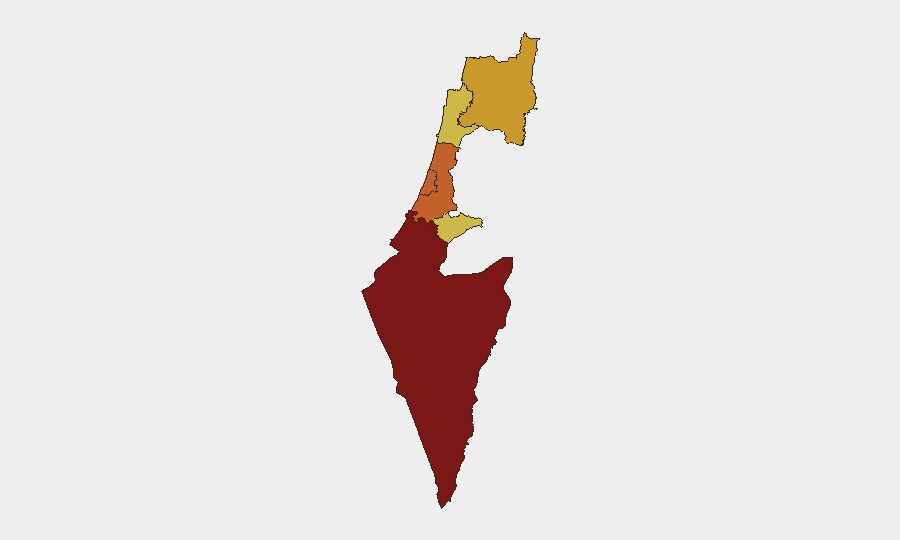
The South District (composite risk 100) remains the primary concern, driven by proximity to Gaza, recent Iranian ballistic-missile strikes on Bat Yam, and ongoing Israeli air-defence operations. The Center District (74.5) and Tel-Aviv District (74.2) follow closely, reflecting population density, infrastructure concentration, and impact zones from recent and anticipated strikes. The North District (71.2) and Haifa District (70.8) face sustained cross-border risk from Lebanon and Hezbollah activity, amplified by fragile ceasefire conditions and recent IDF operations. Jerusalem District (70.4) is elevated by settlement-approval tensions and West Bank political instability, driving civil-unrest risk.
How GeoBit Would Assist
AOI Monitoring & Early Warning with persistent geographic watch on high-risk districts enables real-time alerting on new military activity, protest formation, or cross-border incidents. Battle Mapping and Conflict & Military capability track IDF and adversary force posture, air-defence operations, and drone/strike patterns to predict kinetic escalation windows. Network & Actor Analysis combined with OSINT fusion (X/Telegram, multi-language search) provides early detection of espionage networks, Hamas/Hezbollah coordination, and civil-unrest signaling before street-level incidents.
7-Day Outlook
The ceasefire framework with Lebanon is likely to remain fragile, with sporadic cross-border incidents possible as both sides test compliance. Iranian intelligence activity is expected to persist, increasing counterintelligence pressure and arrest risk for suspected operatives. Domestic tensions—crime in Arab communities, West Bank settlement disputes—will remain elevated but below threshold for major civil violence absent external escalation triggers.
Highest-Risk Areas — Ranked
| # | State / Region | Risk |
|---|---|---|
| 1 | South District | 100 |
| 2 | Center District | 74.5 |
| 3 | Tel-Aviv District | 74.2 |
| 4 | North District | 71.2 |
| 5 | Haifa District | 70.8 |
| 6 | Jerusalem District | 70.4 |
Sources
Previous Daily Briefs
A new Israel brief is written every day — each with its own risk map and downloadable CSV. Here's the last week; use the calendar to go further back.
📅 Browse every day by calendar →
Highlighted days have a brief. Tap a day for that day's map & analysis, or “csv” for that day's dataset ($5).