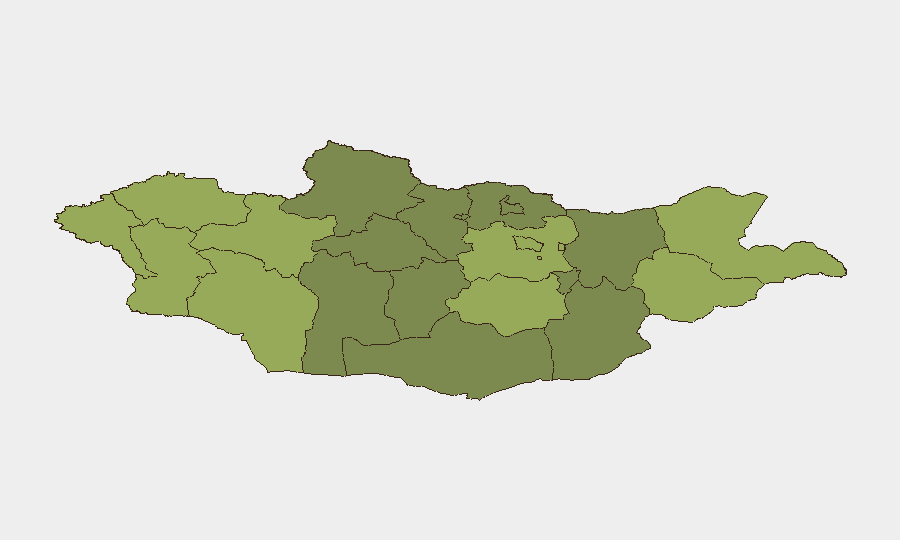
Situation Summary
Mongolia remains a low-threat environment globally (rank #145, composite score 10) with no tracked security incidents in the past week. However, economic strain has triggered public demonstrations in the capital, centered on fuel shortages and cost-of-living pressures. Border regions—particularly Dornod, Sükhbaatar, and Uvs—carry elevated risk profiles independent of current events, warranting baseline monitoring. The broader security trajectory is stable but contingent on resolution of supply-chain and inflation drivers fueling dissent.
Key Developments
- Ulaanbaatar, Sükhbaatar Square — October 1: Hundreds of demonstrators (motorists, students, elderly residents) gathered to protest prolonged fuel shortages, rising prices, inflation, and utility-cost increases. The protest was reported as peaceful but caused significant traffic disruption in the central business district.
- Ulaanbaatar, Peace Avenue and central intersections — October 1: Drivers abandoned vehicles and marched toward the government and parliament area, blocking or severely slowing traffic while demanding action on fuel supply and pricing.
- Ulaanbaatar filling stations — October 1–6: Extended queues persisted throughout the week; authorities identified suspected fuel hoarding and resale at inflated prices and launched investigations to address supply leakage.
- Ulaanbaatar — October 1–5: Fuel-related grievances expanded to encompass food prices, taxation, household-income decline, and increases in electricity, heating, and water tariffs, indicating broader economic discontent.
- Ulaanbaatar — October 1: Police appealed to demonstrators not to obstruct public transport and emergency services; one secondary report indicated dispersal occurred, though independent corroboration is limited.
- Mongolia nationwide — October 6: The Ministry of Industry and Mineral Resources announced monitoring measures at fuel stations, including proposed video surveillance, to counter alleged diversion and resale operations.
- Mongolia — October 2–6: The government initiated requests for additional fuel supplies from Russia, China, and South Korea to mitigate shortages and reduce further disruption risk.
- Mongolia nationwide — September 30 (operational period summary): Police reported 114 suspected criminal incidents and 855 total offenses nationwide, including 82 DUI detentions, 66 domestic-violence cases, 15 fraud cases, and nine thefts. Specific sub-regional locations were not disclosed.
Highest-Risk Areas
Dornod, Sükhbaatar, and Uvs provinces register the highest composite risk scores (58, 55, and 52 respectively), driven by geographic proximity to the Russian border, limited state capacity, and historical cross-border movement patterns. Khovd and Bayan-Ölgii in the northwest present secondary concern. Ulaanbaatar itself ranks seventh in sub-national risk (45) and currently bears the most visible public-safety activity due to economic-driven demonstrations. Eastern and western border provinces remain persistently higher-risk even absent acute triggering events, reflecting structural conditions rather than immediate crisis.
How GeoBit Would Assist
Security teams should employ AOI Monitoring & Early Warning on Ulaanbaatar's central districts and key filling stations to track protest dynamics and supply-chain disruption in real time. Intel Sweep and multi-language OSINT capabilities support continuous monitoring of government fuel-procurement announcements and supply-chain adjustments from Russian, Chinese, and South Korean sources. Risk & Threat Assessment and sentiment analysis can model the trajectory of economic grievance and identify thresholds at which demonstrations risk escalation or geographic spread to secondary cities.
7-Day Outlook
Fuel-supply replenishment from external sources is expected to begin easing shortages by mid-to-late October, likely reducing near-term protest momentum. If supply restoration stalls or prices remain elevated, economic discontent may broaden geographically or intensify. Baseline sub-national risk in border regions should be monitored continuously independent of capital-city events.
Highest-Risk Areas — Ranked
| # | State / Region | Risk |
|---|---|---|
| 1 | Dornod | 58 |
| 2 | Sükhbaatar | 55 |
| 3 | Uvs | 52 |
| 4 | Khovd | 50 |
| 5 | Bayan-Ölgii | 48 |
| 6 | Govi-Altai | 46 |
| 7 | Ulaanbaatar | 45 |
| 8 | Zavkhan | 44 |
| 9 | Töv | 42 |
| 10 | Dundgovi | 40 |
| 11 | Darkhan-Uul | 38 |
| 12 | Ömnögovi | 37 |
Sources
Previous Weekly Briefs
A new Mongolia brief is written every Monday, covering the week — each with its own risk map and downloadable CSV. Use the calendar to go further back.
- September 29, 2026
- September 22, 2026
- September 15, 2026
- September 8, 2026
- September 1, 2026
- August 30, 2026
- August 28, 2026
📅 Browse past briefs by calendar →
Highlighted days have a brief. Tap a day for that day's map & analysis, or “csv” for that day's dataset ($5).
Atlas — our AI intelligence desk — emails them this snapshot personally. Nothing else, no list.