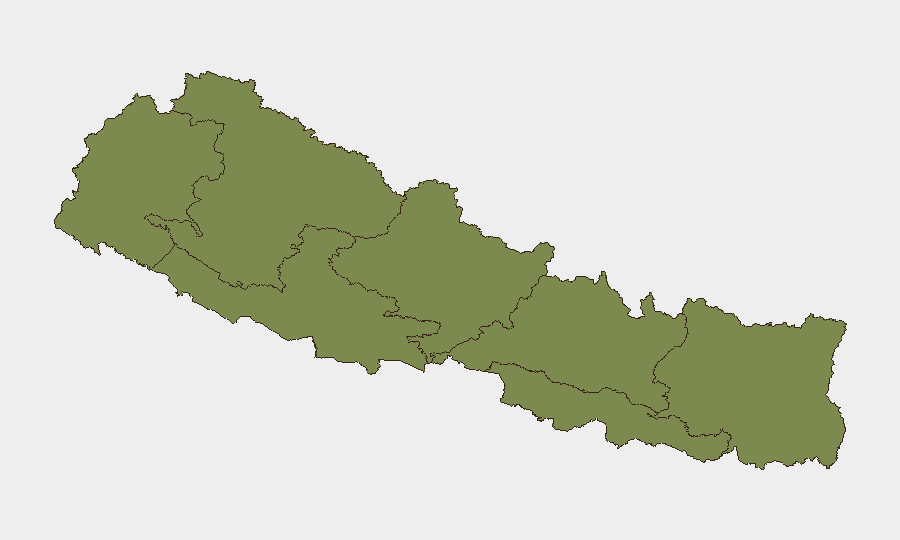
Situation Summary
Nepal is experiencing acute civil unrest and political instability following the July 11 self-immolation death of a 25-year-old ride-sharing worker in Kathmandu, which triggered sustained Gen Z-led protests. Security forces opened fire near Parliament on July 13, killing 19 and injuring over 500; Prime Minister K.P. Sharma Oli resigned the same day, and the Nepal Army assumed nationwide command of security operations with immediate troop deployments to major cities. The confluence of youth-driven dissent, police-force escalation, government collapse, and military mobilization places Nepal at a critical inflection point, with risk concentrated in Bagamati Province (Kathmandu, Lalitpur, Bhaktapur) but secondary security concerns emerging across multiple districts.
Key Developments
- Kathmandu (Bagamati Province), July 11–13: Tens of thousands of predominantly Gen Z protesters gathered around Parliament and central Kathmandu following Ganesh Nepali's self-immolation on July 11 outside the Department of Passports; protests persisted through July 12–13, calling for justice and denouncing police misconduct.
- Kathmandu (Bagamati Province), July 13, 13:00–14:00 local time: Security forces opened fire near the Parliament area, resulting in 19 confirmed deaths and over 500 injuries; widespread looting and arson were reported in central Kathmandu during approximately 27 hours of violent unrest.
- Kathmandu, July 13, 22:00 local time: Prime Minister K.P. Sharma Oli announced his resignation; Nepal Army declared assumption of nationwide security command effective 10 pm, deploying troops across Kathmandu, Lalitpur, Bhaktapur, and other cities with orders to enforce restrictions, restore order, and arrest individuals involved in looting and arson (at least 27 arrests logged).
- Kathmandu (Bagamati Province), July 13: Kathmandu Mayor Balendra "Balen" Shah resigned from his post and announced plans to contest elections from Jhapa-5 against Oli; his departure is interpreted as both political repositioning and a response to public anger over evictions and police abuses.
- Nawalparasi West (Lumbini Province), July 3 order, highlighted July 13: Ministry of Home Affairs directed the District Administration Office to deploy additional security personnel and profile residents lacking citizenship certificates in Susta (border settlement with India); this tightened posture was publicly reported on July 13, indicating sustained border-area tension.
- Multiple districts (Jhapa, Jajarkot, Tanahu, Banke, Kavre), July 13: Authorities reported five unexplained deaths across dispersed districts; government established a five-member investigation committee led by Deputy Inspector General Govinda Thapaliya to examine these deaths and the self-immolation case.
- Rolpa District (Karnali Province), Monday within 48 hours: An improvised explosive device detonated at Trikota Rural Municipality in Libang; Nepal Police suspected involvement of the Netra Bikram Chand–led outfit, which had called a concurrent general strike.
- Durbar Marg, Kathmandu, Monday morning within 48 hours: A fire broke out on an upper floor of a hotel in the central commercial district; no casualties reported, but the incident underscores infrastructure vulnerability during civil unrest.
Highest-Risk Areas
Bagamati Province—which encompasses Kathmandu, Lalitpur, and Bhaktapur—dominates the risk profile with a composite score of 31.5, driven by the current army deployment, police-force presence, and ongoing protest activity around Parliament and government offices. Gandaki Province (4.1) and Madhesh Province (3.0) show secondary risk, likely reflecting sympathetic protests or instability spillover. Rolpa District in Karnali Province (1.9), despite lower numerical ranking, retains asymmetric risk due to active IED capability and historical insurgent networks; border areas in Lumbini Province similarly warrant heightened vigilance given current Ministry of Home Affairs security posturing and India-Nepal coordination.
How GeoBit Would Assist
Real-time AOI Monitoring & Early Warning on Kathmandu (Parliament, Durbar Marg, major thoroughfares) and secondary cities would flag protest gathering, movement restrictions, and curfew compliance. Network & Actor Analysis and OSINT fusion (X/Twitter, Telegram, YouTube, local news corroboration) would track opposition-leader statements, Home Ministry directives, and Nepal Army communications to anticipate further restrictions or security escalations. Routing & Network Analysis would enable duty-of-care teams to plan alternative travel routes around army checkpoints and protest zones in real time.
7-Day Outlook
Kathmandu and surrounding cities will likely remain under heightened military-police presence with curfews, checkpoint screening, and documentation checks persisting through the immediate aftermath of Oli's resignation. Secondary unrest clusters—Rolpa IED activity, border profiling in Susta, and unexplained deaths under investigation—will require continuous monitoring to assess whether they signal broader instability or localized, containable incidents. A new government formation or caretaker administration is anticipated within 7–10 days; protest momentum may either consolidate around specific political demands or dissipate if security operations suppress public assembly.
Highest-Risk Areas — Ranked
| # | State / Region | Risk |
|---|---|---|
| 1 | Bagamati Province | 31.5 |
| 2 | Gandaki Province | 4.1 |
| 3 | Madhesh Province | 3 |
| 4 | Koshi Province | 2.3 |
| 5 | Karnali Province | 1.9 |
| 6 | Lumbini Province | 1.9 |
| 7 | Sudurpashchim Province | 1.5 |
Sources
Previous Daily Briefs
A new Nepal brief is written every day — each with its own risk map and downloadable CSV. Here's the last week; use the calendar to go further back.
📅 Browse every day by calendar →
Highlighted days have a brief. Tap a day for that day's map & analysis, or “csv” for that day's dataset ($5).
Atlas — our AI intelligence desk — emails them this snapshot personally. Nothing else, no list.