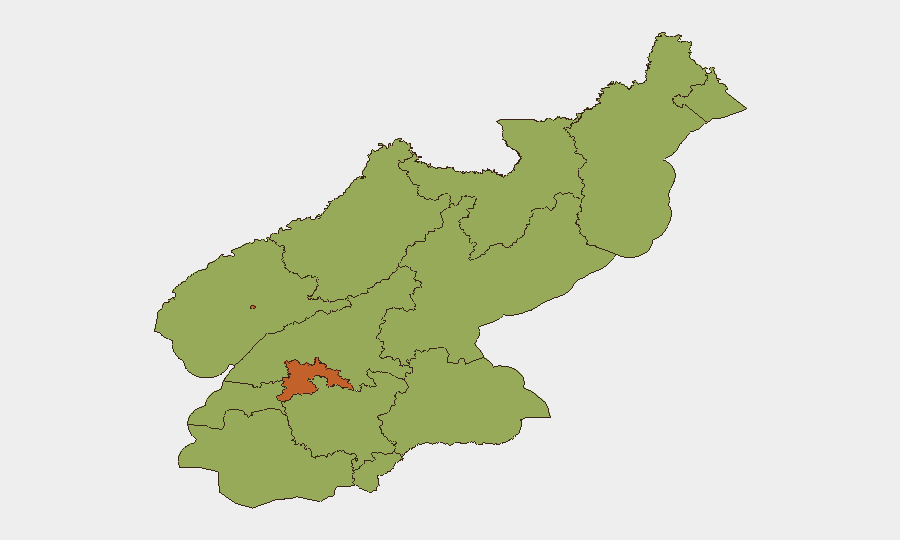
Situation Summary
North Korea remains at composite threat rank #35 globally, with P'yŏngyang and South Pyongan accounting for the majority of measurable risk. Open-source reporting for June 29–30, 2026 does not confirm any acute security incidents, civil unrest, or infrastructure failures within the country. Recent military modernization activity (late June ballistic and naval tests) and isolated discipline issues among security personnel indicate underlying organizational strain, but no imminent destabilizing event is evident in current 24–48 hour windows.
Key Developments
No verifiable new security or civil-unrest events have been independently confirmed within the last 24–48 hours inside North Korea. Open-source platforms, specialist North Korea monitoring outlets (NK Pro, Daily NK), and international news services report no time-stamped incidents on June 29–30, 2026 that would meet operational verification standards for corporate duty-of-care reporting. Social media recirculation of late-June military and leadership items does not constitute new incident confirmation.
The most temporally recent confirmed development is satellite imagery as of June 30, 2026 showing the new 5,000-ton destroyer "No. 51 Choe Hyon" still moored at a civilian cargo port (west coast, likely Nampo area) one week after a publicized deployment ceremony. This suggests either delayed operational readiness or inconsistency in state media claims regarding force posture, but does not represent an acute security threat to foreign personnel or assets.
Highest-Risk Areas
P'yŏngyang (risk 75) and South Pyongan (risk 54.2) drive the country-level threat composite, with a sharp risk gradient between the capital region and secondary provinces. All remaining tracked provinces cluster at or near risk 45, indicating that threat concentration is heavily capital-centric. The dominance of P'yŏngyang reflects political-security apparatus density, elite military presence, and operational control functions; South Pyongan's secondary elevation likely reflects proximity to both the capital and the South Korean border, where military and counterintelligence activity is highest.
How GeoBit Would Assist
Security teams with personnel or assets in North Korea should deploy AOI (Area-of-Interest) Monitoring & Early Warning on P'yŏngyang and South Pyongan to detect sudden changes in regime stability, military movement, or border incident signals before they escalate. OSINT Fusion & Corroboration (multi-language, X/Twitter, Telegram, specialist NK media) would filter social media noise and validate emerging reports against credible specialist outlets, reducing false-positive alerts. Satellite & Imagery Analysis of military installations, ports, and border zones would provide independent verification of force posture and readiness claims, complementing state media claims that—as the Choe Hyon case shows—may be unreliable.
7-Day Outlook
No acute escalation is forecast for the next seven days based on current open-source signals. Routine military exercises, leadership inspections, and low-level security operations will likely continue. The risk of sudden border incidents or internal security crackdowns remains structurally present but is not elevated by any single detected triggering event; monitoring for secondary indicators (mass movement, communications disruption, or leadership absence) will remain essential for early warning.
Highest-Risk Areas — Ranked
| # | State / Region | Risk |
|---|---|---|
| 1 | P'yŏngyang | 75 |
| 2 | South Pyongan | 54.2 |
| 3 | Ryanggang | 45 |
| 4 | North Hamgyong | 45 |
| 5 | North Pyongan | 45 |
| 6 | Chagang | 45 |
| 7 | Nampo | 45 |
| 8 | South Hwanghae | 45 |
| 9 | North Hwanghae | 45 |
| 10 | South Hamgyong | 45 |
| 11 | Kaesong | 45 |
| 12 | Kangwon | 45 |
Sources
Previous Daily Briefs
A new North Korea brief is written every day — each with its own risk map and downloadable CSV. Here's the last week; use the calendar to go further back.
📅 Browse every day by calendar →
Highlighted days have a brief. Tap a day for that day's map & analysis, or “csv” for that day's dataset ($5).