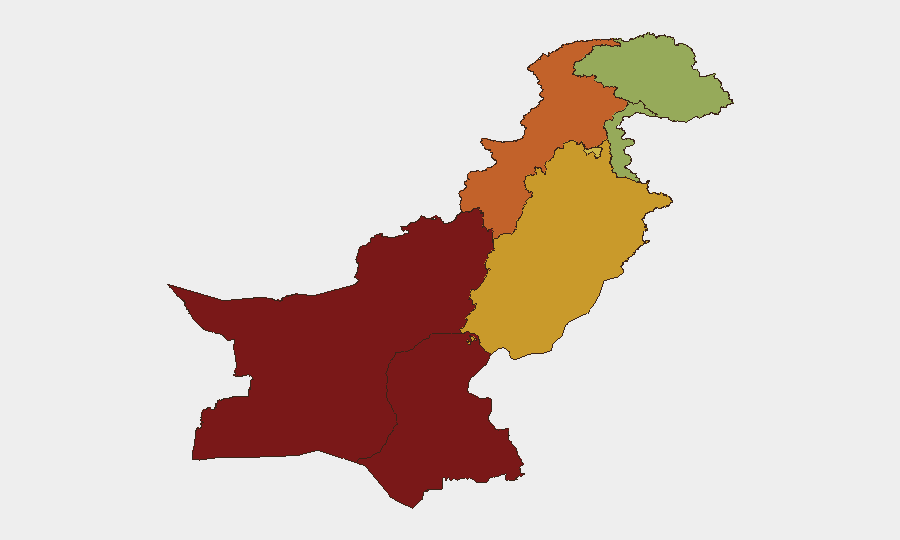
Situation Summary
Pakistan faces an acute escalation in militant violence and cross-border conflict, with a suicide bombing in North Waziristan on 29 June killing at least 13 security personnel, followed immediately by major Pakistani airstrikes across the Afghanistan border claiming 29 militant casualties. Civilian casualties reported by Afghan Taliban sources and ongoing security operations along the frontier have elevated terrorism and civil-unrest risk nationwide, with heightened alert status in major urban centers and visible military/paramilitary presence. The convergence of internal insurgency, cross-border retaliation, and political tension positions Pakistan at composite threat rank #14 globally, with Sindh and Balochistan driving the highest sub-national risk scores.
Key Developments
- North Waziristan District, Khyber Pakhtunkhwa – 29 June 2026
Suicide bombing killed at least 13 security personnel and wounded four civilians, signaling active militant capability in the tribal border belt and elevated terrorism risk in KP.
- Pakistan–Afghanistan Border (Paktia, Paktika, Kunar provinces) – 29 June 2026
Pakistan conducted major airstrikes and ground operations targeting militant hideouts; Pakistani sources report ~29 militants killed including a senior commander. Afghan Taliban report dozens of civilian casualties, raising cross-border retaliation and regional escalation risk.
- Islamabad, Rawalpindi, Lahore – 29 June 2026
Security forces placed on heightened alert with reinforced measures around diplomatic districts; visible security presence and potential demonstration-related movement disruptions expected in these capitals and major cities.
- Karachi (Pakistan Rangers Headquarters area) – 29 June 2026
Following a recent attack on Rangers facilities, sustained high terrorism and civil-unrest risk remains around security installations and diplomatic/political sites; protests linked to regional tensions ongoing.
- Border Belt (within 50 km of Afghanistan frontier) – 29 June 2026
Widespread security-force mobilization and ongoing operations; travel advisories reiterate extreme risk of militant attacks and military activity; this zone remains the primary active conflict theater.
- Major Cities Nationwide – 29 June 2026
Protests tied to cross-border attacks and regional tensions reported and expected; prior demonstrations have triggered clashes with security forces and transport disruption, particularly in demonstration-prone urban areas.
- Wagah Border Crossing (Punjab) – 29 June 2026
India–Pakistan crossing remains closed; overland travel between Lahore and India is not currently possible, contributing to broader regional infrastructure disruption.
Highest-Risk Areas
Sindh (88.5) and Balochistan (84.5) drive the composite risk ranking, with Sindh sustained by insurgent activity, organized-crime networks, and high-profile security incidents in Karachi (Rangers operations, ongoing protests). Balochistan remains a persistent zone of nationalist separatist violence and security-force operations. Khyber Pakhtunkhwa (73.9) is now the acute tactical driver following the North Waziristan suicide bombing and the subsequent cross-border airstrike campaign; the tribal frontier with Afghanistan presents the most immediate, kinetic terrorism and military-escalation risk. Punjab (71.4) remains elevated due to urban protest activity and heightened alert in Lahore and Rawalpindi, though direct conflict intensity is lower than the frontier provinces.
How GeoBit Would Assist
Corporate security and duty-of-care teams should deploy AOI (Area-of-Interest) Monitoring & Early Warning on frontier districts, Karachi, and major city centers to detect protest activity, security-force movements, and militant signals in real time. Conflict & Military tracking (force structure, airstrikes, cross-border operations) combined with OSINT feeds and multi-language sentiment analysis (Telegram, X, local news) will provide early warning of escalation cycles and retaliation patterns. Routing & Network Analysis should be used to identify safe transit corridors away from protest zones, military checkpoints, and the Afghanistan border belt.
7-Day Outlook
The cross-border military exchange is likely to persist for 7–14 days, with Pakistani security forces sustaining operations along the frontier and Taliban retaliation rhetoric increasing civilian and military casualty risk. Protest activity in major cities will likely continue, with transport disruptions and police responses affecting corporate mobility. The Wagah closure and heightened diplomatic-district alert will remain in place; frontier-zone travel should be considered extremely high-risk or avoided entirely.
Highest-Risk Areas — Ranked
| # | State / Region | Risk |
|---|---|---|
| 1 | Sindh | 88.5 |
| 2 | Balochistan | 84.5 |
| 3 | Khyber Pakhtunkhwa | 73.9 |
| 4 | Punjab | 71.4 |
| 5 | Islamabad Capital Territory | 64.1 |
| 6 | Azad Kashmir | 58.6 |
| 7 | Gilgit-Baltistan | 58.5 |
Sources
Previous Daily Briefs
A new Pakistan brief is written every day — each with its own risk map and downloadable CSV. Here's the last week; use the calendar to go further back.
📅 Browse every day by calendar →
Highlighted days have a brief. Tap a day for that day's map & analysis, or “csv” for that day's dataset ($5).