Situation Summary
Pakistan remains at composite threat level 76 (rank #26 globally) amid an active cycle of cross-border military operations and domestic counter-terrorism activity. Over the last 24–48 hours, Pakistani security forces have conducted ground operations and "calibrated strikes" against militant positions along the Pakistan–Afghanistan border, characterized by the military as part of Operation "Ghazab-ul-Haq" and a response to cross-border threats. The Foreign Office has issued formal demarches to Afghan authorities and publicly warned of elevated risk in border provinces and major urban centers, including Karachi, due to the threat of retaliatory militant action.
Key Developments
- Pakistan–Afghanistan border operations (Khyber Pakhtunkhwa/Balochistan sector), 30 June–1 July 2026: Pakistani security forces executed ground operations followed by strikes against militant positions; exchanges of fire reported to include Afghan Taliban fire landing in Pakistani territory. Foreign Office characterized actions as response to cross-border militancy and issued formal complaint to Afghan authorities.
- Foreign Office media briefing (Islamabad, 1 July 2026): Spokesperson linked Operation Ghazab-ul-Haq to recent Karachi terrorist incidents and warned of continued elevated threat levels in border regions and major cities, framing Pakistan's posture as "open war" against certain militant groups.
- Public security alert (nationwide, issued 30 June–1 July 2026): Pakistani authorities highlighted cross-border security concerns and military alert status along the Pakistan–Afghanistan frontier; reports note heightened risk of further militant incursions and possible retaliatory attacks in populated centers.
- Pakistan–Bahrain regional security consultation (Manama, 1–2 July 2026): Senior officials reviewed regional security environment in context of broader Middle East escalation, signaling continued diplomatic focus on threat environment affecting Pakistani citizens in Gulf states.
- UN Security Council monitoring (early July 2026 forecast): Pakistan–Afghanistan cross-border violence noted as active file with recent strikes and civilian casualty reports; international monitoring of escalation risk remains current.
Highest-Risk Areas
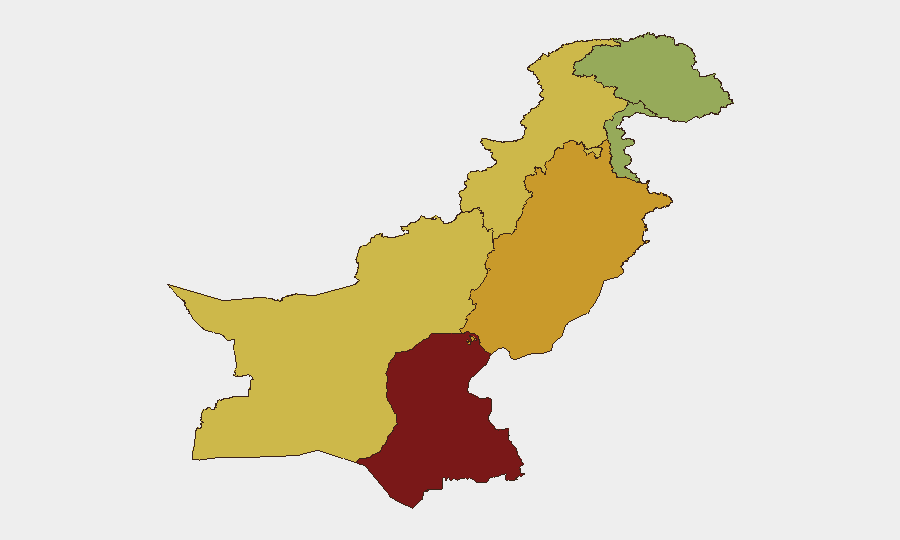
Sindh province (risk 83.1) and Punjab (71.3) carry the highest composite threat scores, with Sindh's elevated level reflecting ongoing urban terrorism and militant activity in Karachi. Khyber Pakhtunkhwa (68.5) and Balochistan (64.3) face acute cross-border militancy risk given the current operational cycle along the Pakistan–Afghanistan frontier; these provinces serve as primary staging areas for militant groups and Pakistani counter-operations. Islamabad Capital Territory (64.3) remains at elevated risk due to proximity to border-affected regions and its status as a seat of government facing potential retaliatory targeting. Recent military operations and Foreign Office warnings indicate that border provinces and major urban centers carry the highest near-term operational risk.
How GeoBit Would Assist
Security teams with personnel or assets in Pakistan should deploy Intel Sweep and global event feeds to capture real-time cross-border military activity, coupled with multi-language OSINT (X/Twitter, Telegram, local news sources) for early warning of militant responses or attack planning in Karachi and other urban centers. Conflict & Military battle mapping and force-structure tracking would provide situational awareness of Pakistani and militant positions along the frontier, while AOI Monitoring with alerting on Sindh, Punjab, and Khyber Pakhtunkhwa can flag emerging incidents. Routing & Network Analysis supports alternative journey planning for staff in border provinces.
7-Day Outlook
Cross-border military activity and retaliatory militant risk will likely remain elevated through early July. Karachi and other Sindh-based assets face heightened threat from potential retaliation; security posture in Punjab and Khyber Pakhtunkhwa should reflect sustained operational tempo. No de-escalation signals are evident; further strikes or cross-border exchanges are plausible within the 7-day window.
Highest-Risk Areas — Ranked
| # | State / Region | Risk |
|---|---|---|
| 1 | Sindh | 83.1 |
| 2 | Punjab | 71.3 |
| 3 | Khyber Pakhtunkhwa | 68.5 |
| 4 | Balochistan | 64.3 |
| 5 | Islamabad Capital Territory | 64.3 |
| 6 | Azad Kashmir | 53.3 |
| 7 | Gilgit-Baltistan | 53.1 |
Sources
Previous Daily Briefs
A new Pakistan brief is written every day — each with its own risk map and downloadable CSV. Here's the last week; use the calendar to go further back.
📅 Browse every day by calendar →
Highlighted days have a brief. Tap a day for that day's map & analysis, or “csv” for that day's dataset ($5).