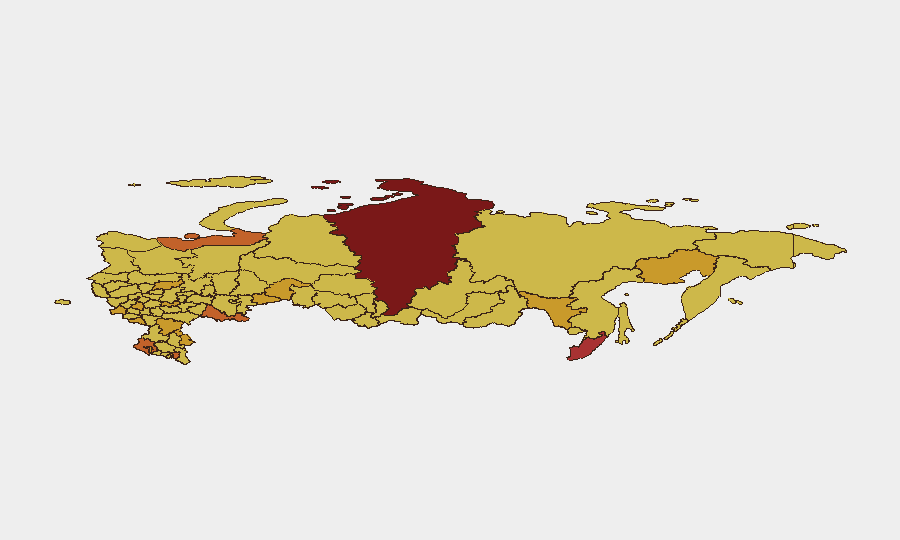
Situation Summary
Russia faces an intensifying campaign of large-scale Ukrainian strikes targeting energy, military, and civilian infrastructure across multiple regions. The night of 24–25 June saw one of the largest coordinated drone attacks of the conflict, with Ukraine's air force reporting strikes on gas, rail, medical, and residential infrastructure across 12 Russian regions and occupied Crimea, while Russia's defence ministry claimed interception of 660 drones. Simultaneously, Ukrainian forces struck the Orenburg gas processing plant and multiple gas distribution facilities in Moscow and Tver oblasts, degrading critical energy infrastructure. The trajectory is one of sustained mutual escalation, with elevated risk to civilian infrastructure, transport networks, and personnel across western and southern Russia.
Key Developments
- Orenburg Oblast (24 June): Ukrainian long-range strike damaged the Orenburg gas processing plant, a major facility supplying Russian energy exports. Economic and logistics disruption expected regionally and nationally.
- Moscow & Tver Oblasts (24 June): Freedom of Russia Legion announced "Operation Torch," claiming successful strikes on six gas distribution facilities with significant damage and deliberate intent to degrade energy revenues.
- Crimea—Kerch Region (24–25 June): Ukrainian drones struck military vessels and air-defence systems; Russian authorities subsequently declared a state of emergency and halted civilian fuel sales, citing infrastructure damage and security risks.
- Tula Region (24–25 June): Drone strike reported near/on Azot chemical plant, marking the second targeting of this facility in two weeks and indicating sustained focus on Russian industrial infrastructure.
- Nizhny Novgorod Region (night 23–24 June): Ukrainian drone strike killed two civilians and wounded two others east of Moscow, reflecting cross-border attack expansion beyond traditional front-line regions.
- Belgorod Oblast (night 23–24 June): One civilian killed in cross-border drone strike; Belgorod remains under sustained pressure due to proximity to active operations.
- Nationwide—12 Regions & Crimea (night 24–25 June): Major coordinated Ukrainian drone offensive reported across Kursk, Oryol, Bryansk, Rostov, Smolensk, Krasnodar, and other launch areas; Russia's defence ministry claimed 660 drone interceptions. Multiple casualty and infrastructure damage reports across occupied and Russian-held territory.
Highest-Risk Areas
Krasnoyarsk Krai (risk 100) and Moscow (96.2) anchor the highest-risk ranking, driven by critical energy infrastructure concentration and symbolic/political importance. However, the current operational picture elevates Orenburg Oblast, Tula Region, and Belgorod Oblast above their standard rankings due to active targeting of gas processing, chemical, and border infrastructure. Crimea's fuel emergency and military asset losses underscore occupied territory vulnerability. Western and southern Russian regions hosting launch sites (Kursk, Bryansk, Rostov, Krasnodar) face reciprocal strike risk. Personnel and asset risk in these areas is acute and near-term.
How GeoBit Would Assist
Security teams would deploy AOI Monitoring & Early Warning on critical infrastructure sites (gas plants, power facilities, rail nodes) across identified high-risk regions to detect drone launches and incoming strikes in real time. Routing & Network Analysis enables identification of alternative transport and supply chains around damaged energy and logistics corridors. Conflict & Military intelligence and OSINT fusion (Telegram, social media, regional authority statements) provide continuous corroboration of strike locations, infrastructure status, and civilian impact, informing duty-of-care decisions for personnel mobility and supply continuity.
7-Day Outlook
Sustained Ukrainian drone and missile offensives against Russian energy and military infrastructure are expected to continue at current or elevated tempo. Cascading outages in gas distribution, electricity, and rail transport will likely disrupt commercial operations and civilian services across western and central Russia. Risk to civilian populations and foreign personnel in Moscow, Tver, Orenburg, Tula, Nizhny Novgorod, and border regions (especially Belgorod) will remain elevated; travel and supply-chain disruption should be anticipated.
Highest-Risk Areas — Ranked
| # | State / Region | Risk |
|---|---|---|
| 1 | Krasnoyarsk Krai | 100 |
| 2 | Moscow | 96.2 |
| 3 | Primorsky Krai | 76.2 |
| 4 | Chechnya | 73.4 |
| 5 | Krasnodar Krai | 73.3 |
| 6 | Nenets Autonomous Okrug | 73.1 |
| 7 | Orenburg Oblast | 73 |
| 8 | Saint Petersburg | 72.9 |
| 9 | Magadan Oblast | 72.1 |
| 10 | Bryansk Oblast | 72.1 |
| 11 | Belgorod Oblast | 72.1 |
| 12 | Republic of Adygea | 72.1 |
Sources
Previous Daily Briefs
A new Russia brief is written every day — each with its own risk map and downloadable CSV. Here's the last week; use the calendar to go further back.
📅 Browse every day by calendar →
Highlighted days have a brief. Tap a day for that day's map & analysis, or “csv” for that day's dataset ($5).