Situation Summary
South Korea remains at a moderate composite threat level (rank #117 globally, score 8) with no acute civil unrest or major security incidents reported in the last 24–48 hours. State-level security activity has accelerated, including high-level Japan–South Korea defense coordination on 28 June and trilateral U.S.–Japan–South Korea cyber-counterintelligence measures against North Korean financial networks. Seoul and North Chungcheong province carry significantly elevated risk profiles relative to the rest of the country, driven by political and security-policy developments rather than active violence or criminal spikes.
Key Developments
- Seoul (Yongsan District), 28 June 2026 – South Korean Defense Minister Ahn Gyu-back and Japanese Defense Minister Shinjiro Koizumi held their first in-person bilateral defense talks in 11 years, focusing on regional security cooperation and North Korean threats. This represents the highest-level defense dialogue between the two countries in a decade and signals coordinated regional posturing.
- Seoul (Yongsan District), 28 June 2026 – The same bilateral meeting included agreement to revive joint maritime search-and-rescue exercises between South Korea and Japan, the first such joint drills in nearly a decade. This indicates enhanced emergency-response readiness but does not signal imminent crisis.
- Seoul, 28 June 2026 – U.S., Japanese, and South Korean officials announced strengthened trilateral efforts to counter North Korean cyber-enabled illicit financing, including sanctions evasion and cryptocurrency theft. This operational measure affects financial-crime and cyber-risk exposure for entities with banking, fintech, or digital-asset exposure in-country.
- Seoul, 28 June 2026 – Japanese Defense Minister Koizumi met with South Korean Foreign Minister Cho to exchange regional security assessments and confirm defense-cooperation roadmaps. No protests or unrest were linked to these meetings in reporting.
- Nationwide (reported 28 June 2026) – South Korean military announced plans for a comprehensive overhaul of drone operations and counter-drone defenses, including training approximately 500,000 personnel ("drone warriors") and expanding counter-drone systems. This multi-month initiative reflects heightened military preparedness but does not constitute an acute event.
- Broader context (since 26 June) – GeoBit event signals captured low-level North Korean demonstrative activity and internal South Korean police/prosecutorial disapproval statements, but no confirmed large-scale protests, armed clashes, or infrastructure disruptions affecting the capital or major urban centers.
Highest-Risk Areas
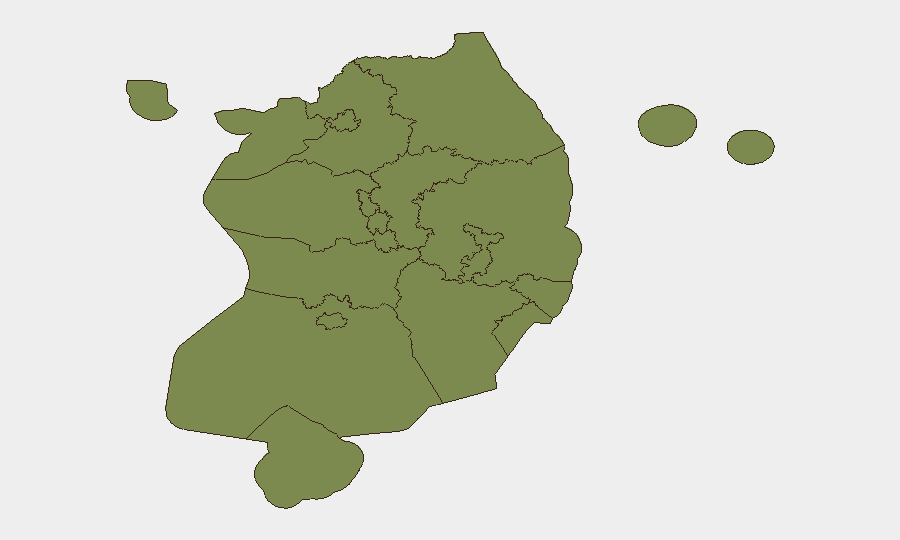
Seoul dominates the risk profile (31.8), driven primarily by political-security policy announcements, defense coordination, and government activity rather than street-level unrest. North Chungcheong (25.4) shows elevated composite risk, likely reflecting proximity to the demilitarized zone and military-security posture monitoring. All other provinces remain well below risk threshold (2.1–3.4), indicating that security concerns are concentrated in the capital and DMZ-adjacent areas. The gap between Seoul's risk and all others suggests threat concentration in policy, diplomacy, and state-level decision-making rather than distributed civil or criminal unrest.
How GeoBit Would Assist
Intel Sweep and multi-language OSINT fusion would monitor Seoul and North Chungcheong for emerging political or security signals ahead of formal announcements. AOI Monitoring & Early Warning with persistent watches on Yongsan District (defense ministry), Seoul government quarters, and DMZ-adjacent provinces would provide 24–48-hour alerting for protest mobilization, security incidents, or policy shifts. Network & Actor Analysis applied to South Korean government, military, and North Korean state entities would map coordination patterns and detect anomalies signaling rapid threat escalation.
7-Day Outlook
State-level defense coordination and cyber-counterintelligence operations are expected to continue through early July; no acute security deterioration is forecast over the next week. Monitoring for unplanned military exercises, unilateral North Korean provocations, or rapid policy shifts remains prudent. Corporate security teams with personnel in Seoul should maintain standard duty-of-care protocols and subscribe to AOI alerts for the capital and Gyeonggi province.
Highest-Risk Areas — Ranked
| # | State / Region | Risk |
|---|---|---|
| 1 | Seoul | 31.8 |
| 2 | North Chungcheong | 25.4 |
| 3 | Gyeonggi | 3.4 |
| 4 | Gangwon State | 2.4 |
| 5 | South Chungcheong | 2.4 |
| 6 | Jeju | 2.4 |
| 7 | Busan | 2.4 |
| 8 | Incheon | 2.1 |
| 9 | Jeonbuk State | 2.1 |
| 10 | South Gyeongsang | 2.1 |
| 11 | South Jeolla | 1.8 |
| 12 | Sejong | 1.8 |
Sources
Previous Daily Briefs
A new South Korea brief is written every day — each with its own risk map and downloadable CSV. Here's the last week; use the calendar to go further back.
📅 Browse every day by calendar →
Highlighted days have a brief. Tap a day for that day's map & analysis, or “csv” for that day's dataset ($5).