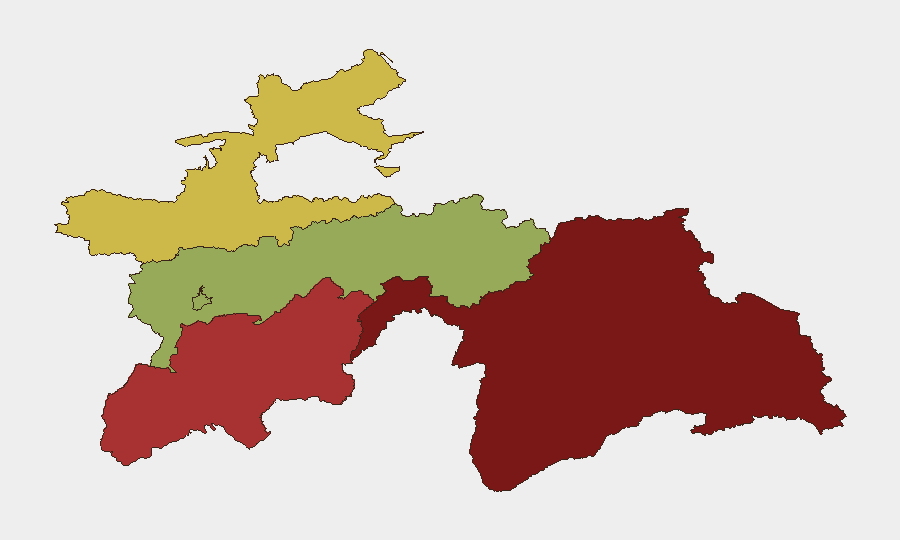
Situation Summary
Tajikistan remains in a low-frequency security event environment with no confirmed discrete incidents (attacks, clashes, major unrest) recorded in the past 7 days. Overall internal stability is intact, though border volatility with Afghanistan persists as a chronic risk driver, particularly affecting Khatlon Region and Gorno-Badakhshan Autonomous Region (GBAO). Foreign governments continue to issue travel warnings for southern and eastern border zones due to spillover gunfire, illegal cross-border movement, and mine/UXO contamination. A secondary political-legal exposure has emerged regarding Tajikistan's non-compliance with International Criminal Court arrest warrants, escalated to the Assembly of States Parties on 18–19 September.
Key Developments
- Tajik–Afghan border (Khatlon & GBAO) — 14 September 2026
Chinese diplomatic channels issued renewed advisories warning of stray bullets, illegal cross-border movement, and heightened border volatility, urging Chinese nationals and institutions to relocate from Shamsiddin Shohin district and Khorog area to safer regions within Tajikistan.
- Post-amnesty recidivism and police operations (countrywide) — reported 20 September 2026
At least seven individuals released under a June 2026 amnesty have been re-detained on suspicion of new crimes, indicating active law-enforcement operations and public-security concerns linked to released offenders.
- Tajik–Afghan frontier security reinforcement (national) — reiterated 15–16 September 2026
Russian Defense Ministry and CSTO statements (originally made 8 and 28 August) were republished on 15–16 September, reaffirming plans to deploy additional military equipment and weapons to strengthen border security in autumn 2026, reflecting ongoing focus on cross-border militant infiltration risks.
- International Criminal Court compliance matter (Dushanbe) — 18–19 September 2026
ICC judges formally referred Tajikistan's failure to arrest Russian President Vladimir Putin during his October 2025 visit to the Assembly of States Parties; Tajikistan appeared before the Assembly's Bureau on 19 September to explain non-compliance, creating a political-legal exposure.
- Mine and UXO hazard persistence (GBAO & border areas) — reiterated 14 September 2026
Security briefings updated 14 September confirm ongoing contamination in border regions, with travel advisories emphasizing persistent danger from unexploded ordnance despite absence of new reported detonations or casualties this week.
- National independence anniversary (Dushanbe / countrywide) — 20 September 2026
Tajikistan marked its 35th independence anniversary with official celebrations; no unrest or security incidents were reported in association with these mass-gathering events.
Highest-Risk Areas
Gorno-Badakhshan Autonomous Region (risk 92) and Khatlon Region (risk 78) dominate the sub-national threat landscape, both driven by proximity to the volatile Tajik–Afghan border where spillover violence, militant infiltration, illegal smuggling, and landmine contamination remain endemic. Sughd Region (risk 65) faces secondary exposure to broader regional instability. Dushanbe (risk 42) remains relatively lower-risk internally, though now subject to international political-legal scrutiny. Foreign nationals and corporate assets should avoid travel to border-adjacent districts in Khatlon and GBAO; operations in Dushanbe and Sughd carry materially lower kinetic risk but face standard urban crime and administrative pressures.
How GeoBit Would Assist
Security teams would employ AOI Monitoring & Early Warning to track border incidents and cross-border spillover in real time across GBAO and Khatlon, coupled with multi-language OSINT and social-media intelligence (X, Telegram, local platforms) to detect emerging protest, criminal activity, or civil unrest before they escalate. Satellite & imagery analysis and GIS mapping would support identification of mine/UXO zones and safe routing alternatives, while network & actor analysis would help track criminal recidivism clusters post-amnesty and militant infiltration patterns.
7-Day Outlook
No major escalation is anticipated in the immediate near term; the security environment is expected to remain calm domestically. Border tensions will likely persist as a chronic baseline risk requiring heightened awareness for southern and eastern travel. The ICC compliance matter may generate diplomatic pressure but poses no imminent kinetic risk to personnel or assets.
Highest-Risk Areas — Ranked
| # | State / Region | Risk |
|---|---|---|
| 1 | Gorno-Badakhshan Autonomous Region | 92 |
| 2 | Khatlon Region | 78 |
| 3 | Sughd Region | 65 |
| 4 | Districts of Republican Subordination | 58 |
| 5 | Dushanbe | 42 |
Sources
Previous Weekly Briefs
A new Tajikistan brief is written every Monday, covering the week — each with its own risk map and downloadable CSV. Use the calendar to go further back.
- September 14, 2026
- September 7, 2026
- September 3, 2026
- September 2, 2026
- September 1, 2026
- August 31, 2026
- August 30, 2026
📅 Browse past briefs by calendar →
Highlighted days have a brief. Tap a day for that day's map & analysis, or “csv” for that day's dataset ($5).
Atlas — our AI intelligence desk — emails them this snapshot personally. Nothing else, no list.